💎 Iolite
🪨 What It Is
Iolite is a beautiful blue to violet gemstone that belongs to the mineral family known as cordierite. It is commonly used in jewelry due to its attractive color and affordability compared to other blue gemstones like sapphire. Despite its lesser-known status, iolite is prized for its unique visual characteristics and historical significance.
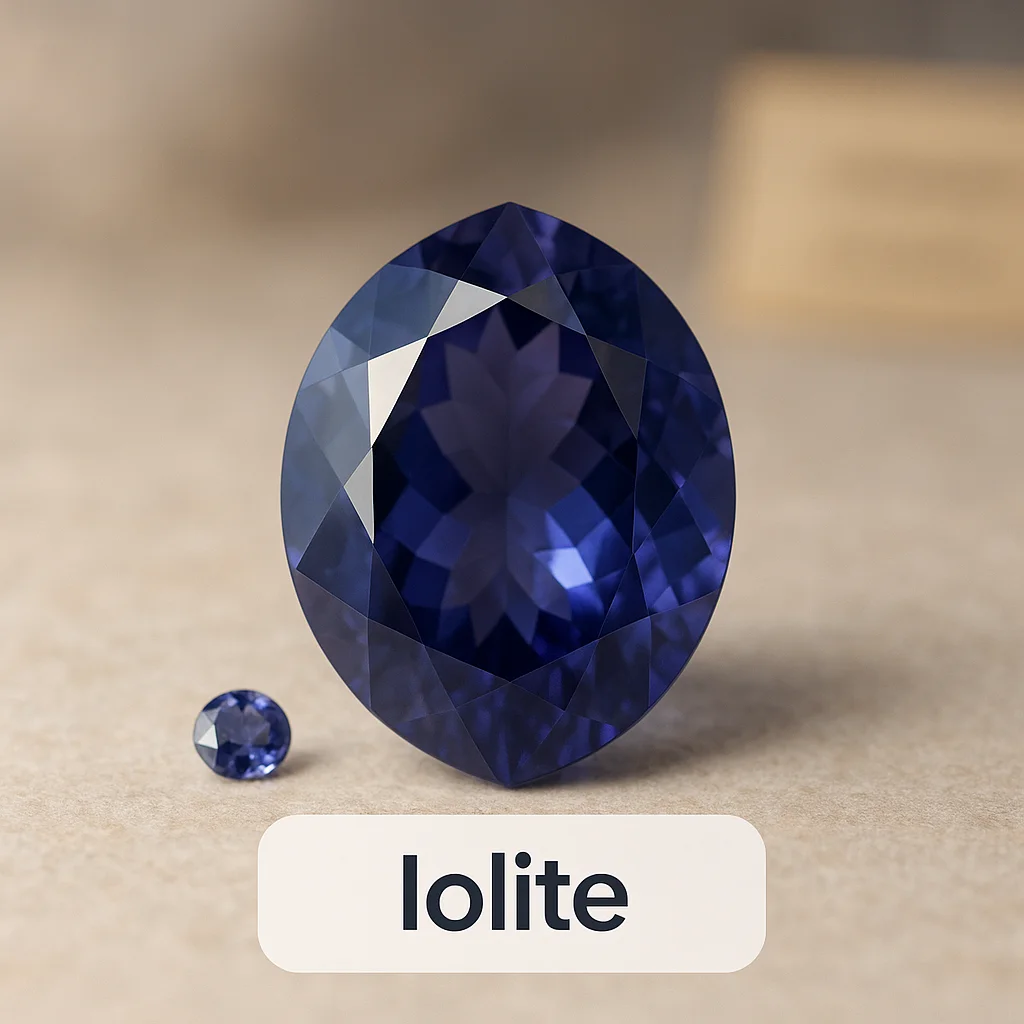
This gemstone is often likened to enjoying an optical illusion, as it can display different colors when viewed from different angles. Known technically as pleochroism, iolite can appear blue, violet, or even pale yellow-brown, depending on orientation. This fascination makes iolite a favorite among gem enthusiasts and jewelry designers alike.
Iolite is not typically listed among traditional birthstones, but its captivating colors have made it a popular choice for alternative birthstone options and modern jewelry designs. In this article, we will explore its appearance, properties, origin, care, and buying tips to better understand this diverse gemstone.
🌍 Where It Comes From
Iolite occurs naturally in metamorphic rock formations, which are rocks that have been transformed by heat, pressure, or other natural processes. These environments provide the high temperatures and pressures needed to form cordierite crystals.
Significant deposits of iolite have been found in various parts of the world, including regions of Africa, Brazil, India, and Sri Lanka. Each of these locations can offer differing qualities of iolite, including variations in color intensity, clarity, and market value. For instance, some of the finest iolite comes from India, where the gemstone is known for its deep, saturated hues.
The origin of iolite can have implications for its color and clarity characteristics. While the region alone does not strictly define the quality, it often shapes the gemstone's reputation in the market. Collectors and jewelers may seek stones from specific locales based on historical standards of quality.
🔬 How It Forms
Iolite forms under metamorphic conditions, which typically involve high pressures and temperatures affecting pre-existing rocks. It can be found in schists and gneisses, types of rocks resulting from the re-crystallization of minerals under these transformative conditions.
The gemstone’s color is influenced by trace elements, primarily iron, which imparts the rich blue to violet coloration. Pleochroism occurs due to variations in the absorption of light specific to the stone's crystal structure.
In its natural form, iolite can be found as prismatic crystals or massive forms, depending on the specific geological conditions where it was formed. These different forms can impact how the gemstone is cut and its ultimate appearance in jewelry pieces.
🎨 Color and Look
Iolite is renowned for its intense blue-violet color, which can change depending on the angle from which it is viewed. This distinctive quality, known as pleochroism, allows the stone to present varying hues, creating a dynamic visual experience.
The appearance of iolite can be affected by how it is cut and polished. A well-cut iolite gemstone will minimize its natural pleochroism, displaying its most attractive colors. Proper lighting further enhances the stone's visual appeal, with natural daylight often providing the best conditions.
While iolite is generally untreated, stones can occasionally undergo heat treatment to enhance color or clarity. It’s important to ask about such treatments, as they affect the stone's value and care requirements.
🧪 Properties That Matter
Iolite has a Mohs hardness of 7 to 7.5, indicating a good scratch resistance suitable for various types of jewelry, but caution is advised when using it in rings for daily wear due to moderate toughness.
Its cleavage is distinct, meaning it can fracture along internal planes if struck. This property requires that iolite jewelry be worn with care, avoiding harsh impacts.
The gemstone exhibits a vitreous luster and is typically transparent to translucent. This quality contributes significantly to its beauty and allure, making iolite particularly eye-catching when used in pendants and earrings.
✨ Meanings, Birthstones, and Culture
Traditionally, iolite is associated with clarity of thought and vision. It's believed that the stone historically helped Vikings navigate the seas due to its pleochroic nature, offering glimpses through clouds to find the sun.
Though not a traditional birthstone, many people choose iolite for its uniqueness and beauty, often associating it with September as an alternative to sapphire due to their similar hues.
In modern jewelry, iolite is valued both for its affordability and its exotic appearance, making it a cherished option for unique, custom designs, often set alongside other complementary gemstones.
🧼 Care and Cleaning
Iolite jewelry should be cleaned with simple soap and water, using a soft cloth to gently polish the surface. Harsh chemicals and ultrasonic cleaners should be avoided to prevent damage.
Avoid exposing iolite to extreme temperature changes or prolonged soaking to maintain its integrity and appearance. It is best to clean iolite by hand rather than machines.
For storage, keep iolite jewelry in a separate compartment or a soft pouch to prevent scratches from contact with harder gemstones such as diamonds or sapphires.
🛒 Buying Tips and What to Check
When purchasing iolite, the intensity and consistency of color are major factors determining quality and price. A deep, uniform blue-violet is most desired.
Clarity is also important; while minor inclusions are acceptable, excessive imperfections can degrade the stone's appearance. Always ask about any treatments a stone may have undergone.
Ensure any high-value iolite comes with a gemological report, providing details on origin, treatments, and authenticity. For online purchases, verify the seller's reputation and return policy.
⚠️ Real vs Fake and Common Look-Alikes
Natural iolite can be confused with synthetic stones or imitations made from glass or plastic. While these imitates may mimic the color, they lack the pleochroic effect of true iolite.
Some stones, like tanzanite or sapphire, are commonly mistaken for iolite due to similar coloration. However, professional gem identification focusing on pleochroism and other properties can help distinguish them.
To confirm authenticity, consult a gemologist for specialized testing, as visual inspection alone is insufficient for accurate identification.
❓ Common Questions and Misconceptions
Is it a mineral or a rock? Iolite is a mineral, specifically a gemstone variety of the mineral cordierite.
Is it a birthstone? While not an official birthstone, iolite is sometimes chosen as an alternative for September.
Will it scratch easily? With a Mohs hardness of 7 to 7.5, it's relatively scratch-resistant but not indestructible.
Can it go in water? Yes, but avoid long soaking and rapid temperature changes to prevent damage.
Does color fade in sunlight? Iolite generally maintains its color well, but prolonged exposure to intense light should be avoided.
What treatments are common? Iolite is rarely treated, though some stones may be heat-treated for color enhancement.
Is lab-grown 'fake'? Lab-grown stones are considered synthetic; they have the same properties as natural stones.
How do I store it safely? Use a soft pouch or separate compartment to avoid scratches from harder materials.
Do inclusions always lower value? Not always, but excessive inclusions can reduce both beauty and value.
How do I pick a good one for jewelry? Look for vivid, even color, high clarity, and a pleasing cut that enhances its pleochroism.
📌 Summary
- Iolite is a mineral in the cordierite family known for its pleochroic nature
- Typically appears blue to violet; angles may alter its observed color
- Forms under metamorphic conditions; availability varies by region
- Offers good scratch resistance; moderate toughness warrants care
- Rarely treated; ask about heat enhancements when buying
- Clean with soap and water; avoid chemicals and sudden temperature shifts
- Best suited for non-daily jewelry like pendants and brooches
- Can be mistaken for sapphire or tanzanite; professional testing advised
- Authenticity confirmed via expert examination or gemological reports
- Consider color, clarity, and origin for price and quality assessment
- Associated with September as an alternative birthstone
- Pleochroic effect makes iolite visually dynamic and distinctive