💎 Kunite
🪨 What It Is
Kunite, commonly misspelled as "kunzite," is a gemstone variety of the mineral spodumene. It is celebrated for its delicate pink to violet hues. As a relatively recent addition to the gemstone market, it is beloved for its unique color and shimmering appearance.
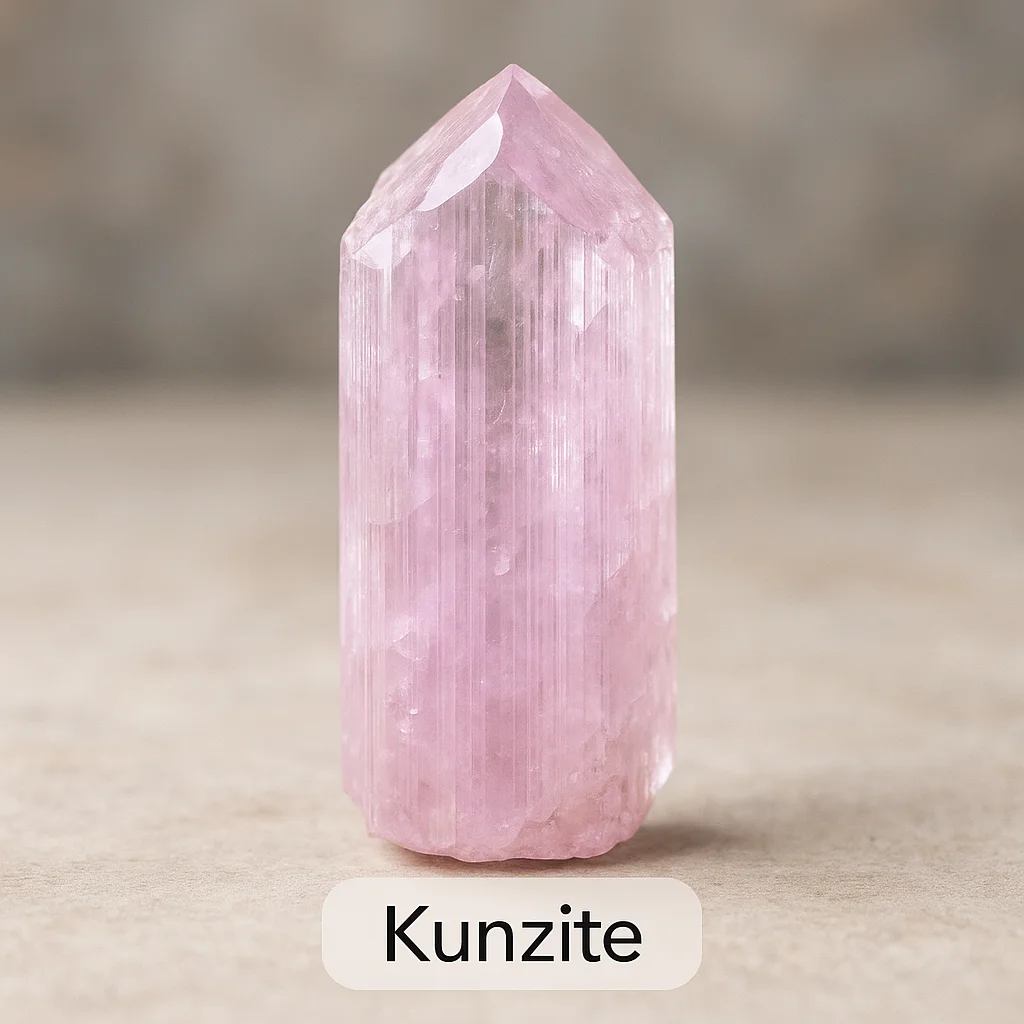
This gemstone is often considered an ideal choice for jewelry due to its captivating look and affordability compared to other pink gemstones like pink sapphire or tourmaline. While not designated as a traditional birthstone, Kunite is cherished by gemstone enthusiasts and collectors for its notable appeal and charm.
Throughout this article, we will explore Kunite's origin, the process of its formation, its color variations, properties, and practical considerations for purchasing and maintaining this beautiful stone.
🌍 Where It Comes From
Kunite is found primarily in igneous rock formations. These environments provide the necessary conditions for the development of spodumene crystals, where Kunite emerges as one of its prominent varieties. The presence of lithium in these geological settings plays a crucial role in the creation of spodumene, which then leads to the formation of Kunite.
Well-known sources of Kunite include regions in Afghanistan, Brazil, and the United States. Each of these regions can contribute to variations in the stone's color and clarity, driven by the specific geological conditions and trace elements present during its formation.
The location where Kunite is mined can impact its desirability and market value. Some sources may have a reputation for producing particularly vivid or clear specimens, making gems from those regions more sought after by collectors and jewelers.
🔬 How It Forms
The formation of Kunite involves several geological processes. It begins with the crystallization of spodumene in granite pegmatites, which are igneous rocks characterized by large crystal structures. Over time, the presence of lithium, along with exposure to specific temperatures and pressures, facilitates the transformation of spodumene into Kunite.
The distinct pink to violet color of Kunite is attributed to trace amounts of manganese. These elements can cause variations in the intensity of the color, with some stones exhibiting rich, deep hues and others appearing lighter and more delicate.
Kunite typically forms as elongated, prismatic crystals that can be quite sizable. This structure contributes to its popularity in jewelry, as larger stones offer attractive options for crafting into a variety of designs.
🎨 Color and Look
The hallmark of Kunite's appearance lies in its enchanting pink to violet coloration, with variations ranging from pale blushes to vibrant purples. This color spectrum can change depending on the amount and type of trace elements present in the gem.
Kite is prized for its pleochroic nature, meaning it can show different colors when viewed from various angles. This optical effect is caused by the way the crystal structure interacts with light, creating a captivating visual appeal.
To enhance or stabilize its color, Kunite is sometimes subjected to treatments such as heat or irradiation. These methods are common in the gemstone industry but should be carefully considered when purchasing to ensure transparency about any such enhancements.
🧪 Properties That Matter
Kunite has a Mohs hardness rating of 6.5 to 7, making it reasonably resistant to scratches but more susceptible than harder stones like sapphire or diamond. It has fair toughness, meaning it can be prone to cleaving if not handled with care.
The stone features perfect cleavage in two directions, which implies that it can split along flat planes if struck or dropped. Its luster is described as vitreous, offering a glass-like shine that enhances its appeal when properly polished.
Given these properties, Kunite is a suitable choice for pendants and earrings that face less wear and tear than rings. However, with mindful care, it can still be an engaging addition to various jewelry types.
✨ Meanings, Birthstones, and Culture
Traditionally, Kunite is associated with love and emotional balance. It is frequently used in jewelry designs that aim to evoke feelings of romance and intimacy.
Though not a traditional birthstone, some modern jewelers recommend Kunite for those born in February as an alternative to amethyst. Its pink to violet hues align closely with the month's association with love and relationships.
In various cultures, Kunite is viewed as a symbol of positive energy and resilience. Its gentle colors are believed to promote calm and tranquility, although such interpretations are not scientifically proven and should be appreciated as cultural folklore.
🧼 Care and Cleaning
Proper care for Kunite involves gently cleaning it with mild soap and lukewarm water. It's important to use a soft cloth to avoid scratching the surface and to dry it thoroughly after cleaning.
Avoid harsh chemicals and ultrasonic cleaners, as these can damage the stone or alter its appearance. Sudden temperature changes should also be avoided, as they can cause stress fractures.
To store Kunite safely, place it in a lined jewelry box or a soft pouch to prevent contact with harder materials that might cause scratches. If possible, keep each piece of jewelry separate from others.
🛒 Buying Tips and What to Check
When purchasing Kunite, the primary quality factors are its color, clarity, cut, and carat size. Stones with vivid colors and minimal inclusions are generally more valuable.
It is wise to inquire about any treatments the stone may have undergone and request a gemological report for high-value purchases. These reports provide data on aspects like authenticity and treatments but cannot always guarantee the origin.
Consider reputable vendors and ensure they offer clear images and a satisfactory return policy for online purchases. Reviews and seller reputation are also important factors in determining trustworthiness.
⚠️ Real vs Fake and Common Look-Alikes
Kunite is a natural gemstone, but synthetic versions are created in laboratories using the same chemical composition as their natural counterparts. These lab-grown stones are real but often more affordable.
Imitation Kunite might be made from glass or plastic, designed to mimic the appearance of the genuine stone. Assembled stones, like doublets and triplets, may also be presented as Kunite look-alikes.
Common confusion arises with pink topaz and morganite, which share similar colors. Professional testing by a gemologist is essential to distinguish these stones reliably.
❓ Common Questions and Misconceptions
Is it a mineral or a rock? Kunite is a mineral, specifically a variety of spodumene.
Is it a birthstone? While not a traditional birthstone, some modern jewelers suggest it for February.
Will it scratch easily? With a hardness of 6.5 to 7, it is moderately scratch-resistant but not immune to damage.
Can it go in water? Yes, but always dry it thoroughly after cleaning to avoid unnecessary stress.
Does color fade in sunlight? Prolonged exposure can potentially fade its color, so it should be stored away from direct sunlight.
What treatments are common? Heat and irradiation treatments are used to adjust or enhance its color.
Is lab-grown 'fake'? Lab-grown Kunite is real but manufactured, offering an ethical and cost-effective alternative.
How do I store it safely? Store it separately in a soft, lined jewelry box to avoid scratches.
Do inclusions always lower value? Not always, but fewer inclusions generally increase desirability.
How do I pick a good one for jewelry? Look for vibrant color, minimal inclusions, and a well-executed cut.
📌 Summary
- Kunite is a variety of the mineral spodumene.
- Typical colors range from pink to violet.
- Forms in igneous rock formations containing lithium.
- Hardness of 6.5–7, suitable for pendants and earrings.
- Color treatments like heat and irradiation are common.
- Clean with mild soap and avoid harsh chemicals.
- Best used in jewelry with low wear, like pendants and earrings.
- Look-alikes include morganite and pink topaz.
- Natural, synthetic, and imitation distinctions are crucial.
- Buy from reputable sources, verify with reports.
- Not a birthstone, but occasionally suggested for February.
- Memorable aura of love and positive energy, celebrated for its beauty.