💎 Malachite
🪨 What It Is
Malachite is a vibrant green copper carbonate mineral known for its striking patterns and forms. It is not a birthstone but is highly regarded as a popular gemstone used in various types of jewelry and decorative pieces. Its intense green color, ranging from light to dark, with banded patterns, makes it visually appealing and sought after by collectors and jewelers alike.
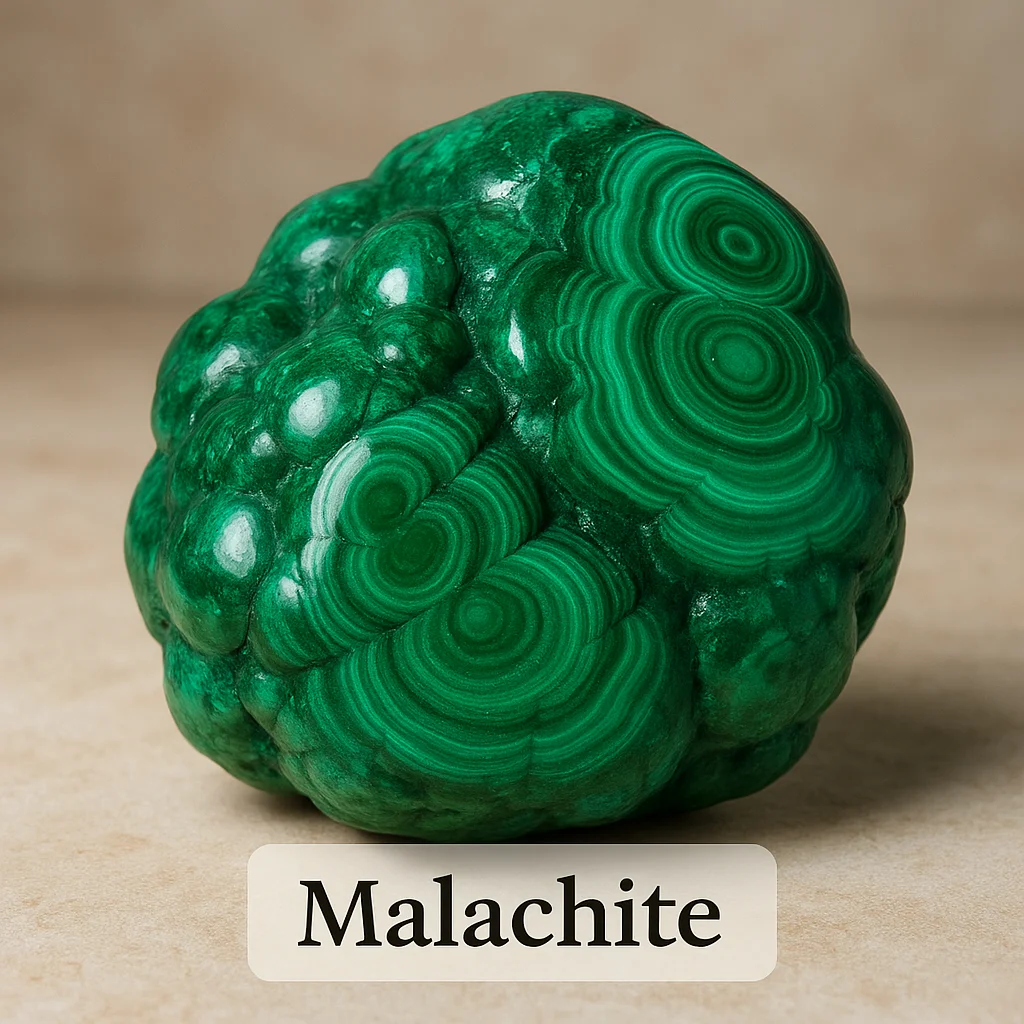
In this article, you'll learn about Malachite's appearance, properties, origin, and care. We will cover its geological formation, color characteristics, and practical tips for selecting and maintaining malachite jewelry. Whether you're a budding enthusiast or simply curious about this captivating stone, this guide will provide key insights into understanding Malachite.
Malachite is primarily used for ornamental purposes and is admired for its aesthetic qualities rather than its rarity or hardness. As a mineral with a rich history and cultural significance, Malachite holds a notable place in both ancient and modern contexts.
🌍 Where It Comes From
Malachite forms in the upper zones of copper deposits, often in association with other copper minerals. Its occurrence is typically in sedimentary and hydrothermal environments where copper ore has been exposed to the weathering elements. The stone forms as a result of chemical reactions between copper and carbon dioxide in the presence of water over time.
Malachite is found in different parts of the world, with notable deposits in Africa, particularly the Democratic Republic of Congo. Russia and parts of the Southwestern United States are also known for substantial Malachite mining. These regions are renowned for producing large and high-quality specimens.
The origin of Malachite can influence its value. Malachite from specific locales is often more prized, with stones from Russia and the Congo considered especially desirable due to their intense color and intricate natural patterns. Generally, collectors and jewelers favor stones that exhibit a rich, saturated color with well-defined bands.
🔬 How It Forms
Malachite forms in nature through the weathering of copper minerals in the Earth’s crust. It occurs when copper deposits react with carbon dioxide and water, leading to the creation of copper carbonate, which combines to form Malachite. This process involves time and specific environmental conditions conducive to mineral formation.
The stone typically develops in botryoidal (grape-like) lumps, fibrous aggregates, or stalactitic forms within the geologic spaces where copper minerals are found. These formations are often seen as crusts or clumps along the walls of caves or other openings in copper-rich deposits.
The color of Malachite is largely due to the presence of copper. Its iconic green pigmentation is a direct result of the copper content, with the variability in its hue depending on the concentration and exposure to environmental conditions during formation.
🎨 Color and Look
Malachite is known for its various shades of green, ranging from bright, light green to deep, dark green. Its most distinctive feature is the vivid banding and concentric circles that emerge due to variations in mineral concentration and growth conditions.
While Malachite naturally showcases a remarkable beauty when polished, its appearance can differ based on how it is cut and finished. Polishing enhances the stone's luster and intensifies its banded patterns, making it particularly attractive in cabochons and sculptural pieces.
Malachite occasionally undergoes stabilization treatments to improve its durability, as it is inherently a relatively soft stone compared to other gemstones. Some sellers may also apply wax to enhance its sheen. These treatments are generally considered acceptable but knowing about them is essential when buying.
🧪 Properties That Matter
Malachite has a Mohs hardness of 3.5 to 4, which means it is softer than many other gemstones and susceptible to scratches and abrasions. This makes it better suited for earrings, pendants, and other jewelry that doesn’t endure daily wear like rings do.
The stone exhibits good toughness but can fracture or chip if handled roughly. Its cleavage is not pronounced, which means it typically breaks in an irregular fashion. This property makes it a bit more durable for decorative purposes but still necessitates careful handling.
Malachite has a vitreous to silky luster, contributing to its visual appeal, especially when polished. Its transparency ranges from translucent to opaque, which is typical for stones with its pattern and coloration.
✨ Meanings, Birthstones, and Culture
Historically, Malachite has been associated with transformation and protection. Many cultures have traditionally linked the stone with safeguarding against negative energies and facilitating transformation in one's life journey. These associations remain part of its allure in modern society.
While Malachite is not an official birthstone, it is frequently featured in jewelry pieces that emphasize its unique aesthetic and traditional symbolism. It's especially popular among those who appreciate its visual impact and the historical narratives attached to it.
In various cultures, Malachite was believed to have protective qualities and has historically been fashioned into talismans and amulets. This showcases its longstanding cultural significance beyond its decorative use.
🧼 Care and Cleaning
Proper care is essential to preserving the beauty of Malachite. Due to its sensitivity to moisture and chemicals, cleaning should be done with a mild soap and water solution using a soft cloth. It's important to avoid harsh cleaning agents and prolonged exposure to water, as these can damage the stone.
Malachite should not be exposed to high heat or sudden temperature changes, which can cause fissures or structural damage. For storage, keep Malachite pieces away from harder gemstones that may scratch them, ideally in a jewelry box or pouch that offers gentle protection.
Special care should be taken to avoid impacts and harsh conditions, as Malachite can be porous and relatively soft. These precautions will ensure the stone maintains its luster and remains a cherished piece in any collection.
🛒 Buying Tips and What to Check
When purchasing Malachite, color and pattern are the primary factors affecting its value. Look for vivid green hues with distinct, intriguing banding. While inclusions can add to Malachite’s character, consistent patterns are often preferred for more formal jewelry settings.
Consider the stone's origin and any disclosed treatments when assessing value. High-quality specimens should have excellent polish and vivid colors. Requesting a gem identification report can provide reassurance about a stone's authenticity and any enhancements.
For online purchases, ensure the seller offers clear photos, a good return policy, and has a reputable standing in the gemstone community. Understanding these factors helps make informed decisions and guarantees satisfaction with your purchase.
⚠️ Real vs Fake and Common Look-Alikes
Malachite can be confused with synthetic imitations or assembled stones. Real Malachite exhibits unique banded patterns and a richness of color, while synthetic or imitation stones may have unnaturally uniform color and lack the natural texture of genuine Malachite.
Glass, plastic, and other composites are sometimes used to mimic Malachite. Doublets or triplets, which are layered stones, can also appear similar. These imitations can usually be identified by their uniformity and weight, as genuine Malachite is typically heavier.
It is recommended to have a professional gemologist assess stones if authenticity is in question. Reliable identification cannot be accurately performed by untrained individuals and requires proper testing equipment.
❓ Common Questions and Misconceptions
Is it a mineral or a rock? Malachite is a mineral, specifically a copper carbonate mineral.
Is it a birthstone? No, Malachite is not an official birthstone.
Will it scratch easily? Yes, due to its lower hardness on the Mohs scale, it can scratch easily.
Can it go in water? It is not recommended to soak Malachite in water for long periods.
Does color fade in sunlight? Prolonged exposure to sunlight can potentially fade Malachite’s color over time.
What treatments are common? Stabilization and waxing are common treatments for enhancing Malachite's durability and luster.
Is lab-grown 'fake'? Lab-grown Malachite would be considered synthetic but not necessarily fake. Its authenticity depends on disclosure and use.
How do I store it safely? Store Malachite separately in soft pouches or jewelry boxes to avoid scratches.
Do inclusions always lower value? Not always; some inclusions can add character unless they significantly impact the stone's stability or appearance.
How do I pick a good one for jewelry? Focus on vibrant color, distinct patterns, and quality polishing when selecting Malachite for jewelry.
📌 Summary
- Malachite is a copper carbonate mineral with striking green banding.
- Typically exhibits shades of green with concentric banding patterns.
- Forms through chemical processes involving copper, water, and carbon dioxide.
- Soft relative to other gemstones, with moderate toughness and vitreous luster.
- Common treatments include stabilization to enhance durability.
- Care involves gentle cleaning, avoiding heat and harsh chemicals.
- Best suited for earrings, pendants, and non-daily wear jewelry.
- Look-alikes include glass, plastic, and synthetic composites.
- Authenticity can be confirmed through professional testing and reports.
- Buying tips emphasize color, pattern, origin, and seller reputation.
- Traditionally associated with transformation and protection in various cultures.
- Malachite’s memorable appeal lies in its unique patterns and vivid color variations.