💎 Morganite
🪨 What It Is
Morganite is a gemstone known for its captivating peach-pink color, a variety of the mineral beryl. Beryl is the same mineral family that includes emerald and aquamarine. Morganite has gained popularity for its delicate hues and is often featured in modern jewelry designs.
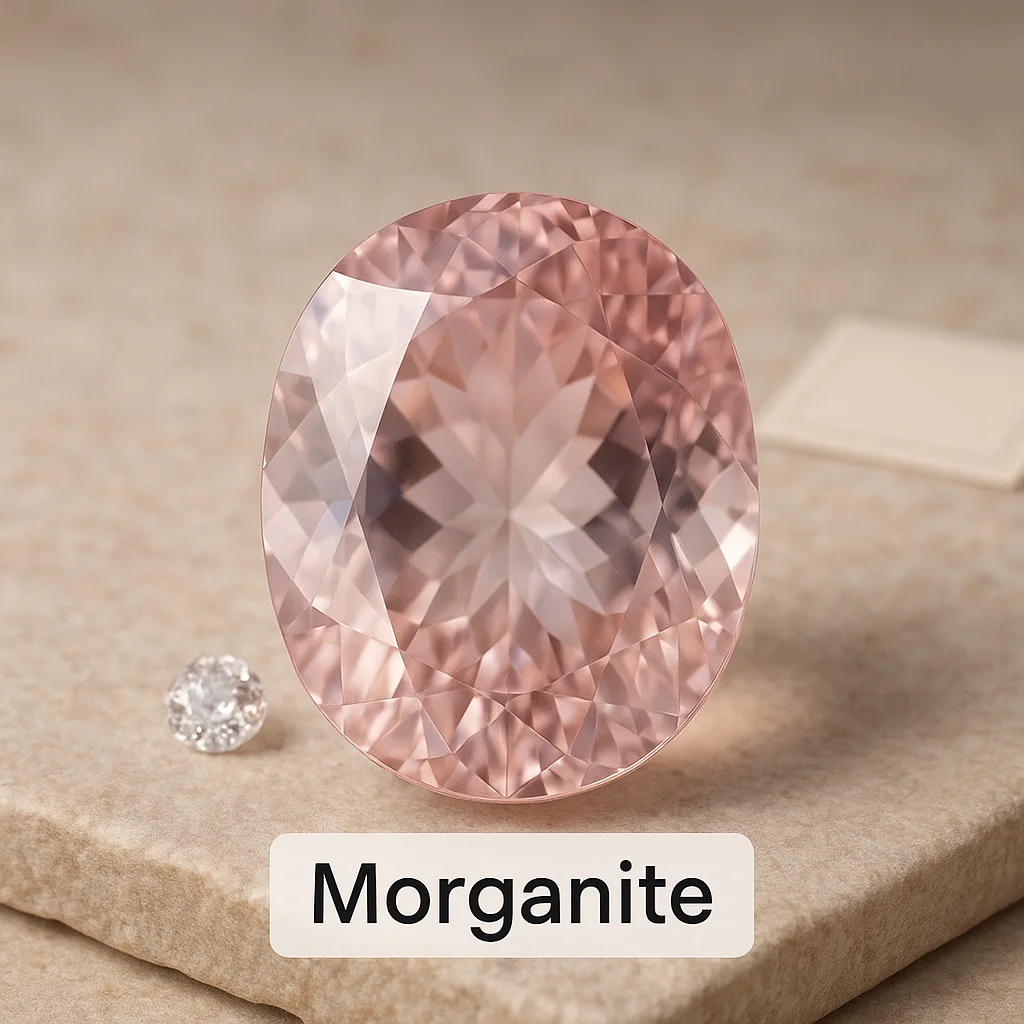
This gemstone is not traditionally recognized as a birthstone, but its popularity has risen due to its romantic color and suitability for various jewelry pieces. Within this article, we will explore its appearance, properties, origins, valuations, care, and tips for purchasing.
As we delve into morganite's world, you'll gain an understanding of its geological origins, how it forms, what gives it its distinct color, and what to look for when buying and caring for this charming gemstone.
🌍 Where It Comes From
Morganite forms under specific geological conditions and is typically found in pegmatite deposits. Pegmatites are igneous rocks formed from the crystallization of magma and are known for containing large crystals. These environments are conducive to the growth of gem-quality beryl crystals, like morganite.
Notable sources of morganite include parts of Africa, Brazil, and the United States, specifically California and Maine. The color and quality can vary based on the origin, although any claims that a specific region's morganite is categorically superior should be approached with caution.
The origin matters primarily to collectors and in terms of market perception, but often the beauty, color, and clarity may override origin considerations when purchasing morganite.
🔬 How It Forms
Morganite forms when beryl crystals incorporate traces of manganese during their growth in pegmatites. The presence of manganese gives morganite its characteristic pink to orange-pink color. These environments provide the necessary elements and space for morganite to develop its beautiful crystal structure.
When forming, these crystals may grow slowly over millions of years, allowing them time to develop good clarity and size. The crystals often appear in hexagonal formations, which is characteristic of the beryl family.
This slow formation process in specifically conducive environments is what results in morganite's stunning appearance and quality.
🎨 Color and Look
Morganite is cherished for its soft, pastel color spectrum, mainly ranging from pink to peach. The exact color is influenced by the amount of manganese present, and the stone's exposure to natural radiation over time can deepen its color.
The appearance of morganite can be enhanced by cutting and polishing, which brings out its brilliance and transparency. Common cuts that highlight morganite's beauty include oval, cushion, and pear shapes.
It's worth noting that morganite may undergo heat treatment to improve or stabilize its color. This is a common practice in the gem industry and generally considered a standard enhancement for gemstones.
🧪 Properties That Matter
With a Mohs hardness of 7.5 to 8, morganite is relatively resistant to scratches, making it suitable for regular wear in jewelry like rings and pendants. However, it should still be handled with care, as its toughness is moderate, meaning it can chip or fracture if struck.
Morganite has a vitreous luster, giving it a glass-like sheen that enhances its appearance. It possesses good transparency, though inclusions can sometimes be present. These are internal features that develop as the crystal forms and do not always detract from the stone's beauty or value.
Understanding these properties helps in selecting the right setting and care for morganite jewelry to ensure its longevity and maintain its appeal.
✨ Meanings, Birthstones, and Culture
While morganite is not an official birthstone, it is popularly associated with love, compassion, and emotional healing in modern culture. Its gentle color has made it a favorite in engagement rings and romantic gifts.
Traditionally, some cultures believe that morganite brings a sense of peace and strength, enhancing one's capacity to deal with stressful situations. However, these meanings are based on cultural traditions rather than scientific evidence.
In modern jewelry, morganite is admired for its beauty and elegance, not unlike the more traditional gemstones, and it occupies a prominent place in contemporary designs.
🧼 Care and Cleaning
To keep your morganite jewelry looking its best, clean it with a mild soap and warm water, using a soft cloth to gently remove dirt and oils. Avoid harsh chemicals and ultrasonic cleaners, as these can damage the stone.
When using or cleaning morganite jewelry, avoid exposing it to rapid temperature changes, as these can cause stress in the stone. Prolonged exposure to water, especially in settings that trap moisture, should also be avoided.
Store morganite jewelry in a soft pouch or a lined jewelry box separate from other pieces to prevent scratches and maintain its luster.
🛒 Buying Tips and What to Check
When buying morganite, consider the 4Cs: color, clarity, cut, and carat weight. The most desirable color is a pure pink without brownish undertones, and stones that are well-cut will display brilliance.
Always inquire about treatments and request a gemological report if purchasing a high-value piece. These reports verify the authenticity and any enhancements applied, providing peace of mind regarding your investment.
For online purchases, check the seller's reputation and ensure they offer clear images, a substantial return policy, and full disclosure of any treatments.
⚠️ Real vs Fake and Common Look-Alikes
Morganite can be confused with synthetic or imitation stones, which include colored glass or quartz dyed to mimic its appearance. Synthetic morganite is laboratory-grown but has the same chemical composition as natural morganite.
Imitations, however, do not share the same properties. Doublets and triplets are assembled stones designed to look like morganite but will not have the same longevity or appeal.
To confirm authenticity, professional gemological testing is crucial. Avoid home tests that can risk damaging the stone or provide unreliable results.
❓ Common Questions and Misconceptions
Is it a mineral or a rock? Morganite is a mineral and a variety of beryl.
Is it a birthstone? Morganite is not traditionally a birthstone.
Will it scratch easily? With proper care, it resists scratches due to its Mohs hardness of 7.5-8.
Can it go in water? Brief contact is fine, but prolonged exposure should be avoided.
Does color fade in sunlight? Prolonged UV exposure may affect the color, so avoid direct sunlight for extended periods.
What treatments are common? Heat treatment is common to enhance or stabilize color in morganite.
Is lab-grown "fake"? Lab-grown morganite is not fake but synthetic, sharing natural morganite's properties.
How do I store it safely? In a soft, lined box away from other jewelry to prevent scratches.
Do inclusions always lower value? Not always; depends on visibility and effect on durability.
How do I pick a good one for jewelry? Look for vibrant color, clarity, and a well-executed cut.
📌 Summary
- Morganite is a pink variety of the mineral beryl.
- Typical colors include pink and peach.
- Forms in pegmatite deposits from manganese traces.
- Mohs hardness of 7.5–8 makes it suitable for regular wear.
- Commonly heat-treated to enhance color.
- Clean with mild soap and water; store to prevent scratches.
- Best for pendants, rings, and earrings.
- Common look-alikes include synthetic and dyed quartz.
- Authenticity is confirmed via gemological reports.
- Buying checklist: color, clarity, cut, treatments.
- Not a traditional birthstone but culturally linked to love and peace.
- Morganite's unique color and origin make it memorable for collectors and enthusiasts.