💎 Quartz Rose
🪨 What It Is
Quartz Rose, commonly known as rose quartz, is a popular variety of quartz distinguished by its soft pink hue. As a mineral, rose quartz is composed of silicon dioxide. Quartz is one of the most abundant minerals on Earth, making it a staple in the world of gemstones.
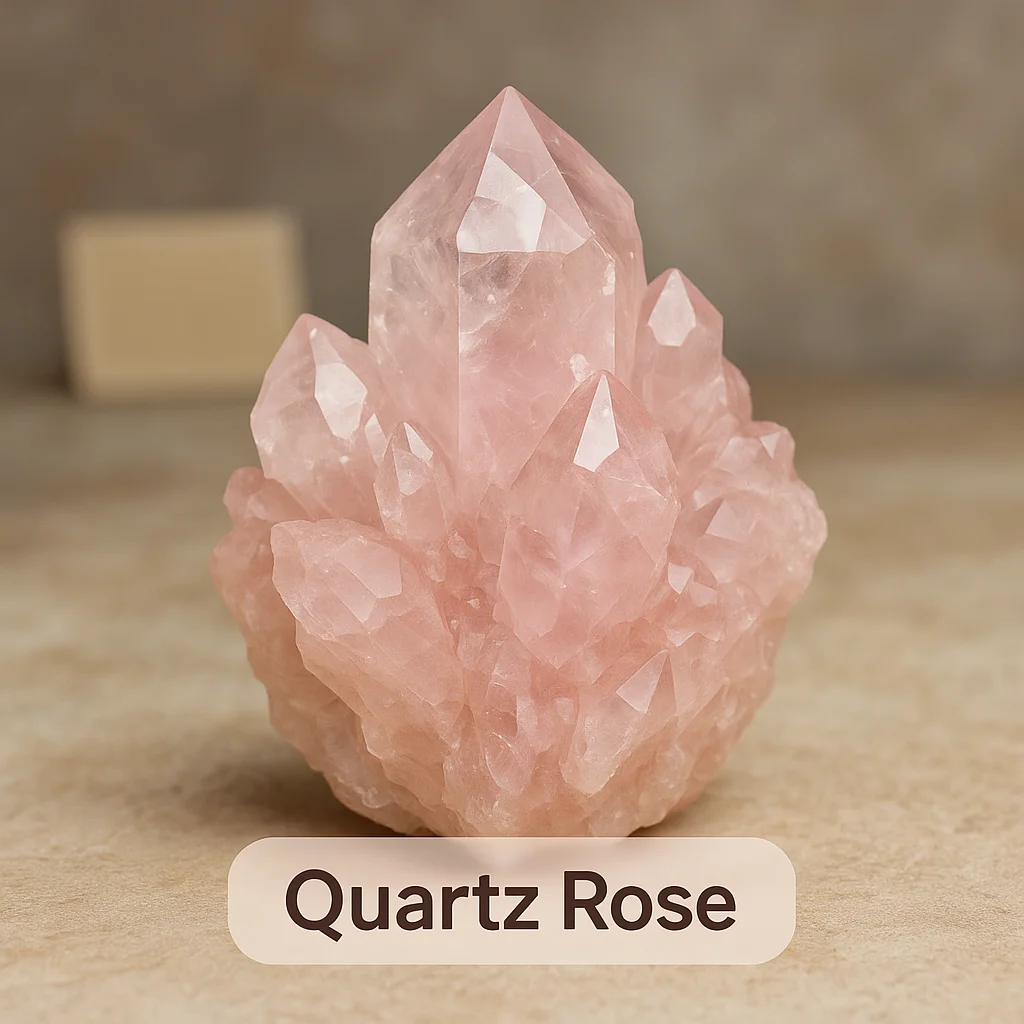
Often appearing in jewelry, rose quartz is admired for its color and affordability. While not a traditional birthstone, it is frequently used in modern jewelry, making it a favorite for many gem enthusiasts.
In this article, you will learn about the origins, appearance, properties, care, and how to purchase rose quartz wisely. Whether you are a budding collector or someone looking to buy your first piece of gemstone jewelry, understanding these basics will help you appreciate this beautiful stone.
🌍 Where It Comes From
Rose quartz is typically found in massive formations rather than well-formed crystals. It occurs mainly in pegmatites, which are coarse-grained igneous rocks formed during the final stages of magma crystallization.
Significant deposits of rose quartz can be found in several locations worldwide, including Brazil, Madagascar, and South Dakota in the United States. The region where rose quartz is mined can sometimes influence the stone's color and clarity, which in turn can affect its market value.
The significance of origin often lies in the reputation of the locality. For example, some regions may be noted for producing rose quartz with deeper colors or fewer inclusions, which can be more desirable to collectors and jewelers.
🔬 How It Forms
Rose quartz forms under specific conditions, primarily involving heat and pressure over long periods. It is believed that trace elements, such as titanium or manganese, contribute to its distinct pink color. The exact cause of its pink coloration is still a subject of study and often debated among gemologists.
In addition to trace elements, microscopic inclusions of fibrous material may also influence its pink hue. These inclusions can give rose quartz a slightly cloudy appearance, which differentiates it from other quartz varieties like amethyst or clear quartz.
Rose quartz is most commonly found as large masses, rather than as distinct, individual crystals. Its typical form is a massive, opaque stone that is translucent and features a lovely, milky appearance.
🎨 Color and Look
The defining characteristic of rose quartz is its beautiful pink color, which can range from pale pink to a rose red. Typically, its color is consistent throughout the stone, but some specimens may show zones of varying intensity.
The appearance of rose quartz can be enhanced by cutting and polishing, which can influence its transparency and luster. The stone generally has a greasy to vitreous luster, which can make it particularly attractive when used in jewelry.
Common treatments for rose quartz are rare, but occasionally, the stone may be irradiated to deepen its color. Caution is advised with claims of heat treatments, as these are not typical for enhancing rose quartz.
🧪 Properties That Matter
On the Mohs scale of hardness, rose quartz ranks at a 7, making it relatively durable and suitable for a variety of jewelry items. Hardness refers to scratch resistance, ensuring it can withstand daily wear without easily scratching.
While rose quartz does not have cleavage, meaning it does not break along flat planes, it can fracture irregularly. This type of breakage is known as a conchoidal fracture, which can affect how the stone is shaped or cut.
The stone's toughness or resistance to chipping varies, so it is often best used for jewelry that doesn't encounter hard impacts, such as pendants or earrings, rather than rings which sustain more wear.
✨ Meanings, Birthstones, and Culture
Cultural associations of rose quartz are rich and varied, often symbolizing love and harmony. Many traditions regard rose quartz as a stone of gentle emotional healing and romance, although there is no scientific evidence to support these claims.
While not a traditional birthstone, rose quartz's beauty and purported properties have made it popular in contemporary jewelry and gift-giving, often chosen for its aesthetic appeal and symbolic love connections.
The stone's reputation as a symbol of love and peace endures in modern times, making it a thoughtful gift for loved ones or special occasions.
🧼 Care and Cleaning
Caring for rose quartz involves simple measures to maintain its natural beauty. The best cleaning method is using gentle soap and warm water, with a soft cloth to dry and polish the stone afterward.
It is advisable to avoid harsh cleaning agents or ultrasonic cleaners, which could damage the stone’s surface or internal structure. Sudden temperature changes should also be avoided to prevent any risk of fracturing.
When storing rose quartz, ensure it is kept separate from harder gemstones that can scratch its surface. A soft pouch or cloth-lined box is ideal for storage.
🛒 Buying Tips and What to Check
When purchasing rose quartz, consider the color, clarity, and cut as primary factors influencing quality and price. A uniform pink color without visible inclusions is generally more valuable.
Inquire whether the stone has undergone any treatments, such as irradiation, to enhance its color. For high-value pieces, request a gemological report for authenticity verification.
When buying online, ensure you review the seller’s reputation, the availability of detailed photos showing the stone from multiple angles, and a clear return policy to ensure you are satisfied with your purchase.
⚠️ Real vs Fake and Common Look-Alikes
Natural rose quartz should not be confused with synthetic or imitation products. Synthetic quartz is laboratory-grown but shares the same chemical composition as natural quartz.
Imitations might include glass or plastic items dyed to mimic natural rose quartz. It is important to confirm the stone’s authenticity through a gemologist's inspection, as this will involve advanced tests that are not recommendable at home.
Avoid purchasing doublet or triplet stones without understanding that they are assembled to look like a singular mineral, often using multiple layers of different materials.
❓ Common Questions and Misconceptions
Is it a mineral or a rock? Rose quartz is a mineral, specifically a variety of quartz.
Is it a birthstone? No, rose quartz is not a traditional birthstone but is popular in jewelry for its romantic symbolism.
Will it scratch easily? With a hardness of 7, it is relatively resistant to scratches from softer materials but can be scratched by harder stones.
Can it go in water? Yes, but prolonged exposure to water can dull its polish over time.
Does color fade in sunlight? Prolonged exposure to direct sunlight may cause slight fading of the color.
What treatments are common? Rose quartz may occasionally undergo irradiation to deepen its pink color.
Is lab-grown "fake"? Lab-grown quartz is not fake; it shares the same properties as natural quartz but is man-made.
How do I store it safely? Store in a soft pouch away from harder gemstones to avoid scratches.
Do inclusions always lower value? Not always, but significant inclusions can affect clarity and value.
How do I pick a good one for jewelry? Look for uniform color, good polish, and minimal inclusions for most desirable pieces.
📌 Summary
- Rose quartz is a mineral variety of quartz, known for its pink color.
- Typical colors range from pale pink to rose red, usually translucent.
- Forms under heat and pressure with trace elements influencing color.
- With a hardness of 7, suitable for various jewelry pieces.
- May be irradiated for color intensity; inquire about treatments.
- Clean with gentle soap and water; avoid harsh conditions.
- Best for necklaces and earrings; avoid heavy-duty rings.
- Common look-alikes include dyed glass and plastic imitations.
- Authenticity confirmed via professional gemological testing.
- Buying checks: uniform color, minimal inclusions, seller reputation.
- Not a traditional birthstone but significant in cultural symbolism of love.
- Memorable takeaway: Rose quartz is a symbol of beauty and love, enhancing both jewelry and sentiments.