💎 Spinel
🪨 What It Is
Spinel is a captivating mineral often cherished for its bright and varied colors. It is a gemstone that has been used throughout history in jewelry, sometimes even mistaken for more well-known stones like ruby and sapphire. Spinel is a single refractive gemstone with a cubic crystal system, making it relatively unique among colored stones.
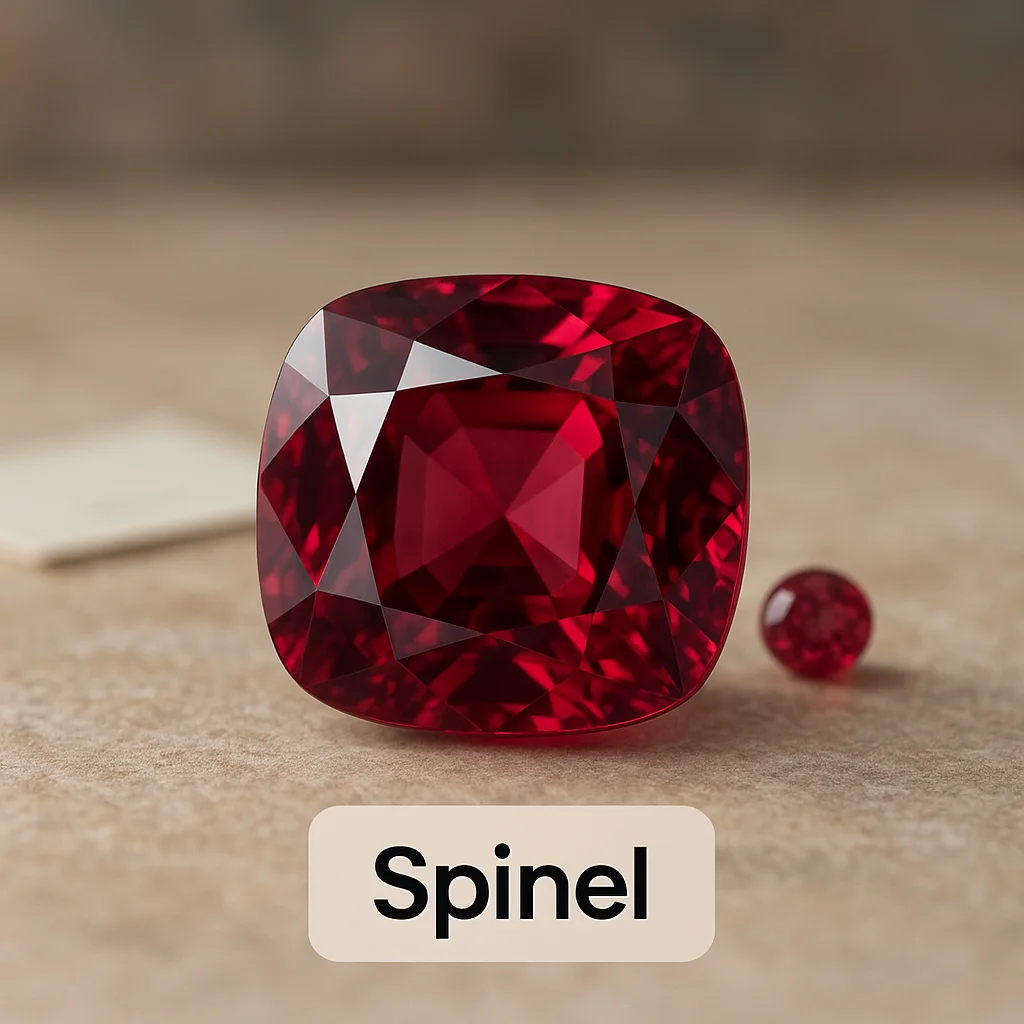
Spinel is also considered a modern birthstone for August, alongside peridot. Its radiant hues and appealing durability make it a favorite choice for jewelers and collectors alike. In this article, you will learn about its appearance, physical properties, origins, formation, and more.
This gemstone presents in a range of colors, from vivid reds and pinks to stunning blues and purples. Its beauty, coupled with a respectable hardness, makes it suitable for various types of jewelry. You will also discover how to care for and select spinel to make an informed purchasing decision.
🌍 Where It Comes From
Spinel forms in various geological environments, often in metamorphic rocks such as marble, which forms under intense heat and pressure within the Earth. These conditions foster the growth of distinctly shaped spinel crystals, known for their sharp-faced octahedral forms.
A significant amount of spinel is sourced from regions rich in marbles, such as parts of Africa and Asia. Spinel deposits are often found in Myanmar (Burma), Sri Lanka, Tanzania, and Vietnam, each location contributing to unique color variations and qualities.
For instance, spinel from Myanmar is renowned for its vibrant red hue, often called "Burmese ruby spinel." The locale from which a spinel originates can influence its coloration and market value, though location alone cannot determine quality. Therefore, origin is an aspect, among many, that buyers consider when procuring this gemstone.
🔬 How It Forms
Spinel forms under significant heat and pressure, typically in metamorphic settings such as marble. These conditions contribute to its dense structure and vibrant optical properties. Spinel crystals begin forming when certain aluminum and magnesium-rich minerals undergo transformation.
Color in spinel, as with many gemstones, arises from trace elements incorporated into its structure. For example, chromium imbues red spinel with its vivid hue, while the presence of cobalt deepens blue tones. This trace element composition directly affects the color and can impact the gemstone's overall value.
Commonly, spinel crystals present themselves in a sharp, octahedral shape, although they can also appear in other crystal habits, such as flattened and twinned formations. These crystal characteristics are a direct result of their geological formation process.
🎨 Color and Look
Spinel is adored for its broad palette of colors, which include red, pink, blue, violet, and orange, with some stones displaying gray or even black shades. The gemstone's color intensity and saturation can vary based on its geological origin and the trace elements present during its formation.
The cut of a spinel is integral to showcasing its full beauty. A well-cut spinel can display exceptional brilliance and luster, enhancing its appearance under various lighting conditions. Some spinels may undergo heat treatment to improve color consistency, though untreated stones are often more valued by collectors.
Spinel's transparency and luster, which can range from vitreous (glass-like) to sub-adamantine (slightly more reflective than glass), further enhances its appeal. These optical properties combined with spinel's inherent clarity give it a striking visual appeal in jewelry.
🧪 Properties That Matter
Spinel has a Mohs hardness of 7.5 to 8, indicating good resistance to scratching, making it suitable for daily wear in rings and other jewelry. Its durability is an asset, as it is less likely to wear down over time compared to softer stones.
Toughness, or the stone's ability to resist chipping and breaking, is another property to consider. Spinel generally has good toughness, making it less prone to breakage during normal wear or when subjected to slight impacts or pressure.
Spinel lacks cleavage, meaning it does not easily split along specific planes. This property reduces the risk of unintentional fracture. Its quality luster and transparency contribute to a vibrant appearance, enhancing its desirability in jewelry pieces.
✨ Meanings, Birthstones, and Culture
Traditionally, spinel has been associated with values such as protection and encouragement, though such meanings are based on cultural lore rather than scientific evidence. Its inclusion as an August birthstone alongside peridot is a modern recognition, intended to offer those born in August a variety of choices.
Throughout history, spinel was often mistaken for ruby and even adorned crowns and regalia, celebrated for its beauty and evocative colors. Today, it is appreciated in its own right and featured in diverse styles of modern jewelry, including contemporary and vintage designs.
The cultural symbolism of spinel may vary widely across different regions and customs, but its beauty and durability consistently earn it a cherished place in various jewelry collections.
🧼 Care and Cleaning
Caring for spinel requires simple, gentle methods. Generally, cleaning the gemstone with mild soap and warm water, followed by a soft cloth to dry, is adequate to maintain its luster. Avoid using harsh chemicals that may damage the stone.
While spinel can withstand exposure to moderate temperatures, sudden temperature changes should be avoided to prevent thermal shock. Long periods of soaking in water are also discouraged, even though spinel is not particularly porous.
Store spinel jewelry separately in a padded box or pouch to prevent scratching from harder materials. This precaution will help preserve the gem’s surface, ensuring that its brilliance remains undiminished over time.
🛒 Buying Tips and What to Check
When buying spinel, consider key factors like color, clarity, cut, and size. Vibrant and consistent colors can significantly affect price, with red and cobalt blue hues often commanding higher values. Inclusions, while natural, should be minimal to enhance clarity.
Always inquire about potential treatments the stone may have undergone, such as heating, and seek stone reports or certificates from reputable gemological institutes for high-value purchases. These reports can offer insights into authenticity and possible treatments.
When buying online, check for clear, realistic photos, a reliable return policy, and verified seller reputation. Request explicit gemstone disclosures on treatments and origins to ensure transparency and avoid potential disappointments.
⚠️ Real vs Fake and Common Look-Alikes
Natural spinels are distinct from synthetic or lab-grown spinels, though the latter share the same chemical composition and properties. Lab-grown spinels are not "fake" but are created through human technology rather than natural processes.
Imitation stones, such as colored glass, are designed to mimic spinel but lack the hardness and brilliance of the genuine mineral. Additionally, doublets and triplets might combine spinel with other materials to enhance appearance.
Common look-alikes include rubies and sapphires, which share similar colors but differ in refractive index and crystal structure. Professional testing through a gemological lab remains the most reliable method for confirming spinel authenticity.
❓ Common Questions and Misconceptions
Is spinel a mineral or a rock? - Spinel is a mineral, not a rock. Its mineral classification is due to its distinct crystalline structure.
Is it a birthstone? - Yes, spinel is recognized as one of the birthstones for August.
Will it scratch easily? - With a Mohs hardness of 7.5 to 8, spinel is relatively scratch-resistant and durable enough for regular wear.
Can it go in water? - Spinel can tolerate brief exposure to water, but prolonged soaking is not advised.
Does color fade in sunlight? - Spinel generally retains its color well, even with prolonged exposure to sunlight.
What treatments are common? - Some spinels may be heat treated to enhance color; however, untreated stones are often preferred.
Is lab-grown "fake"? - Lab-grown spinels are not "fake"; they share the natural version's properties, having been synthetically created.
How do I store it safely? - Store spinel in a soft pouch or separate compartment to prevent scratching and maintain its finish.
Do inclusions always lower value? - While minimal inclusions are expected and do not necessarily reduce value, stones with high clarity are often more prized.
How do I pick a good one for jewelry? - Consider color vibrancy, clarity, size, and the quality of the cut to select a fine spinel for jewelry.
📌 Summary
- Spinel is a colorful mineral used in jewelry.
- Appears in reds, pinks, blues, and purples.
- Forms in metamorphic rocks like marble.
- Mohs hardness of 7.5–8, durable for everyday wear.
- May be heat treated to enhance color.
- Care with gentle cleansers and soft storage recommended.
- Suitable for rings, pendants, earrings, and more.
- Look-alikes include rubies and sapphires.
- Authentication through professional lab testing.
- Check color, clarity, cut, and size when buying.
- August birthstone, significant cultural value.
- Remember its resilience and diverse hues.