💎 Tanzanite
🪨 What It Is
Tanzanite is a beautiful and rare gemstone, known for its stunning blue-violet hues. It is a variety of the mineral zoisite and is highly prized in the jewelry industry. Often used in rings, pendants, and earrings, tanzanite offers a unique color that sets it apart from other precious stones.
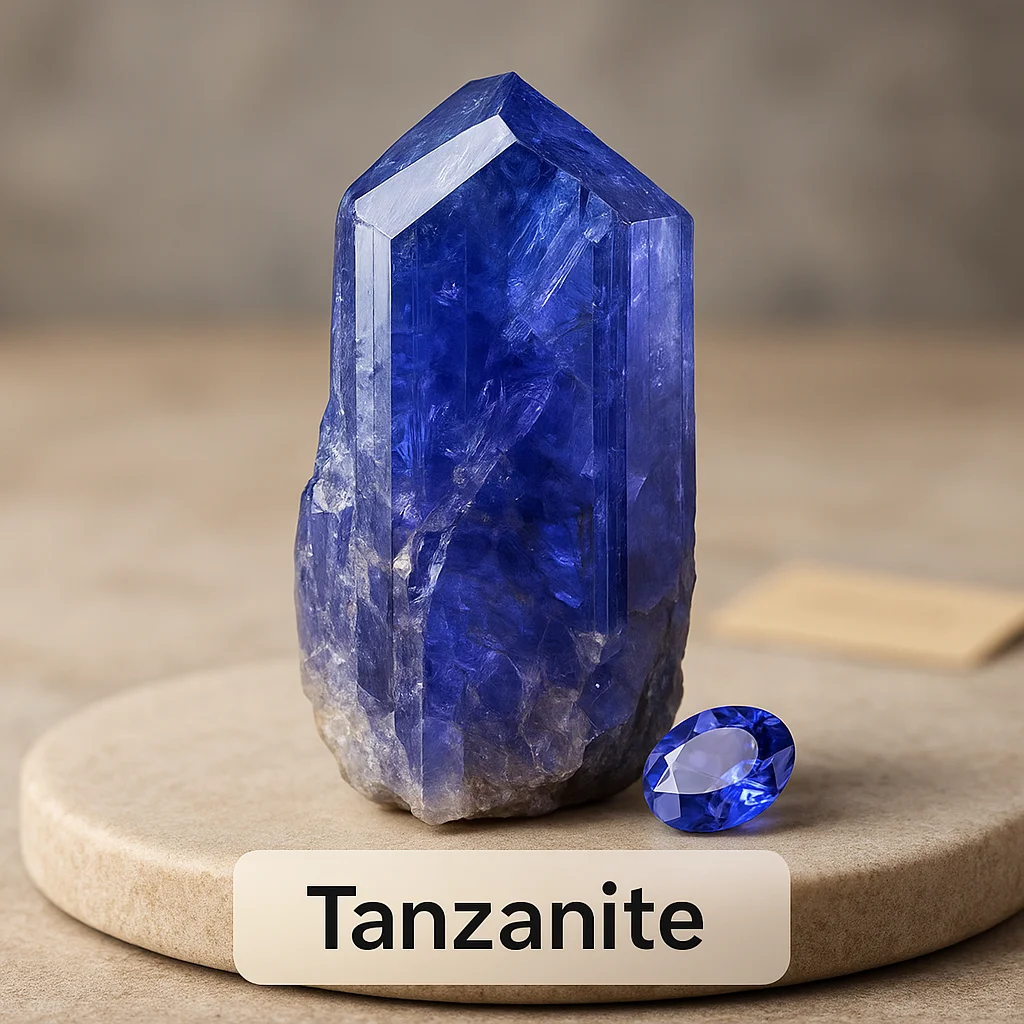
This gemstone is also known as a December birthstone alongside turquoise and zircon, making it a popular gift option for those born in that month. As you explore this article, you will learn about its striking appearance, essential properties, origins, and how to care for tanzanite jewelry.
Gemologists are particularly fascinated by tanzanite's vibrant tones, which can shift between blue and violet depending on the angle of the light or the way it is cut. This shimmering quality adds to its allure and has captivated collectors since its discovery in the mid-20th century.
🌍 Where It Comes From
Tanzanite is geologically unique because it is only found in a small area near the Merelani Hills at the base of Mount Kilimanjaro in Tanzania, East Africa. This limited geographic availability contributes to its rarity and exclusivity in the gem market. The region's specific conditions have fostered the stone's unique formation over millions of years.
The geological setting for tanzanite is primarily metamorphic, meaning the mineral crystals form through a process of high pressure and temperature changes in the Earth's crust. The distinct blue-violet color of tanzanite is attributed to the presence of vanadium, a trace element intermixed within the zoisite mineral structure.
Tanzanite's Tanzanian roots not only lend the gemstone its name but also contribute to its high market demand and value, as the limited mining area is considered precious and irreplaceable. Many gem enthusiasts consider owning a piece of tanzanite jewelry a special symbol of this geographical rarity.
🔬 How It Forms
The formation of tanzanite is a fascinating process taking place over millions of years. It begins with the presence of the mineral zoisite, which transforms under intense heat and pressure found in the Earth's metamorphic rock layers. This geological environment leads to the inclusion of trace elements like vanadium, which give tanzanite its signature color.
During the metamorphic process, zoisite crystals are subjected to various tectonic forces and chemical exchanges that contribute to the final crystalline form observed in tanzanite. Typically, tanzanite forms as orthorhombic crystals, which mean they generally grow elongated along one axis, often producing remarkable clarity and brilliance when cut properly.
The transformation of raw, colorless zoisite into deeply colored tanzanite is a natural wonder, showcasing the Earth's vast underground processes. This natural workshop generates the unique coloration and clarity that gemologists and jewelers covet.
🎨 Color and Look
Tanzanite is renowned for its exotic blue-violet color, which varies depending on the viewing angle. This phenomenon, known as pleochroism, means that different hues may be noticed when the gemstone is rotated under light. In some cases, you might observe shades of blue, violet, or even burgundy.
To enhance tanzanite's vibrant appearance, most stones undergo a heat treatment process to elevate and stabilize their natural hues, a common practice in the gemstone industry. This treatment is considered safe and permanent, ensuring the stone maintains its stunning color over time.
When cut and polished, tanzanite exhibits a captivating luster that can range from glassy to sub-vitreous, depending on the finishing work done by skilled gemstone cutters. This expertly refined polish plays a crucial role in showcasing the depth of tanzanite's inherent beauty.
🧪 Properties That Matter
The practical properties of tanzanite make it a desirable option for jewelry, albeit with some caution. Its Mohs hardness rating of around 6 to 7 means that while it is relatively resistant to scratching, it is not as durable as harder gemstones like sapphire or diamond.
Tanzanite is more prone to chipping, particularly due to its cleavage tendencies, where it may split along certain natural planes within the crystal structure. Hence, it is essential to handle tanzanite jewelry with care, especially when selecting it for rings or bracelets that may be subject to knocks.
In terms of transparency, tanzanite is typically transparent to translucent, offering a bright and clear appearance that enhances its visual appeal. The gemstone's luster adds to its attractiveness, making it popular for creating eye-catching pieces.
✨ Meanings, Birthstones, and Culture
In the realm of culture and tradition, tanzanite is often celebrated for its symbolic meanings and as a birthstone. It is one of the modern birthstones for December, along with turquoise and zircon, marking it as a special gift for those born in that month.
Tanzanite is traditionally associated with transformation and new beginnings, reflecting its own geological transformation from zoisite to its vibrant final form. In folklore, it is often affiliated with calming and soothing effects, enabling clarity in communication and thought.
Despite these associations, it is important to cherish tanzanite for its authentic beauty and gemological significance rather than interpret its symbolic meanings as scientifically validated effects.
🧼 Care and Cleaning
Proper care and cleaning of tanzanite are vital to preserving its beauty. Cleaning can be done using warm, soapy water and a soft cloth or brush, ensuring you avoid harsh chemicals or ultrasonic cleaners that may damage or alter the stone.
Tanzanite should be kept away from sudden temperature changes and environment extremes, as thermal shock may cause fractures. It is advisable to avoid prolonged soaking and direct sunlight exposure to minimize any potential adverse effects.
When storing tanzanite, place it separately from other jewelry pieces to prevent scratches, ideally in a soft-lined jewelry box or bag. These storage measures will help maintain the gemstone's appearance for years to come.
🛒 Buying Tips and What to Check
When buying tanzanite, several factors influence its price and apparent quality, such as color intensity, clarity, cut, carat weight, and overall craftsmanship. Rich, deeply saturated hues typically demand a premium, with clear, well-cut stones fetching the highest prices.
Between authenticity concerns, it is recommended to inquire about any treatments the stone may have undergone and to request a gemological report for high-value purchases. Such reports provide insights into the gemstone's characteristics but should be verified through reputable sources.
For online buyers, a checklist is essential: examine high-quality photographs, ensure a solid return policy is in place, assess the seller's reputation, and verify full disclosure of any enhancements or treatments the stone may have received.
⚠️ Real vs Fake and Common Look-Alikes
Understanding the differences between natural, synthetic (lab-grown), and imitation tanzanite is crucial for making informed purchases. While natural tanzanite boasts authenticity and rarity, synthetic stones are created in laboratories but share similar chemical compositions. Imitations like glass or plastic, however, do not have equivalent properties.
Assembled stones such as doublets or triplets may attempt to mimic tanzanite's appearance but lack its singular geological background. Common look-alikes include sapphires or iolites; distinguishing among them requires professional tools and expertise.
Avoid home testing methods as these can damage the gemstone; instead, seek out certified gemologists and authorized testing centers for reliable identification.
❓ Common Questions and Misconceptions
Is it a mineral or a rock? Tanzanite is a variety of the mineral zoisite, not a rock.
Is it a birthstone? Yes, tanzanite is a modern birthstone for December.
Will it scratch easily? Its Mohs hardness of 6 to 7 makes it moderately resilient, but it can scratch more easily than harder stones like diamonds.
Can it go in water? Brief exposure should be fine, but prolonged soaking should be avoided to prevent damage.
Does color fade in sunlight? Prolonged exposure to direct sunlight can potentially fade its color, so avoid excessive sun exposure.
What treatments are common? Heat treatment is common for enhancing its color.
Is lab-grown 'fake'? Lab-grown stones have the same properties as natural ones but are not "fake"; they are an alternative.
How do I store it safely? Store it separately in a soft-lined box to prevent scratches and keep it out of extreme conditions.
Do inclusions always lower value? Not always, but significant inclusions may affect clarity and value in high-quality settings.
How do I pick a good one for jewelry? Look for deep blue-violet colors, good clarity, a quality cut, and ensure all enhancements are disclosed.
📌 Summary
- Tanzanite is a variety of the mineral zoisite, prized for its unique blue-violet color.
- Typically exhibits pleochroism, leading to different color undertones visible from different angles.
- Forms from zoisite with vanadium under high pressure and heat in metamorphic environments.
- Moderate hardness (6 to 7 Mohs) but can chip; care is needed, especially in rings.
- Most stones are heat-treated to enhance color, a standard practice in the industry.
- Clean with gentle soap and water; store in soft-lined storage away from direct light.
- Well-suited for occasional wear jewelry like pendants, earrings, and less frequent rings.
- Looks similar to sapphire and iolite, but professional testing confirms authenticity.
- Buying tips: seek good color, clarity, cut; verify treatments and obtain reports for high-value items.
- Known as a December birthstone and traditionally associated with transformation.
- A Unique gem from Tanzania, tied to the region's identity and gemstone market rarity.