💎 Tourmaline
🪨 What It Is
Tourmaline is a fascinating gemstone adored by both gemologists and jewelry enthusiasts. Known for its vibrant color range, tourmaline is actually a complex mineral group composed of multiple species. It is a popular choice for jewelry due to its stunning hues and varied formations.
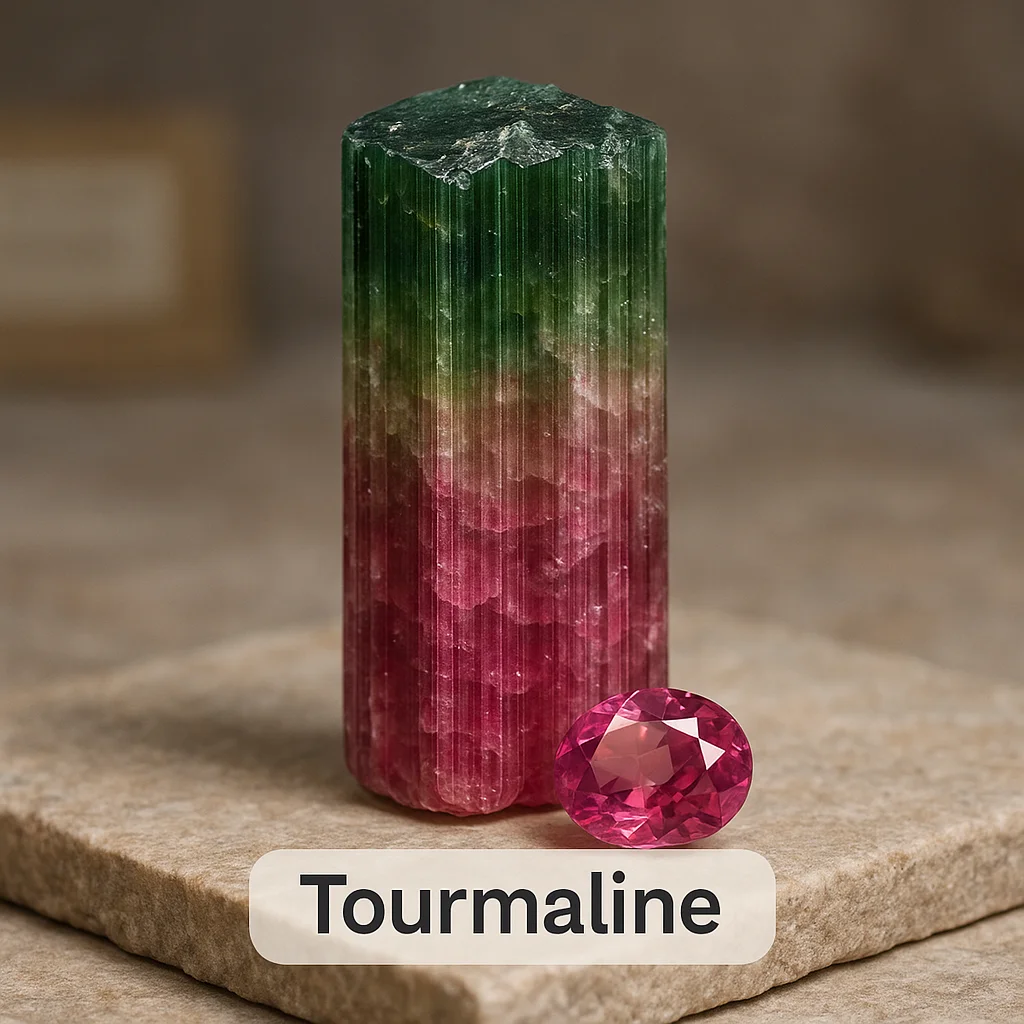
This gemstone is the traditional birthstone for the month of October. Many people are attracted to tourmaline not only for its beauty but also for its reputed metaphysical properties. Throughout this article, we'll explore its various appearances, properties, origins, as well as tips on care and purchasing.
By understanding tourmaline, you'll gain insights into its formation, appearances in nature, and the factors that influence its market value. These insights can guide you in making informed decisions when choosing tourmaline pieces, whether for personal adornment or as a treasured gift.
🌍 Where It Comes From
Tourmaline forms naturally in igneous and metamorphic rocks, where it can be found in a variety of shapes and sizes. This mineral typically forms in pegmatites, which are igneous rocks rich in large crystals. In some instances, tourmaline can also appear within metamorphic rocks such as schists and marbles.
Some of the most renowned regions for tourmaline mining include parts of Africa, Brazil, and the United States. Specifically, areas such as Madagascar and Afghanistan are well-known for producing high-quality specimens. The country of origin can greatly affect a tourmaline's appeal and sometimes its price, based on historical reputation and market demand.
Brazil, in particular, has produced many notable tourmalines, ranging in many colors and large sizes. Because of its variety, collectors and jewelry makers often look for location-specific characteristics, such as Madagascar's claim to some of the finest green hues. As such, the geographic source plays a crucial role in the stone's value and desirability.
🔬 How It Forms
Tourmaline's formation is a complex natural process involving intense heat and pressure over extended periods. Generally occurring in geological environments rich in silica and certain trace elements, tourmaline forms as the magma cools and solidifies within the Earth's crust.
The color of tourmaline is primarily influenced by trace elements like iron, magnesium, lithium, and manganese. These elements substitute into the crystal structure during formation, resulting in the wide range of colors observed in tourmaline crystals. An example is the deep green hue often caused by chromium or vanadium.
Tourmaline is most commonly found as elongated prismatic crystals, making it instantly recognizable. These crystals are often vertically striated and can appear in various forms, including transparent, translucent, or opaque.
🎨 Color and Look
Tourmaline's allure lies in its extensive color palette, ranging from colorless to hues of red, pink, yellow, blue, green, and black. It can even display multiple colors in a single stone, often known as bi-color or watermelon tourmaline due to its layered pink and green appearance.
Factors affecting the stone's appearance include its cut, polish, clarity, and the lighting conditions under which it is viewed. The cut aims to enhance the stone's natural color and light reflection, while the polish contributes to its luster, making the stone more visually appealing.
Tourmaline sometimes undergoes treatments to improve its color and clarity. Heat treatment and irradiation are common, and these processes stabilize and enhance the gemstone's natural characteristics. It's vital to inquire about any treatments before making a purchase to ensure informed decisions.
🧪 Properties That Matter
Tourmaline has a Mohs hardness of 7-7.5, making it durable enough for daily wear but less resistant than other gemstones like sapphires or diamonds. While it has good toughness, tourmaline can be prone to fractures in cases of hard blows or forceful impacts.
The stone's prismatic crystal structure gives it poor cleavage, meaning it is less likely to split or shatter along defined planes. Still, care should be taken to protect it from significant knocks. Tourmaline typically displays a vitreous luster, adding a glass-like brilliance essential for jewelry.
For everyday jewelry such as rings and bracelets, tourmaline is an excellent option, but it's advisable to protect it from harsh conditions. Its resistance to scratches makes it suitable for various settings, though it's less suitable for most scratch-prone environments when compared to harder stones.
✨ Meanings, Birthstones, and Culture
Throughout history, tourmaline has been linked with numerous symbolic meanings and folklore. It is traditionally thought to bring energy and positivity, often associated with creativity and inspiration. As the October birthstone, it symbolizes protection and grounding in some cultures.
While tourmaline holds a significant place in the world of gemstones, it's vital to understand that its cultural symbolism is not scientifically proven. As with many stones, its symbolic meanings are derived from historical and cultural contexts rather than scientific verification.
In modern jewelry traditions, tourmaline continues to be favored for its array of colors and versatility. It is commonly used in various pieces, from elegant engagement rings to vivid necklaces and earrings, highlighting its power to captivate and enhance personal style.
🧼 Care and Cleaning
When caring for your tourmaline jewelry, gentle soap and water are recommended as the safest and most effective cleaning method. After cleaning, dry it using a soft cloth to avoid any risk of scratches.
It's important to avoid using harsh chemicals or cleaning agents that could damage the stone. Given tourmaline's sensitivity to sudden temperature changes, you should never expose it to extreme heat, as this might cause structural damage.
When storing your tourmaline jewelry, separate it from harder gems to protect it from scratching. A soft pouch or lined box works well to preserve its beauty and keep it safe when not in use.
🛒 Buying Tips and What to Check
Several factors influence the price and quality of tourmaline, including color saturation, clarity, cut, carat weight, and origin. More intense colors usually command higher prices, while clarity contributes to the stone's overall appearance.
Before purchasing, ask about any treatments the stone might have undergone and consider obtaining a lab report for high-value pieces. Lab reports give an assessment of the stone's characteristics and treatments, aiding your buying decision.
When buying online, look for reputable sellers with clear return policies and detailed photos. Ensure the seller is transparent regarding the stone's characteristics and any enhancements, allowing you to make an informed and satisfying purchase.
⚠️ Real vs Fake and Common Look-Alikes
Distinguishing between natural and synthetic or imitation tourmaline can be challenging for a novice. Natural tourmaline is mined from the earth, whereas synthetic tourmaline is lab-created but shares the same chemical composition.
Imitation tourmaline may be composed of glass or plastic and typically lacks the mineral's natural characteristics. Doublets and triplets, which are assembled stones made from multiple layers, can also mimic tourmaline's appearance.
If you're uncertain about your tourmaline's authenticity, seek professional testing from a certified gemologist. Avoid attempting any tests at home that could damage the stone or lead to inaccurate results.
❓ Common Questions and Misconceptions
Is it a mineral or a rock? Tourmaline is a mineral and not a rock.
Is it a birthstone? Yes, tourmaline is the birthstone for October.
Will it scratch easily? With a Mohs hardness of 7-7.5, it resists scratches fairly well but is not scratch-proof.
Can it go in water? Brief exposure to water is fine, but long-term soaking should be avoided to prevent any structural issues.
Does color fade in sunlight? Generally, it does not fade easily, although prolonged exposure might impact its appearance over time.
What treatments are common? Heat and irradiation are common for enhancing color and clarity.
Is lab-grown 'fake'? Lab-grown stones are real tourmalines in chemical composition but are synthetically produced.
How do I store it safely? Store separately from harder gemstones in a soft pouch to prevent scratches.
Do inclusions always lower value? Not always. While clarity is a factor in value, intense color can outweigh the effect of minor inclusions.
How do I pick a good one for jewelry? Look for vibrant color, good clarity, and a well-proportioned cut.
📌 Summary
- Tourmaline is a colorful gemstone and October's birthstone.
- It boasts a diverse color range, including blacks, greens, pinks, and multi-colored varieties.
- Forms under intense heat and pressure in igneous and metamorphic rocks.
- Durable for daily wear with a Mohs hardness of 7-7.5.
- Common treatments include heat and irradiation.
- Gentle soap and water cleaning is usually recommended.
- Ideal for rings, pendants, and earrings due to its vibrant hues.
- Look-alikes include synthetic versions and assembled stones.
- Professional testing is crucial for determining authenticity.
- Focus on color, clarity, cut, and carat when buying.
- Renowned for its cultural symbolism of protection and grounding.
- Remember that while versatile and vibrant, tourmaline should be handled with care.