💎 Amber Dominican
Amber Dominican is a captivating gemstone admired for its unique beauty and ancient origins. It is a variety of amber, which is not a mineral but an organic gem formed from fossilized tree resin. Amber has been treasured for centuries and is often used in jewelry. Its warm colors and fascinating inclusions make it a popular choice for collectors and enthusiasts. In this article, we will explore its appearance, properties, origins, care, and buying tips.
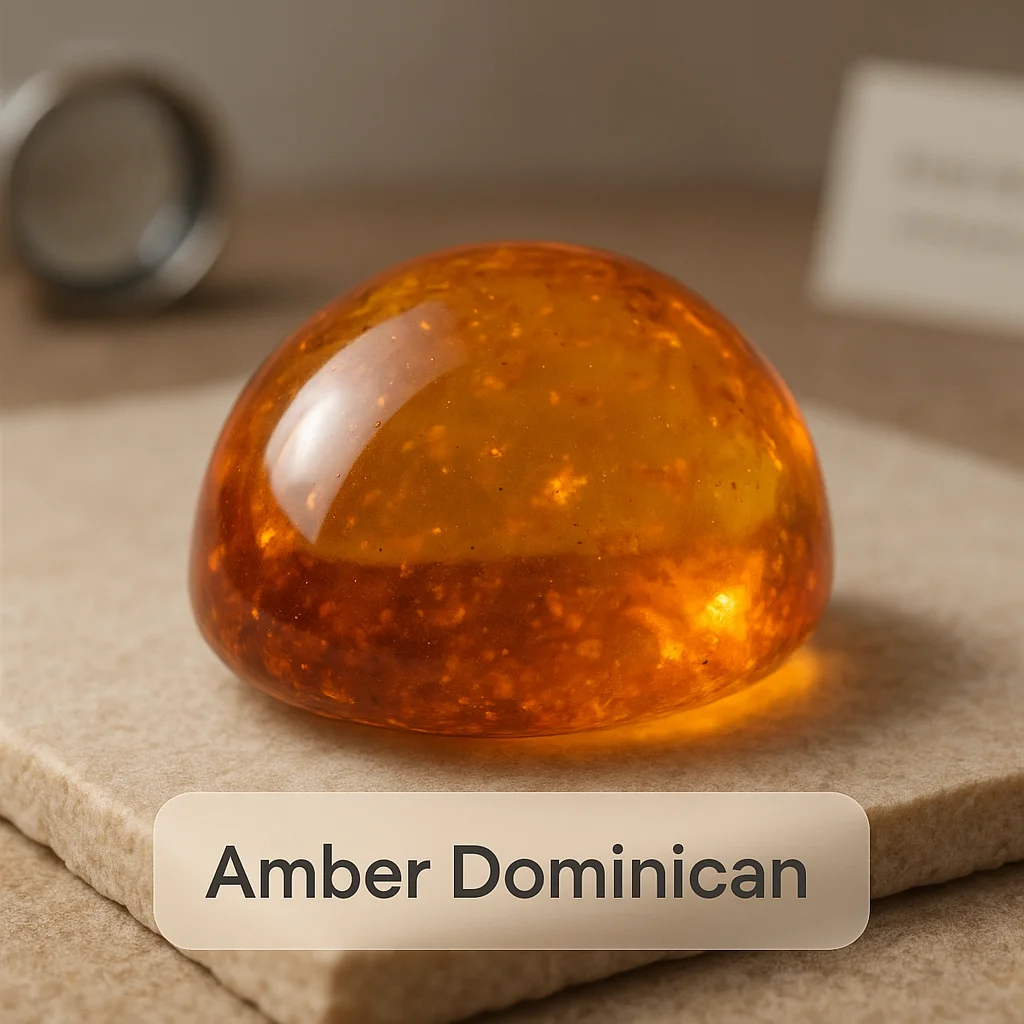
Amber is often recognized as one of the birthstones for November, alongside citrine. It holds cultural significance and is traditionally associated with warmth and light. Amber Dominican, specifically, is known for its clarity and vibrant colors, making it highly valued in the gemstone market.
In the sections that follow, we will delve into the characteristics that make Amber Dominican unique. You will learn about its geological origins, formation process, visual appeal, and much more. This information will help you appreciate this beautiful gem and make informed decisions when purchasing or caring for amber jewelry.
🪨 What It Is
Amber Dominican is a type of amber, which is an organic gemstone formed from the fossilized sap of ancient trees. Unlike minerals or rocks, which are inorganic, amber is made from once-living material. This gives it a special place among gemstones, as it often contains interesting inclusions such as insects or plant matter trapped during the resin's formation.
With its warm, honey-like glow, Amber Dominican is a popular choice in the jewelry world. It is primarily used in necklaces, bracelets, and earrings for its striking appearance. The gem's organic nature and ancient origins contribute to its allure, appealing to both gemologists and collectors alike.
By understanding Amber Dominican's formation and properties, you can better appreciate its rarity and value. Amber is known for its versatility and can be polished to enhance its natural beauty, making it a desirable gemstone for various personal adornments.
🌍 Where It Comes From
Amber Dominican is primarily found in the Dominican Republic, a country known for producing some of the clearest and most colorful amber in the world. The region's tropical climate millions of years ago provided the perfect conditions for the resin to form and eventually fossilize into amber.
This type of amber is typically found in sedimentary rocks, where layers of ancient resin were buried and preserved over time. It represents an important geological story of the area's past, capturing a moment in Earth's history when vast forests thrived.
The origin of amber can influence its color, clarity, and overall value. Amber Dominican is prized for its clarity and the vivid hues it exhibits, ranging from golden yellow to deep reddish-brown. The clarity of this amber often reveals fascinating inclusions, which can add to its unique character and desirability.
🔬 How It Forms
Amber forms from the resin of ancient trees, undergoing a lengthy process of fossilization. Initially, the sticky resin is exuded by trees to protect against insects and disease. Over time, this resin hardens and becomes buried under layers of sediment.
Through the processes of pressure, heat, and geological time, the resin gradually transforms into amber. This process can take millions of years, with the resin undergoing chemical changes that result in the hard, plastic-like material we recognize as amber today.
The color of amber is influenced by the specific environmental conditions surrounding its formation. Factors such as the type of tree, climate, and the presence of minerals can affect the final appearance of the amber, making each piece distinct and valuable.
🎨 Color and Look
Amber Dominican is celebrated for its rich color palette, which commonly includes shades of golden yellow, orange, and occasionally red or green. Its translucent nature allows light to pass through, enhancing the gem's natural warmth and glow.
The appearance of amber can be influenced by the way it's cut and polished. Skilled artisans bring out the best in amber by shaping it to highlight its color and clarity. The gem's appearance can also be affected by lighting; natural and artificial lights can enhance or mute its hues.
Treatments such as heat and pressure are occasionally used to improve amber's clarity and color, although it's essential to disclose such enhancements to buyers. These treatments are generally accepted in the market, provided they are declared honestly.
🧪 Properties That Matter
Amber Dominican has several properties that are important for collectors and those who wish to wear it as jewelry. It has a Mohs hardness of about 2-2.5, which means it is relatively soft and can scratch easily compared to harder gemstones. This softness must be considered when selecting jewelry that may encounter daily wear and tear.
Despite its softness, amber is known for its unique luster, often described as resinous or waxy, giving it a distinct and appealing glow. However, its low toughness makes it susceptible to chipping or cracking, so care should be taken when wearing or storing amber jewelry.
Amber lacks cleavage, the tendency to break along specific planes, but it can fracture under stress. Its organic composition means it's not as robust as mineral gemstones, making it better suited for pendants or earrings rather than rings or bracelets subject to frequent knocks.
✨ Meanings, Birthstones, and Culture
Amber is traditionally associated with warmth and sunlight due to its beautiful, golden-orange hues. In various cultures, it has symbolized the sun and is believed to bring warmth and positivity to its wearer. Historically, it has been used in religious and cultural artifacts across different civilizations.
As a birthstone, amber is often associated with November, alongside citrine. However, it isn't universally recognized in all birthstone traditions. It does hold a special place in modern jewelry, where its organic origins and attractive inclusions make it a conversation piece.
Folklore suggests various symbolic attributes for amber, such as protection and luck, but it's important to differentiate these traditional associations from scientific facts. Amber's value lies in its beauty and historical significance rather than any purported mystical powers.
🧼 Care and Cleaning
To care for Amber Dominican, use gentle methods to clean and preserve its appearance. A solution of mild soap and lukewarm water is sufficient for cleaning, applied with a soft cloth. Avoid using harsh chemicals, ultrasonic cleaners, or hot water, as these can damage the gem.
Handle amber with care, avoiding sudden temperature changes that could cause it to crack. When not worn, store amber jewelry separately from harder gemstones to prevent scratching. Soft cloth pouches or padded jewelry boxes work well for this purpose.
For treated amber, be mindful of the enhancements and follow any specific care instructions provided by the retailer. By maintaining your amber responsibly, you can enjoy its beauty for years to come without compromising its quality.
🛒 Buying Tips and What to Check
When purchasing Amber Dominican, consider factors that impact its price and quality. The color, clarity, and presence of unique inclusions can all influence its value. Clear amber with vivid colors is typically more desirable, as are specimens containing well-preserved inclusions.
Ask for disclosure of any treatments, as enhancements like heat or pressure can affect pricing. For high-value pieces, a lab report can confirm the gem's authenticity and provide useful details about any treatments.
If buying amber online, ensure you purchase from reputable dealers with good return policies. Examine photographs closely, and verify the seller's reputation through reviews or recommendations. Transparency about the gem's origin and treatments is key to a successful purchase.
⚠️ Real vs Fake and Common Look-Alikes
The market for amber can include imitations and synthetic materials. Natural amber is distinct from synthetic amber, which is often generated from laboratory processes. Amber imitations can also be made from plastic or glass and may lack the natural inclusions that give genuine amber its character.
Common look-alikes include copal, a younger form of amber that hasn't fully fossilized, and various resins that can mimic amber's appearance. Doublets and triplets, which are assembled stones, may also be encountered but should not be confused with solid, natural amber.
Reliable identification of genuine amber typically requires professional testing, so it's advisable to seek expert advice when in doubt. Avoid home experiments that could damage the stone or provide misleading results.
❓ Common Questions and Misconceptions
Is it a mineral or a rock? Amber is neither; it is an organic gemstone formed from fossilized tree resin.
Is it a birthstone? Amber is associated with November, but its acceptance varies by tradition.
Will it scratch easily? Yes, with a Mohs hardness of 2-2.5, amber is relatively soft.
Can it go in water? Amber can be cleaned with water, but prolonged soaking should be avoided.
Does color fade in sunlight? Prolonged exposure to direct sunlight can cause color fading, so storage away from light is advisable.
What treatments are common? Heat and pressure treatments are sometimes used to enhance clarity and color.
Is lab-grown 'fake'? Lab-created materials can be synthetic or imitations; synthetic resembles natural amber but is man-made.
How do I store it safely? Store amber separately from harder gems in a soft cloth pouch or padded jewelry box.
Do inclusions always lower value? Not necessarily; interesting inclusions can add value to amber, especially if they are well-preserved.
How do I pick a good one for jewelry? Look for clarity, color, and interesting inclusions, and prioritize pieces without cracks or chips.
📌 Summary
- Amber Dominican is a type of organic gemstone formed from fossilized tree resin.
- Typical colors include golden yellow, orange, and occasionally red or green.
- Amber forms over millions of years, beginning as tree resin that hardens and fossilizes.
- It has a low Mohs hardness (2-2.5), meaning it is prone to scratching.
- Common treatments include heat and pressure to enhance clarity and color.
- Care involves gentle cleaning with soap and water and avoiding harsh chemicals.
- Best used in pendants and earrings due to its softness and potential for scratching.
- Common look-alikes include copal, plastics, and assembled stones like doublets.
- Authenticity is best confirmed through professional gemological testing.
- Check for treatment disclosure, seller reputation, and detailed photos when buying.
- Amber is a traditional November birthstone with rich cultural symbolism.
- A memorable takeaway: Amber Dominican's ancient origins and unique inclusions make it a prized gemstone for jewelry and collections.