💎 Ammolite
🪨 What It Is
Ammolite is an organic gemstone, derived from the fossilized shells of ancient marine creatures called ammonites. It is considered a gemstone because of its stunning iridescence, showcasing a splendid play of colors that can rival the opal.
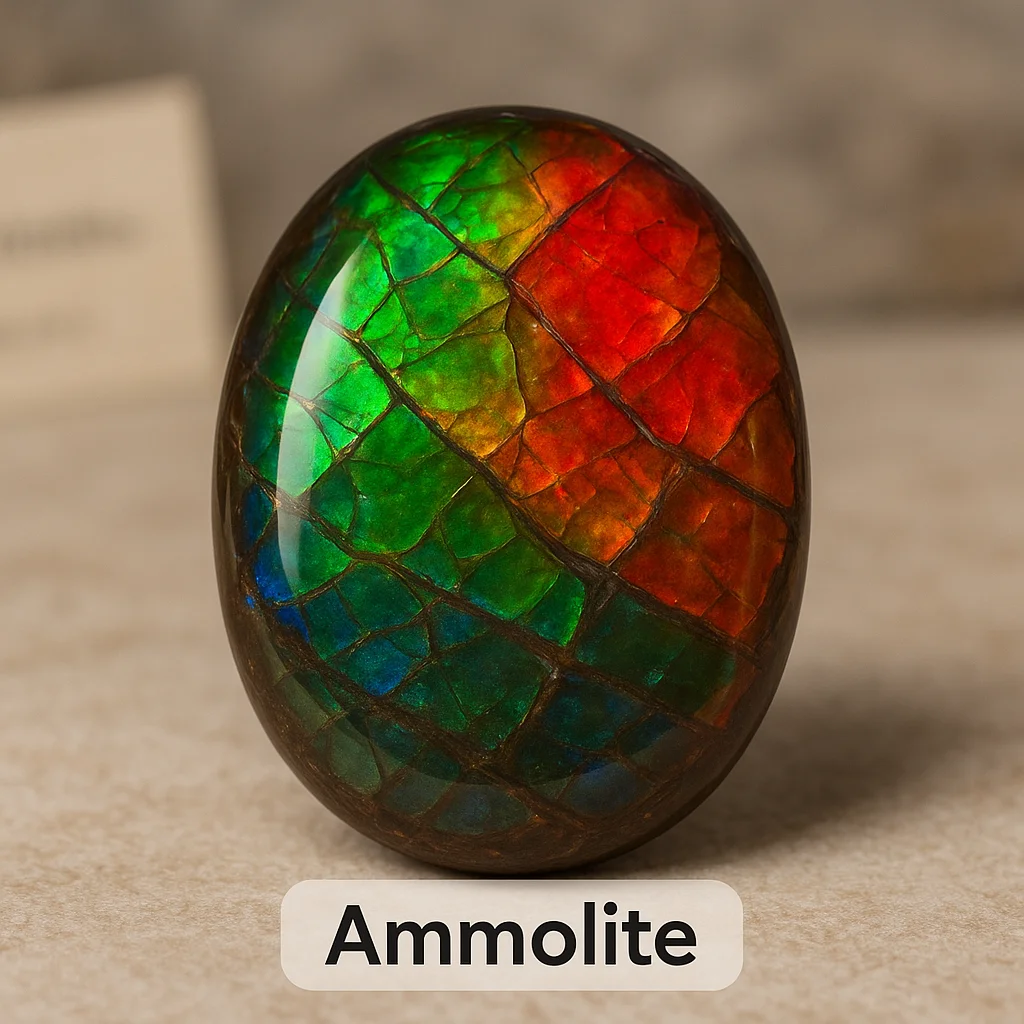
This dazzling gem is often utilized in jewelry making, especially in pendants and earrings. Due to its captivating appearance, it has become popular among collectors and gem enthusiasts around the world.
In this article, you will learn about Ammolite's appearance, properties, origins, and tips for buying and taking care of this extraordinary gem. Let's delve deeper to understand what makes Ammolite unique among gemstones.
🌍 Where It Comes From
Ammolite is found primarily in the sedimentary layers of the Bearpaw Formation in the foothills of the Rocky Mountains in Alberta, Canada. This geological setting, rich in carbon and minerals, supported the fossilization of ammonite shells over millions of years.
The region's unique environmental conditions contributed to the exceptional colors and patterns found in Ammolite. The gemstone's origin can influence its market reputation, with pieces from this area being highly prized for their vivid coloration.
While Ammolite is rare and mostly sourced from Canada, some deposits have also been found in the United States. The geographical origin often indicates the potential quality and value of the gemstone in the market.
🔬 How It Forms
Ammolite forms through the mineralization of ammonite shells. Over millions of years, these shells were buried under layers of sediment where heat, pressure, and mineral-rich waters aided their transformation into iridescent gemstones.
Factors like the presence of iron, copper, and other trace elements during fossilization contribute to Ammolite's dazzling range of colors. Variations in these elements and the conditions around the fossilization process result in unique patterns and hues.
The characteristic iridescence of Ammolite is the result of light interacting with the microstructure of the fossilized shells, similar to how light produces the colorful play seen in opals.
🎨 Color and Look
Ammolite is renowned for its wide array of colors, including vibrant reds, blues, greens, yellows, and violets. The gemstone's play-of-color is a natural optical effect where light diffracts through layers within the mineral, creating a rainbow-like appearance.
The appearance of Ammolite can be affected by how it is cut and polished. Skilled gem cutters often select sections of the gemstone that will maximize color and brilliance. Lighting conditions also play a significant role in the perceived color and intensity of Ammolite.
Gem treatments, such as oiling, can enhance Ammolite's colors, though it is less commonly treated compared to other gems. Buyers should always inquire about any treatments when purchasing Ammolite.
🧪 Properties That Matter
The Mohs hardness of Ammolite is relatively low, typically ranging between 3.5 to 4. This makes it susceptible to scratching and not ideal for rings or items meant for daily wear. Its toughness is also moderate, which implies that care should be taken to avoid impacts.
Ammolite exhibits good cleavage, meaning it can split along specific internal planes when struck. It is typically cut as a cabochon to showcase its iridescent qualities while minimizing the risk of cleavage.
The gemstone's luster is described as vitreous to pearly, adding to its captivating appearance. Due to its unique makeup, it is usually set in jewelry pieces less exposed to moisture and harsh wear, such as pendants and earrings.
✨ Meanings, Birthstones, and Culture
In cultural traditions, Ammolite is often associated with prosperity, harmony, and good fortune. It is believed to have been used by the Blackfeet tribe of North America in spiritual ceremonies and is sometimes called the "Buffalo Stone."
Ammolite is not a traditional birthstone, but its stunning colors and rarity make it a collectible gem for those interested in unique jewelry pieces. Modern jewelry aficionados often select Ammolite for its beauty and the connection to ancient history.
Though not widely recognized in mainstream culture as a birthstone, Ammolite's appeal lies in its visual splendor and the allure of being a piece of history worn as a gemstone.
🧼 Care and Cleaning
Caring for Ammolite requires gentle handling. Clean the gemstone with mild soapy water and a soft cloth, avoiding the use of harsh chemicals or ultrasonic cleaners that can cause damage.
It is advisable to avoid exposure to excessive heat or sudden temperature changes, which can cause the gemstone to crack. Prolonged soaking is also not recommended, as it can weaken the stone over time.
When storing Ammolite, it should be placed in a soft pouch or separate jewelry compartment to prevent scratches from harder gemstones or jewelry pieces.
🛒 Buying Tips and What to Check
When purchasing Ammolite, look for vibrant color play and even patterns, as these characteristics generally enhance the gem's value. The clarity and size of the stone also influence its price.
Inquire about any treatments the Ammolite may have undergone and consider obtaining a gemological report for valuable pieces. Such reports typically include information on the stone's authenticity and characteristics.
For online purchases, make sure to view multiple photos of the stone, check the seller's reputation, and ensure there is a clear return policy. Transparency about treatments and origin is crucial in making an informed purchase.
⚠️ Real vs Fake and Common Look-Alikes
Natural Ammolite forms over millions of years, but synthetic versions made in labs mimic its appearance. These lab-grown stones are often less valuable due to their synthetic origin.
Ammolite imitations made of plastic, glass, or composites may also exist. These imitations generally lack the vibrant play-of-color found in natural Ammolite.
Assembled stones, known as doublets or triplets, may also include a thin layer of genuine Ammolite backed by another material. Identifying these requires professional testing, as visual inspection alone is not sufficient.
❓ Common Questions and Misconceptions
Is it a mineral or a rock? Ammolite is an organic gemstone derived from fossilized shells.
Is it a birthstone? No, Ammolite is not traditionally recognized as a birthstone.
Will it scratch easily? Yes, with a Mohs hardness of 3.5 to 4, it can scratch easily.
Can it go in water? Brief contact with water is okay, but prolonged soaking should be avoided.
Does color fade in sunlight? Prolonged UV exposure may cause fading over time, so limit direct sunlight.
What treatments are common? Some Ammolite may be oiled to enhance appearance.
Is lab-grown 'fake'? Lab-grown stones are real but are considered synthetic and generally less valuable.
How do I store it safely? Store it away from harder gems in a soft pouch or cloth-lined box.
Do inclusions always lower value? Inclusions in Ammolite can affect both appearance and value; however, natural variations are common.
How do I pick a good one for jewelry? Choose stones with bright, even color and few visible flaws.
📌 Summary
- Ammolite is an organic gemstone from fossilized ammonite shells.
- It displays a wide range of vibrant colors due to its unique light-diffracting structure.
- Formed through fossilization in sediment, mainly in Canada.
- Low hardness means it's best for jewelry not subjected to daily wear.
- Commonly enhanced through oiling; check for treatments.
- Clean with mild soapy water and store carefully to avoid scratches.
- Ideal for pendants and earrings where it's less likely to be damaged.
- Lab-grown and imitation versions exist; professional testing is crucial.
- Always confirm authenticity with a gem report if possible.
- Not a birthstone but culturally associated with prosperity.
- The gem is a captivating choice for collectors and jewelry lovers alike.