💎 Conch Pearl
🪨 What It Is
Conch pearls are a unique and beautiful type of organic gem formed by the Queen Conch, a type of marine mollusk. Unlike traditional pearls, which are created by oysters, conch pearls are non-nacreous and have a porcelain-like appearance. This means they do not have the iridescent shininess typical of nacreous pearls.
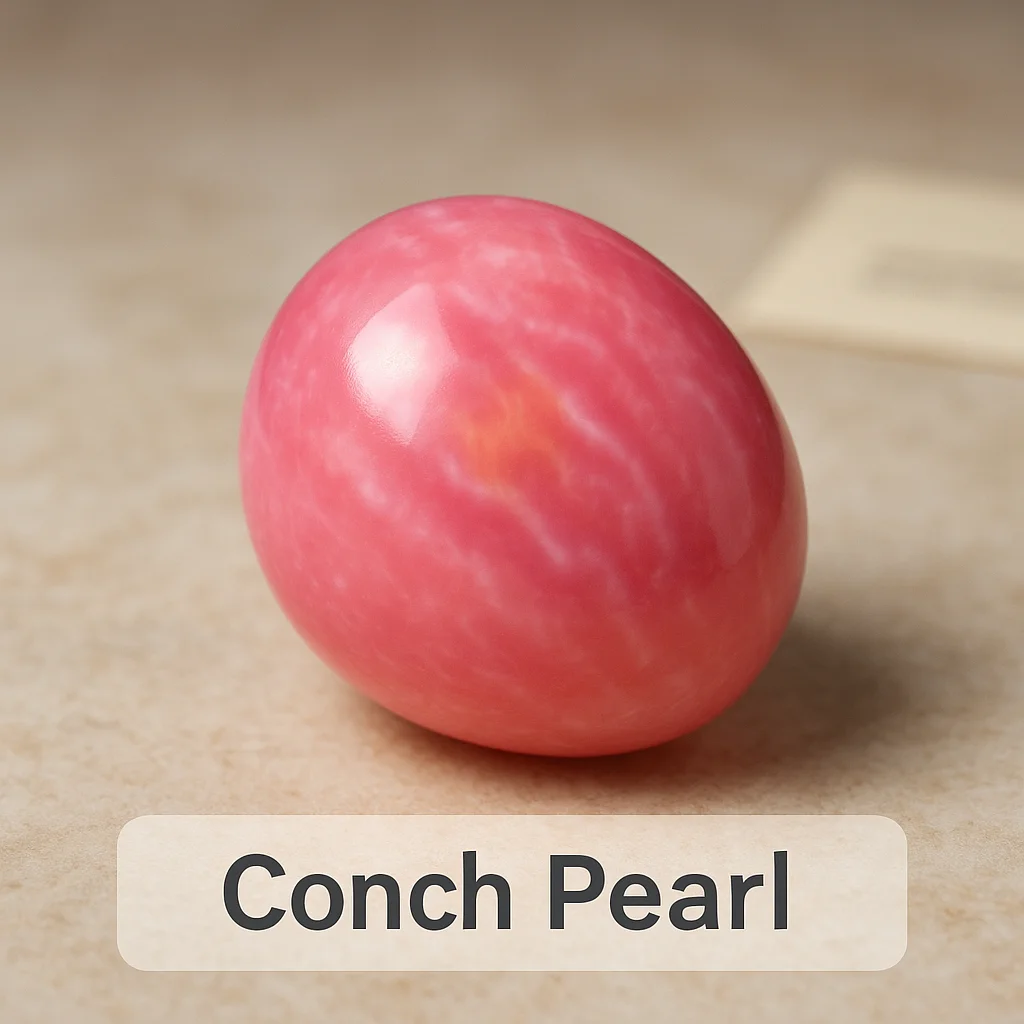
Conch pearls are not classified as minerals or rocks but as organic gems. They are highly prized in jewelry making due to their rarity and distinct colors. They are not considered birthstones but have gained popularity among collectors and jewelry enthusiasts for their warm, vibrant hues.
This article explores various aspects of conch pearls, including their appearance, properties, origins, value, care, and tips for buying these exceptional gems. Expect to learn how to appreciate the beauty and uniqueness of this rare gemstone fully.
🌍 Where It Comes From
Conch pearls are found in the Caribbean Sea, primarily in areas where the Queen Conch is abundant. The Queen Conch (Strombus gigas) inhabits warm, shallow waters, making these regions suitable for finding conch pearls. Fishing for Queen Conchs is most common in countries like the Bahamas and Mexico.
The geographical origin of a conch pearl can play a significant role in its value and desirability. Pearls from the Caribbean are more well-known and preferred, thanks to the region's reputation for producing high-quality conch pearls with stunning colors and patterns.
Environmental factors, including the diet of the Queen Conch and the conditions of the ocean waters, can influence the color and quality of conch pearls. As these pearls do not form regularly, their appearance can vary significantly, making each one unique and valuable.
🔬 How It Forms
Conch pearls form when irritants, such as parasites or organic matter, become trapped inside the Queen Conch's shell, prompting the mollusk to deposit layers of calcium carbonate around the irritant over time. This process does not form in response to human intervention, making conch pearls rare.
The natural environment plays a role in the development of the pearl's color and patterns. The distinctive pink to orange coloration of conch pearls is due to pigments present in the mollusk's diet and natural processes inside the shell.
Unlike nacreous pearls, which are formed of many layers of nacre, conch pearls have a variety of distinct layers of calcite and aragonite, contributing to their unique appearance and lack of an outer layer of nacre.
🎨 Color and Look
The typical colors of conch pearls range from white and cream to pink, orange, yellow, and even brown. The most prized pearls tend to have a vibrant pink to orange color, often referred to as "salmon." The appearance can be solid, or the pearl may exhibit characteristic flame-like patterns known as "flame structure," which can enhance its appeal.
The color and beauty of conch pearls are not subject to enhancement through treatment like heat or dye. This aspect of conch pearls ensures that their natural beauty remains intact, as each pearl's appearance comes directly from its formation process.
The luster of conch pearls is usually satiny or porcelain-like, which differentiates them significantly from the high gloss sheen found in traditional nacreous pearls. This unique appearance adds to their desirability in the jewelry market.
🧪 Properties That Matter
The Mohs hardness of conch pearls is relatively low, around 2.5 to 3, which is similar to other organic gems like coral and ivory. This makes them susceptible to scratches, so care is needed when wearing conch pearl jewelry.
Despite their low hardness, conch pearls have fairly good toughness, meaning they can resist chipping better than their nacreous counterparts. The absence of cleavage, which is the tendency to split along defined planes, also contributes to their durability.
Their luster, as mentioned, is unique, with a subtle sheen that adds to their appearance, making them suitable for various types of jewelry, including pendants, earrings, and occasional-wear rings, though care is advised to prevent damage.
✨ Meanings, Birthstones, and Culture
Conch pearls are traditionally associated with rarity and exotic beauty, though they are not linked to any specific month as a birthstone. They are treasured for their unique and stunning colors and are often associated with luxury and exclusivity.
In cultural traditions, pearls have often symbolized purity and innocence. While conch pearls are not highlighted in folklore as much as their nacreous counterparts, they do hold a special place in high-end jewelry designs celebrated for their unique characteristics.
Modern jewelry traditions celebrate conch pearls' natural colors and patterns, making them highly sought after for bespoke pieces where their natural beauty can be showcased without alteration.
🧼 Care and Cleaning
Gentle care is advised when cleaning conch pearls. It is safest to use mild soap and water, avoiding harsh chemicals that can damage their delicate surface. A soft cloth should be used to gently wipe them clean after each wear.
Conch pearls are particularly sensitive to extremes in temperature and should not be subjected to prolonged sun exposure or sudden changes in heat. It's advisable to store them separately in a soft pouch or lined box to prevent scratches.
Avoid subjecting conch pearls to long soaking, as their organic composition means they could absorb liquids, which might affect their color and structure. Always dry them thoroughly after cleaning or gently rinsing.
🛒 Buying Tips and What to Check
When purchasing conch pearls, consider the pearl's color, size, shape, and surface quality. Pearls with vibrant colors, smooth surfaces, and flame structures are typically more valuable. While size can influence price, smaller pearls with superb color and structure can be even more desirable.
Inquire about the pearl’s authenticity and any available lab reports, especially when considering a high-value purchase, as these can confirm natural origin and potential treatments. Be wary of vendors who cannot provide detailed information.
When buying online, ensure the seller has a good reputation, and check their return policies. Look for clear, detailed photographs of the actual pearl being sold to assess characteristics before purchase. Read customer reviews to gauge quality and service.
⚠️ Real vs Fake and Common Look-Alikes
Natural conch pearls are distinct from synthetic or imitation pearls. Synthetic pearls, commonly created in labs, mimic the appearance but lack the natural formation process. Imitations might use materials like glass or plastic, often significantly less expensive than natural pearls.
Assembled stones, known as doublets or triplets, might combine a slice of real pearl with other materials to enhance their look. Authentic conch pearls should not display these layers.
The true test of a conch pearl’s authenticity is through professional testing, which can differentiate natural pearls from imitations. Amateur home tests are not advised due to potential damage and inaccuracy.
❓ Common Questions and Misconceptions
"Is it a mineral or a rock?" Conch pearls are organic, not mineral or rock.
"Is it a birthstone?" Conch pearls are not considered traditional birthstones.
"Will it scratch easily?" Conch pearls have low hardness, so they can scratch more easily.
"Can it go in water?" Rinse with care; prolonged soaking is discouraged.
"Does color fade in sunlight?" Prolonged sunlight exposure can affect color.
"What treatments are common?" Conch pearls are typically untreated.
"Is lab-grown 'fake'?" Synthetic pearls mimic appearance but lack natural formation.
"How do I store it safely?" Use a soft pouch to prevent scratches.
"Do inclusions always lower value?" Surface quality matters, but color and pattern can still command high prices.
"How do I pick a good one for jewelry?" Focus on vibrant color, smooth surface, and unique pattern.
📌 Summary
- Conch pearls are rare, non-nacreous organic gems from the Queen Conch mollusk.
- Typical colors range from white to pink and vibrant orange, often with a flame-like pattern.
- Formed naturally without human intervention, resulting in unique appearances.
- Mohs hardness of 2.5 to 3, effectively resistant to chipping but can scratch easily.
- Usually untreated, with authenticity requiring professional confirmation.
- Gentle care recommended: use mild soap, avoid harsh chemicals and temperature extremes.
- Best suited for occasional wear jewelry like pendants and earrings.
- Look-alikes include synthetic and imitation pearls, easily differentiated by experts.
- Professional testing confirms natural vs synthetic origins.
- Buying tips include checking color, reputation, and clear return policies.
- Not a birthstone but celebrated for its unique beauty and rarity.
- Remember: authenticity and natural beauty make conch pearls exceptionally desirable.