💎 Copal Resin
🪨 What It Is
Copal resin is a fascinating organic substance often mistaken for amber, but it is technically a less mature form of this hardened tree resin. While amber is fossilized over millions of years, copal is much younger, ranging from thousands to a few million years in age. Unlike minerals or gemstones, copal is classified as an organic gem due to its origin from tree resin.
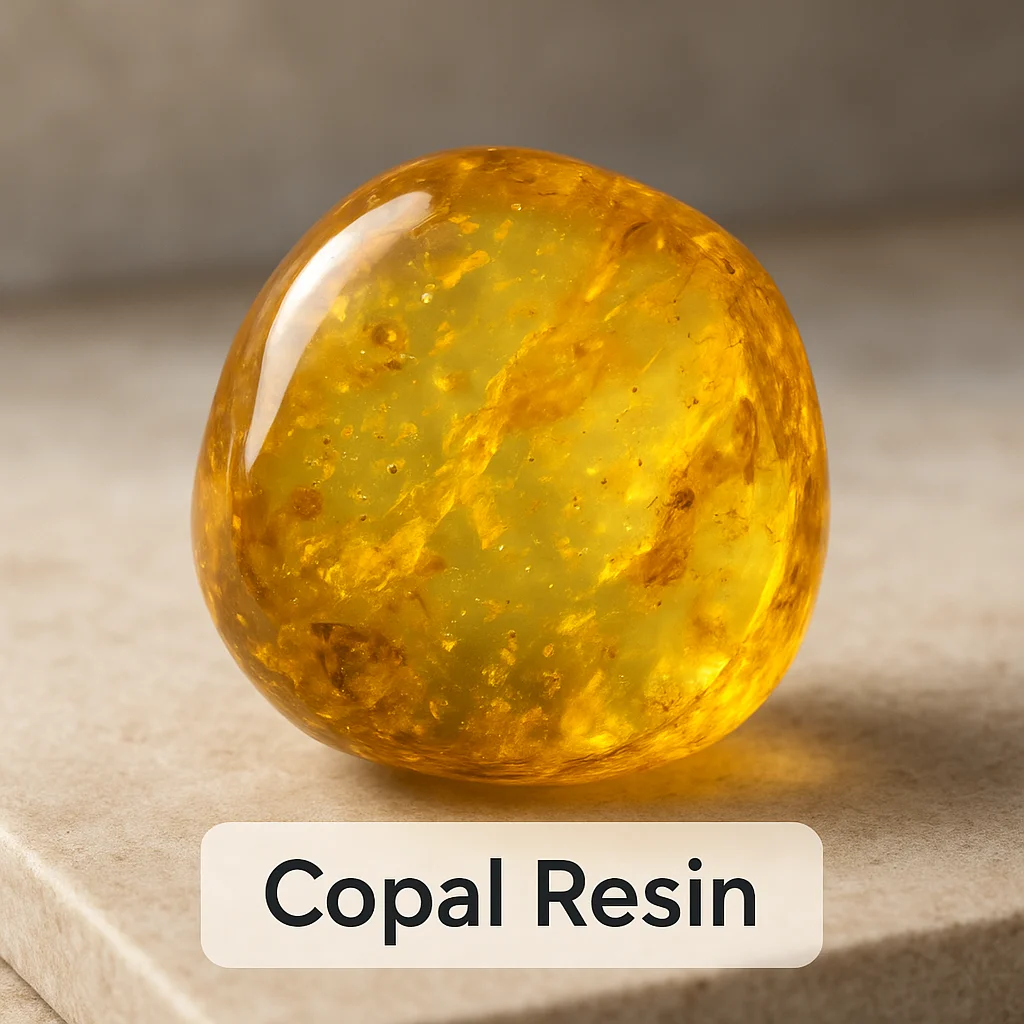
Copal may not be as widely recognized as a birthstone or jewelry staple like other gemstones, but it holds cultural significance in various parts of the world. It is admired for its warm colors, distinctive inclusions, and versatility in jewelry and ornamental use.
In this article, beginners will learn about the appearance, properties, origins, and value of copal resin, as well as tips for its care and how to make informed purchases.
🌍 Where It Comes From
Copal resin is formed naturally from the resin of trees, and it is commonly found in several regions around the world. It is primarily collected from tropical regions in Africa, Central America, and Indonesia. Each region may produce copal with its unique hues and clarity, which can affect its desirability and value in the market.
The origin of copal resin can be a factor in determining its color and clarity. For instance, copal from Madagascar is known for its clarity and often contains intriguing inclusions, while Colombian copal can exhibit a deeper, sunlit hue. These variations can influence collectors and jewelry designers in their selection of copal.
Though copal may not have the geological formation processes like minerals or rocks, its occurrence in tropical regions is essential for its development. The unique environmental conditions in these areas are crucial for the tree resin to flow, seep into the earth, and solidify over time.
🔬 How It Forms
Copal resin forms through the accumulation and hardening of tree resin. The process begins when trees exude resin as a natural protective mechanism against pests and diseases. Over time, this resin seeps into the ground, where it encounters minimal heat and pressure, allowing it to transform slowly into a semi-fossilized state.
While copal is often associated with amber, it does not undergo the same level of fossilization. Unlike amber, which is fully fossilized through extensive time and natural processes, copal remains relatively young. This makes it less dense and more susceptible to physical changes than amber.
The age, environment, and type of tree can all influence copal's final appearance, including its color and the nature of any inclusions present. These factors can make each piece of copal unique, adding to its allure for collectors.
🎨 Color and Look
Copal resin typically appears in warm shades of honey, golden yellow, and light brown. Its translucency allows light to pass through, creating a captivating glow. Inclusions, such as trapped insects or plant matter, are common and are a point of interest for many collectors.
The appearance of copal can be affected by the way it is cut and polished. A well-polished piece will enhance its natural luster and translucency. Factors such as lighting can also influence how copal is perceived, emphasizing its inner beauty and any inclusions.
While copal does not undergo treatments similar to those of mineral gemstones, it is often polished to enhance its natural shine. It is essential to approach any dyed or artificially enhanced copal with caution, as such treatments are uncommon but may occur to mimic the appearance of more mature amber.
🧪 Properties That Matter
Copal resin is softer than many gemstones, with a Mohs hardness rating of about 2 to 3. This low hardness makes it vulnerable to scratches and less suitable for high-impact jewelry like rings. Instead, copal is better suited for pendants or earrings, which experience less wear.
In terms of toughness, copal is relatively brittle and may chip or fracture upon impact. Its fracture is typically conchoidal, meaning it breaks with smooth, curved surfaces. The luster of copal is resinous, providing a soft, glowing appearance when polished.
These properties make it important for wearers to handle copal resin with care and reserve it for occasions where the risk of rough wear is minimal. Although it is an eye-catching and interesting material, its softness and fragility require mindful use and storage.
✨ Meanings, Birthstones, and Culture
Traditionally, copal resin has been associated with spiritual practices and cultural symbolism. In some cultures, it is used in incense and ceremonies, often valued for its aromatic properties. While not a traditional birthstone, copal is appreciated in circles that value organic and natural materials.
Its connection to ancient practices lends copal a sense of mystique and historical value. While scientific studies do not support the effectiveness of these ancient beliefs, copal continues to hold cultural significance and is often cherished as an artifact of nature's artistry.
It is important to present these associations as cultural traditions while recognizing that they may vary widely from one tradition to another.
🧼 Care and Cleaning
Copal resin requires delicate care due to its soft and porous nature. Cleaning copal is best done with warm soapy water and a soft cloth. Harsh chemicals, ultrasonic cleaners, and steam cleaning methods should be avoided to prevent damage.
Extended exposure to heat and sudden temperature changes can cause copal to crack, so it's advisable to keep it away from direct sunlight or high temperatures. Special care should be taken to prevent scratching or abrasion from harder materials or jewelry pieces.
Storing copal separately from harder gemstones or materials in a soft pouch can help protect it from scratches when not in use, preserving its beauty for years to come.
🛒 Buying Tips and What to Check
When purchasing copal, factors like color, inclusion quality, and region of origin can affect price and collectibility. Translucent pieces with well-defined inclusions are popular, while the reputation of the origin region may influence value.
It's advisable to ask sellers about any treatments or enhancements that may have been applied to the copal resin. Requesting an independent lab report for high-value pieces can provide assurance of authenticity and any treatments or characteristics.
A beginner's checklist for buying copal online should include looking for clear photos, a transparent return policy, and good seller reviews. Disclosure of treatments or enhancements by the seller indicates reliability and professionalism.
⚠️ Real vs Fake and Common Look-Alikes
Copal resin is sometimes mistaken for amber, but it's essential to distinguish between the two. Amber is fully fossilized, while copal is younger and less dense. Synthetic or imitation copal can also be made from plastic or glass.
Common look-alikes include synthetic resin materials that mimic the appearance of copal but lack its natural origin and characteristics. Assembled stones, like doublets and triplets, may also occasionally be used to imitate copal.
Identifying genuine copal often requires professional testing, as characteristics like fluorescence under UV light can differ from amber. Home experiments are not recommended due to the risk of damaging the material.
❓ Common Questions and Misconceptions
Is it a mineral or a rock? Copal resin is neither a mineral nor a rock; it is an organic gem derived from tree resin.
Is it a birthstone? Copal is not traditionally recognized as a birthstone.
Will it scratch easily? Yes, with a Mohs hardness of 2 to 3, copal can be easily scratched.
Can it go in water? Gentle washing is fine, but prolonged soaking should be avoided.
Does color fade in sunlight? Prolonged exposure to direct sunlight can cause copal to fade or become brittle.
What treatments are common? While copal may be polished, treatments like dyeing to mimic amber are less common but possible.
Is lab-grown 'fake'? Lab-grown materials are synthetic but differ from naturally occurring copal.
How do I store it safely? Store copal separately in a soft pouch to avoid scratches.
Do inclusions always lower value? Not always; inclusions can add interest and value to a piece depending on their nature.
How do I pick a good one for jewelry? Look for clear, well-polished pieces with appealing color and inclusions suited for jewelry.
📌 Summary
- Copal resin is an organic gem derived from tree resin, often mistaken for amber.
- Typical colors are honey, golden yellow, and light brown, frequently with inclusions.
- Forms from the hardening of tree resin in tropical regions.
- Has a Mohs hardness of 2 to 3, making it suitable for less exposed jewelry like pendants and earrings.
- Be wary of treated or dyed pieces to enhance color.
- Gentle care with soap and water, and avoid heat and harsh chemicals.
- Best used in jewelry where rough wear is minimized.
- Common look-alikes include amber, synthetic materials, and plastics.
- Authenticity can be verified by professional testing and reports.
- Purchase considerations include transparency, seller credibility, and return policies.
- Cultural significance exists, but copal is not a traditional birthstone.
- Understanding copal's properties ensures informed buying and proper care.