💎 Ivory Substitute Tagua Nut
🪨 What It Is
The tagua nut is a plant-based material commonly used as a substitute for ivory. Derived from the seeds of the ivory-nut palm, tagua is an organic gem. Unlike minerals or stones, it is entirely natural, formed by the rich, dense interiors of palm seeds.
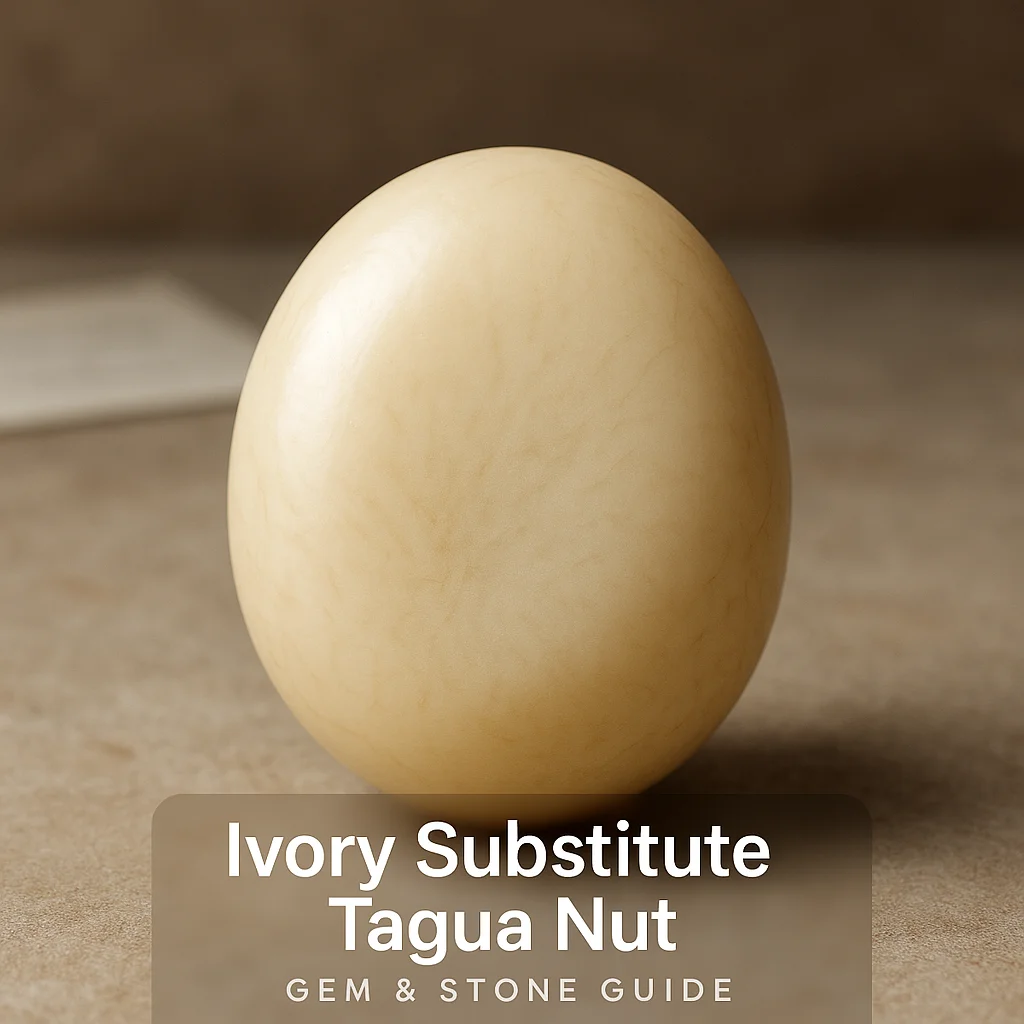
While not a gemstone in the traditional sense, tagua nut is highly valued in sustainable jewelry and craft contexts due to its resemblance to animal ivory. Beginners will learn about its appearance, properties, origin, value, care, and buying tips.
Tagua nuts are celebrated for their eco-friendly qualities, offering a cruelty-free alternative to ivory in various decorative and functional applications. They are enjoyed by those who appreciate unique, conscious materials in their jewelry collections.
🌍 Where It Comes From
Tagua nuts originate from the palm species Phytelephas, commonly found in South American countries such as Ecuador, Colombia, and Peru. These palm trees thrive in tropical rainforests, where they play an essential role in the ecosystem.
The nuts are harvested from the palm trees' fruits, which contain clusters of seeds. Once the fruit ripens, it falls to the ground, where seeds, known as tagua nuts, are collected. The nuts harden over time, taking on their characteristic ivory-like appearance.
Origin can influence the market reputation of tagua nuts, with specific regions having developed a name for the quality and consistency of their products. This impacts their value and desirability in the sustainable and ethical jewelry market.
🔬 How It Forms
Tagua nuts form naturally on the ivory-nut palm. The process begins with the blossom phase of the palm trees, where they produce large, tropical flowers. Following pollination, these flowers develop into sizeable, spherical fruits.
Inside the fruit, several seeds gradually develop. As the fruit matures, the seeds' interiors start solidifying, transforming from a soft, gelatinous state to a hard, dense, and ivory-like material.
The formation process is entirely organic and requires no human intervention. Tagua nuts are renewable resources, regenerating yearly as part of the palm trees' growth cycle. This natural formation contributes to their appeal as an ethical material.
🎨 Color and Look
The typical color of tagua nuts is an off-white, reminiscent of elephant ivory, with occasional tan or brownish hues. This natural appearance is one of the reasons they are favored as an ivory substitute.
Their smooth texture and ability to be carved or polished give them versatility in crafting jewelry and decorative pieces. When polished, tagua nuts exhibit a lustrous, shiny surface that enhances their visual appeal.
There are no common treatments to alter the color or clarity of tagua nuts artificially. Instead, variations in appearance are mainly due to the polishing technique and the nut's origin. Handcrafted design and quality of work significantly affect their final look.
🧪 Properties That Matter
Tagua nuts have a Mohs hardness of about 2.5, making them relatively soft and more prone to scratching than most stones. Their toughness is moderate; they can withstand light impacts but may chip if dropped.
Their fracture is irregular, as they do not have the crystalline structure of minerals. The luster of a polished tagua nut is glossy, enhancing its ivory-like aesthetic. It is opaque, adding to its visual resemblance to genuine ivory.
Given their sensitive nature, tagua nuts are better suited for pendants and earrings rather than rings, which experience more wear and tear. This choice ensures the longevity of the piece and preserves its beauty.
✨ Meanings, Birthstones, and Culture
While tagua nuts are not associated with any birthstone month, they hold significant cultural symbolism, particularly in South America. They represent renewal and prosperity due to the palm's regenerative nature.
Traditionally, they have been used in various cultural artifacts and are renowned for their contribution to preserving elephant populations by offering a sustainable alternative to ivory.
As an environmentally friendly material, tagua nuts convey a message of ecological awareness. In modern jewelry, they symbolize a commitment to conservation and sustainable style choices.
🧼 Care and Cleaning
Caring for tagua nut jewelry involves gentle methods. Cleaning should be done with mild soap and water, using a soft cloth to avoid scratching. Harsh chemicals should be avoided as they can damage the surface.
Tagua nuts may absorb moisture, so it’s best to avoid prolonged exposure to water or extreme humidity. They should also be protected from sudden temperature changes, which could cause cracking.
Store tagua nut pieces individually in a soft pouch or lined box to prevent scratches from other jewelry. Following these care guidelines will help maintain the beauty and integrity of these unique organic materials.
🛒 Buying Tips and What to Check
When purchasing tagua nut items, factors affecting price and quality include size, craftsmanship, and origin. Higher-quality pieces often come from regions reputable for their tagua production and exhibit superior polish and design.
Ask sellers about the craftsmanship and whether the tagua nut has undergone any polishing treatments. For high-end or significant purchases, consider certifications that confirm authenticity, though they are less common than with gems.
For online buying, ensure clear photos of the product, a reasonable return policy, and a trustworthy seller. Disclosures about the source and crafting process add confidence and transparency to your purchase.
⚠️ Real vs Fake and Common Look-Alikes
Unlike synthetic stones, tagua nuts are entirely natural and not manufactured in a lab. However, imitations can sometimes be crafted from plastic or composite materials to mimic their appearance inexpensively.
Recognizing genuine tagua involves examining the internal granularity, smooth texture, and weight, which are distinct from artificial substitutes. Professional inspections may offer verification, particularly for larger, high-value items.
Avoid homemade identification tests, which can damage the piece. Instead, seek professional advice or rely on reputable sources to verify authenticity.
❓ Common Questions and Misconceptions
Q: Is it a mineral or a rock? A: The tagua nut is neither; it is an organic material from a palm seed.
Q: Is it a birthstone? A: No, tagua nut is not a recognized birthstone.
Q: Will it scratch easily? A: Yes, with a lower Mohs hardness, it can scratch more easily than harder gemstones.
Q: Can it go in water? A: Prolonged water exposure should be avoided to prevent absorption and potential damage.
Q: Does color fade in sunlight? A: Long-term sun exposure can lead to some fading or drying out.
Q: What treatments are common? A: Polishing is common, but no color alterations are typically applied.
Q: Is lab-grown 'fake'? A: Tagua nut is not lab-grown; it is a natural plant material.
Q: How do I store it safely? A: Store individually in a soft pouch to avoid scratches.
Q: Do inclusions always lower value? A: Tagua nuts are valued more for craftsmanship than internal clarity.
Q: How do I pick a good one for jewelry? A: Look for high-quality polish, consistent texture, and reputable origin.
📌 Summary
- Tagua nut is a sustainable ivory substitute from palm seeds.
- Typically, it is off-white with a lustrous finish resembling ivory.
- Formed naturally within palm fruits in tropical forests.
- Soft with a Mohs hardness of about 2.5; best for earrings and pendants.
- Usually polished for enhanced appearance without color treatments.
- Clean with mild soap; avoid moisture and temperature extremes.
- Ideal for environmentally conscious jewelry applications.
- Not synthetic; distinguish from plastic imitations by texture and weight.
- Verify authenticity with reputable sellers; avoid risky tests.
- Check for seller reputation and return policy when buying online.
- No birthstone association but valued for conservation symbolism.
- Tagua nut offers an eco-friendly, ethical alternative to ivory.