💎 Jet Gemstone
🪨 What It Is
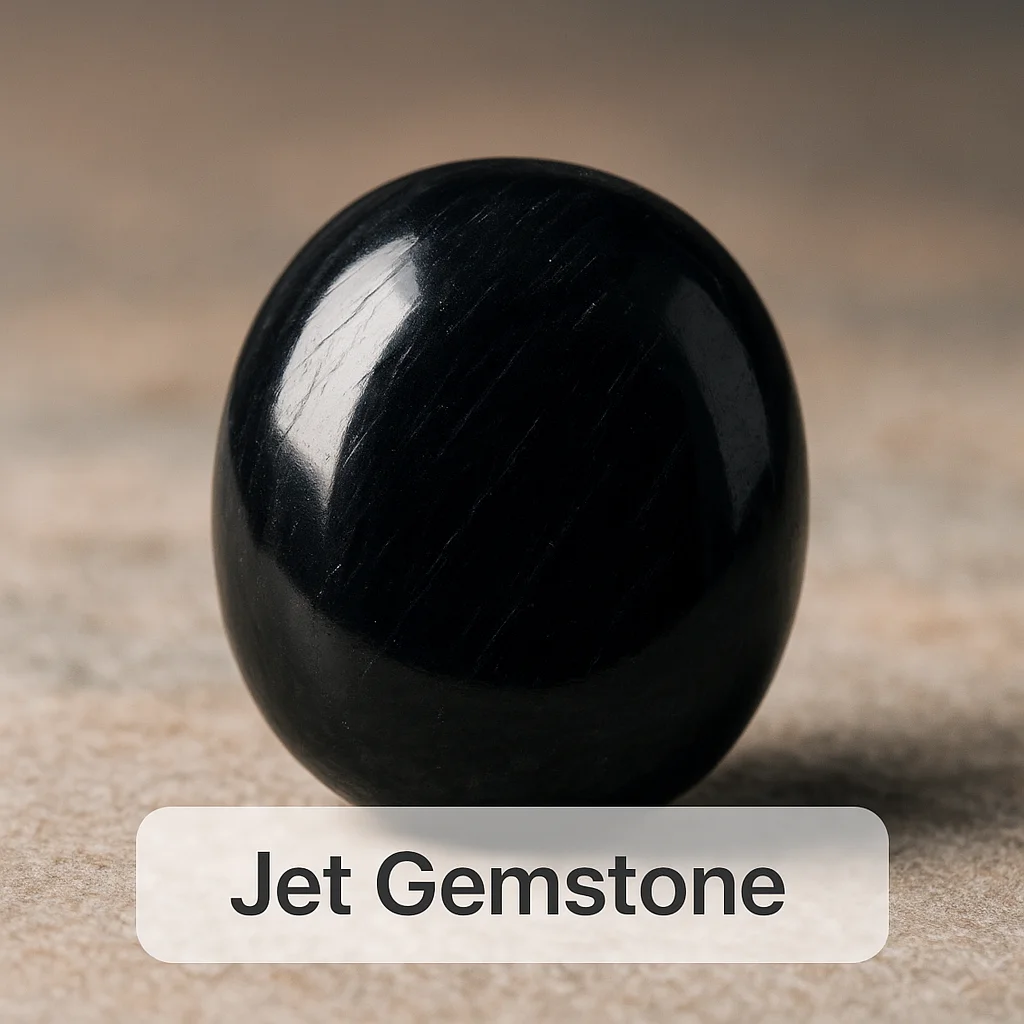
Jet is an organic gemstone known for its deep black appearance and sleek luster. It is not a mineral but rather a variety of lignite coal that has developed over millions of years. Jet is considered an organic gem, similar to amber or pearl, which makes it quite unique among the gemstone community.
This gemstone has been used for centuries in jewelry and decorative arts, most notably during the Victorian era, where it served a significant role in mourning jewelry. Today, jet is still cherished for its rich color and historical significance, making it a popular choice for unique and vintage-inspired jewelry pieces.
In this article, readers will learn about the appearance, properties, formation, and care of jet. Tips on buying and distinguishing it from look-alikes will also be covered, as well as its cultural associations and value factors.
🌍 Where It Comes From
Jet is formed from wood that has been subjected to extreme pressure in waterlogged environments, which slows decay and allows organic material to preserve. This process occurs over millions of years, predominantly in sedimentary environments where layers of sand, mud, or clay settle over decayed trees.
The most famous source of jet is Whitby, located on the northeast coast of England. The region's geological conditions have contributed to producing jet of exceptional quality, making it highly sought after. Other notable sources include parts of Spain, Poland, and Turkey, each offering slight variations in color and texture.
The origin of jet can affect its market value and desirability. While authentic Whitby jet tends to command a premium price due to its reputation and historical significance, other regions provide equally beautiful material that may be more accessible.
🔬 How It Forms
Jet forms under specific geological conditions where wood, typically from coniferous trees, becomes buried and left to deteriorate in the absence of oxygen. Over millions of years, this wood is transformed by pressure and, to some extent, heat into lignite coal. Continued pressure then compacts the lignite until it forms jet.
Unlike other gemstones, jet does not crystallize. It appears in amorphous masses rather than well-defined crystal structures. Its formation process gives it its characteristic lightweight nature and deep black color, which is often compared to the darkest onyx.
The color of jet does not usually vary significantly due to its organic nature, but, unlike many other gems, it can be polished to a glossy sheen that enhances its appeal.
🎨 Color and Look
Jet is prized for its intense black color and subtle luster. When polished, it exhibits a smooth, glassy surface that enhances its mysterious and elegant appearance. The depth of blackness achieved in a high-quality piece of jet is part of its charm and allure.
The appearance of jet can be influenced by its cut and polish, which often aim to maximally reflect light for a glossy finish. Jet does not normally undergo treatments like dyeing or irradiation since its natural beauty is largely appreciated as is.
Because jet is soft and relatively easy to work with, it can be carved into intricate shapes and patterns, contributing to its use in detailed jewelry and art pieces.
🧪 Properties That Matter
The Mohs hardness of jet ranges from 2.5 to 4, making it similar in hardness to amber. This means jet is relatively soft and can be scratched by metals and harder gemstones, making it better suited for earrings and pendants than daily-wear rings.
Jet is also lightweight due to its organic origin, a factor that adds to its comfort when worn as jewelry. However, its toughness is variable and can depend on the quality of the piece, with those of poorer quality more prone to chipping.
The luster of jet can be best described as a velvety sheen when polished, which is highly valued in gemstones for its striking visual impact. Jet fractures irregularly, which again necessitates careful handling and appropriate settings in jewelry.
✨ Meanings, Birthstones, and Culture
Jet is traditionally associated with mourning jewelry, largely due to its solemn black color and historical associations, particularly in Victorian Britain. There, it was worn to signify mourning and remembrance, giving it a lasting symbolic value of elegance and sadness.
While not a formal birthstone, jet is sometimes associated with the zodiac sign Capricorn. Despite its uses in modern jewelry, its symbolic meanings often center around protection and purification, as suggested by various cultural traditions and folklore.
Jet's understated appearance makes it appealing for those who favor accessories with deeper historical connections or a gothic aesthetic.
🧼 Care and Cleaning
Jet should be cleaned using a soft, damp cloth and mild soap. Avoid harsh chemicals or ultrasonic cleaners, as these can damage the gem's surface. Since jet is relatively soft, care should be taken to avoid scratching it; therefore, it should be stored separately from other harder gemstones.
While not prone to significant color changes, jet can be affected by prolonged exposure to direct sunlight and should be kept away from sources of high heat. Jet's porosity means that long soaking should be avoided to prevent moisture damage.
When storing jet jewelry, use a fabric-lined box or separate pouch to minimize contact with hard surfaces and potential abrasion.
🛒 Buying Tips and What to Check
When purchasing jet, quality factors such as the depth of color, polish, and cut should be considered. Jet with a high-grade polish and smooth finish is more desirable. It's smart to inquire about the source of the jet, as pieces from Whitby may carry a higher value.
Given the softer nature of jet, inspect items thoroughly for scratches or chips, especially on vintage pieces where wear and tear may have occurred. Always ask sellers about any treatments the jet may have undergone, even though it's not commonly treated.
For high-value or rare pieces, obtaining a lab report can provide additional reassurance regarding authenticity. When buying online, ensure the seller provides clear photos, a return policy, and transparent information about the stone's properties.
⚠️ Real vs Fake and Common Look-Alikes
In the market, some imitation jets, often made from plastic or glass, are sold. These may appear similar but usually lack the lightweight nature and warm feel of genuine jet. Testing by a professional gemologist can help confirm a piece's authenticity.
Other materials, such as black onyx or obsidian, may also be mistaken for jet due to their similar appearance but are significantly denser and harder than jet. Understanding these differences can help enthusiasts make informed purchasing decisions.
Natural jet remains the preferred choice for those valuing authenticity, but distinguishing it from imitations requires an expert eye. Consumers should be cautious of misleading terms and always prioritize trusted sources when acquiring jet jewelry.
❓ Common Questions and Misconceptions
Is it a mineral or a rock? Jet is an organic gemstone, not a traditional mineral or rock.
Is it a birthstone? Jet is not an official birthstone but holds symbolic value for some signs.
Will it scratch easily? Yes, due to its softness, jet is prone to scratching.
Can it go in water? Brief contact is okay, but avoid long soaking due to porosity.
Does color fade in sunlight? Prolonged exposure may dull its luster, so shield it from intense light.
What treatments are common? Jet is typically untreated and valued for its natural beauty.
Is lab-grown 'fake'? Lab-created jet-like materials do exist but are considered imitations.
How do I store it safely? Store jet in a soft pouch and keep it separate from harder gems.
Do inclusions always lower value? Inclusions can affect value but are less common in jet.
How do I pick a good one for jewelry? Look for deep color, smooth finish, and strong polish.
📌 Summary
- Jet is an organic gemstone, historically valued for its deep black color.
- Typically presents an opaque, velvety black look.
- Forms from waterlogged wood under pressure over millions of years.
- Soft, with Mohs hardness of 2.5 to 4, suitable for earrings/pendants.
- Rarely treated, valued for natural appearance.
- Best obtained from trusted sources to avoid imitations.
- Ease of care using gentle soap and water; protect from scratches.
- Authentic pieces more fragile; avoid daily wear in rings.
- Common look-alikes include plastic, glass, black jasper.
- Lab reports verify authenticity but consumer vigilance is key.
- Though not a birthstone, it holds historical cultural significance.
- Jet's unique formation and appearance make it an enduring symbol of elegance.