💎 Pearl Luster and Surface Guide
🪨 What It Is
Pearls are unique organic gemstones that originate from living creatures, specifically mollusks like oysters and mussels. Unlike other minerals, pearls form inside the shells of these animals, making them distinct in the world of gemstones. The surface of a pearl is known for its captivating luster, which is a measure of the quality of its reflective sheen.
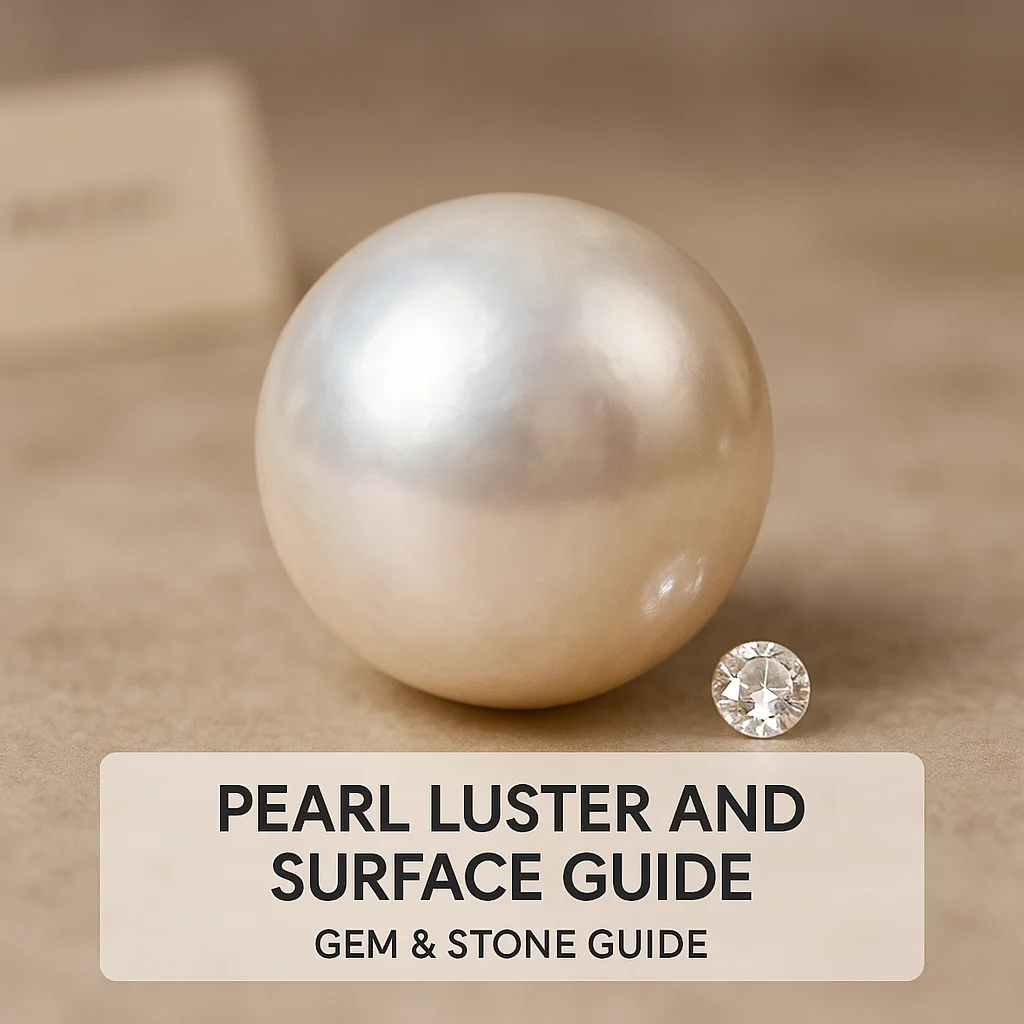
As pearls naturally occur, they are rounded in shape, although they can also be found in unique forms referred to as "baroque" shapes. Pearls are extremely popular in jewelry, often associated with elegance and timeless beauty. They are frequently seen in necklaces, earrings, and bracelets.
This guide will help beginners understand the appearance and key properties of pearls, how they form, and how to care for them. You will also learn about significant buying considerations and common misconceptions.
🌍 Where It Comes From
Pearls are primarily found in marine or fresh water environments. They naturally form in both saltwater and freshwater mollusks that are native to various parts of the world. Major pearl-producing regions include parts of East Asia, the South Pacific, and the coasts of Australia.
The origin of a pearl can play a crucial role in determining its value and characteristics. For example, pearls from the South Sea are well-known for their large size and lustrous appearance, while Japanese Akoya pearls are cherished for their classic beauty and perfect symmetry.
Factors such as water temperature and mineral content in the environment can influence the growth and appearance of pearls, affecting luster, size, and color. Due to these varying factors, pearls from different regions are often distinct and carry unique market reputations.
🔬 How It Forms
Pearls form when a foreign substance enters a mollusk's shell, causing the mollusk to secrete layers of nacre—essentially calcium carbonate—around the irritant. This natural defense mechanism results in the production of a pearl over time. The process can take several months to years, depending on the species of mollusk and environmental conditions.
While natural pearls form independently in wild mollusks, most pearls in the market today are cultured. Cultured pearls arise when humans intentionally introduce an irritant into an oyster to stimulate nacre secretion. This method allows for controlled production of pearls, often yielding higher quality specimens than naturally occurring pearls.
The purity and uniformity of nacre layers contribute to the pearl's luster and surface quality. Therefore, pearls with thick and consistent nacre layers are highly prized for their depth and iridescence.
🎨 Color and Look
Pearls are treasured for their diverse range of colors, which can include classic white, subtle pink, golden hues, and even rare black. The color of a pearl is influenced by the type of mollusk, the environment in which it grows, and layers of nacre.
The optical allure of pearls is further accentuated by their luster, or how brightly they reflect light. Higher luster pearls will display a vividly reflective and nearly mirror-like surface, enhancing their visual appeal.
Pearls can undergo treatments to enhance their color and luster, such as bleaching and dyeing. While these processes can improve appearance, they should be disclosed to buyers, as treated pearls may have different care requirements than untreated ones.
🧪 Properties That Matter
Pearls possess unique properties that buyers should consider for wear and ownership. They rank low on the Mohs hardness scale, with values typically around 2.5 to 4.5, making them relatively soft compared to other gemstones and susceptible to scratches.
The toughness of pearls is moderate, meaning they can chip or fracture if struck. Therefore, pearls are best suited for jewelry that experiences less daily wear, like earrings and necklaces, rather than rings.
Their luster and transparency are key factors defining their visual appeal and ultimately their value. High-quality pearls display a radiant sheen and vibrant surface reflection.
✨ Meanings, Birthstones, and Culture
Pearls have a long-standing association with purity, wisdom, and wealth. Throughout history, they have symbolized elegance and are traditionally associated with June as a birthstone. Those born in June celebrate pearls as a representation of serenity and foresight.
In modern culture, pearls continue to be a staple in bridal jewelry, often representing innocence and grace. Wedding traditions frequently incorporate pearls as tokens of love and beauty.
While pearls carry significant cultural symbolism, these associations are rooted in tradition rather than scientific evidence. Pearls are esteemed for their aesthetic and cultural value rather than any purported mystical properties.
🧼 Care and Cleaning
Gentle care is crucial in maintaining the beauty of pearls. It is advisable to clean pearls using mild soap and lukewarm water, avoiding abrasive cloths that could scratch their surface. A soft cloth can be used to dry and polish them after cleaning.
Pearls should not be exposed to harsh chemicals or acidic substances, which can erode the nacre. It's recommended to avoid wearing pearls during activities that could lead to bumps or knocks.
To prevent scratching, pearls should be stored separately from other jewelry, preferably in a felt-lined box or a silk pouch. Proper storage will help preserve their luster and prevent damage over time.
🛒 Buying Tips and What to Check
Several factors can influence the price and quality of pearls. These include size, color, luster, surface quality, and shape. Typically, larger pearls with fewer blemishes and more radiant luster fetch higher prices.
When purchasing pearls, inquire about any treatments they may have undergone. Buying from reputable sellers and obtaining a lab report can provide assurances about authenticity and quality.
A beginner's checklist for online purchases includes inspecting detailed photographs and reviews, checking return policies, and ensuring full disclosure of treatments.
⚠️ Real vs Fake and Common Look-Alikes
The distinction between natural, synthetic (lab-grown), and imitation pearls is important. Natural and cultured pearls involve genuine nacre formation, while synthetic pearls are crafted in labs, replicating this process.
Imitation pearls, often made from glass or plastic, lack the intrinsic qualities of real pearls but are designed to mimic their appearance. Assembled stones like doublets or triplets may combine materials to enhance visual appeal.
To reliably identify pearls, professional appraisal and testing are recommended, as home methods may be insufficient or potentially damaging.
❓ Common Questions and Misconceptions
Is it a mineral or a rock?
Pearls are neither minerals nor rocks; they are organic gems.
Is it a birthstone?
Yes, pearls are the birthstone for June.
Will it scratch easily?
Pearls are soft and can be scratched easily, so gentle handling is advised.
Can it go in water?
Yes, but prolonged soaking should be avoided, and they should be dried promptly.
Does color fade in sunlight?
Extended sun exposure can cause some pearls to fade, so they should be stored away from direct light.
What treatments are common?
Bleaching and dyeing are common treatments used to enhance color and appearance.
Is lab-grown 'fake'?
Lab-grown pearls replicate natural processes and are considered real, unlike imitation pearls.
How do I store it safely?
Keep pearls in a soft pouch or lined box, separate from other items.
Do inclusions always lower value?
Inclusions can affect value, although minor blemishes are often acceptable.
How do I pick a good one for jewelry?
Look for high luster, minimal blemishes, and a pleasing color and shape.
📌 Summary
- Pearls are organic gems formed inside mollusks.
- They are most commonly found in marine and freshwater environments.
- The formation involves nacre layering around an irritant.
- Key properties include softness and unique luster.
- Common treatments include bleaching and dyeing.
- Use gentle cleaning methods to maintain their beauty.
- Best used in jewelry like necklaces and earrings.
- Imitation pearls are often glass or plastic.
- Lab-grown pearls are genuine but man-made.
- Buying tips include understanding treatments and reputable sourcing.
- Pearls are the traditional June birthstone.
- Pearls symbolize timeless beauty and purity across cultures.