💎 Pearl Shapes Round vs Baroque
🪨 What It Is
Pearls are organic gems that form in mollusks, primarily oysters and mussels. They are cherished for their beauty and are traditionally associated with elegance and sophistication. Pearls are not minerals but are typically classed alongside gemstones due to their use in fine jewelry.
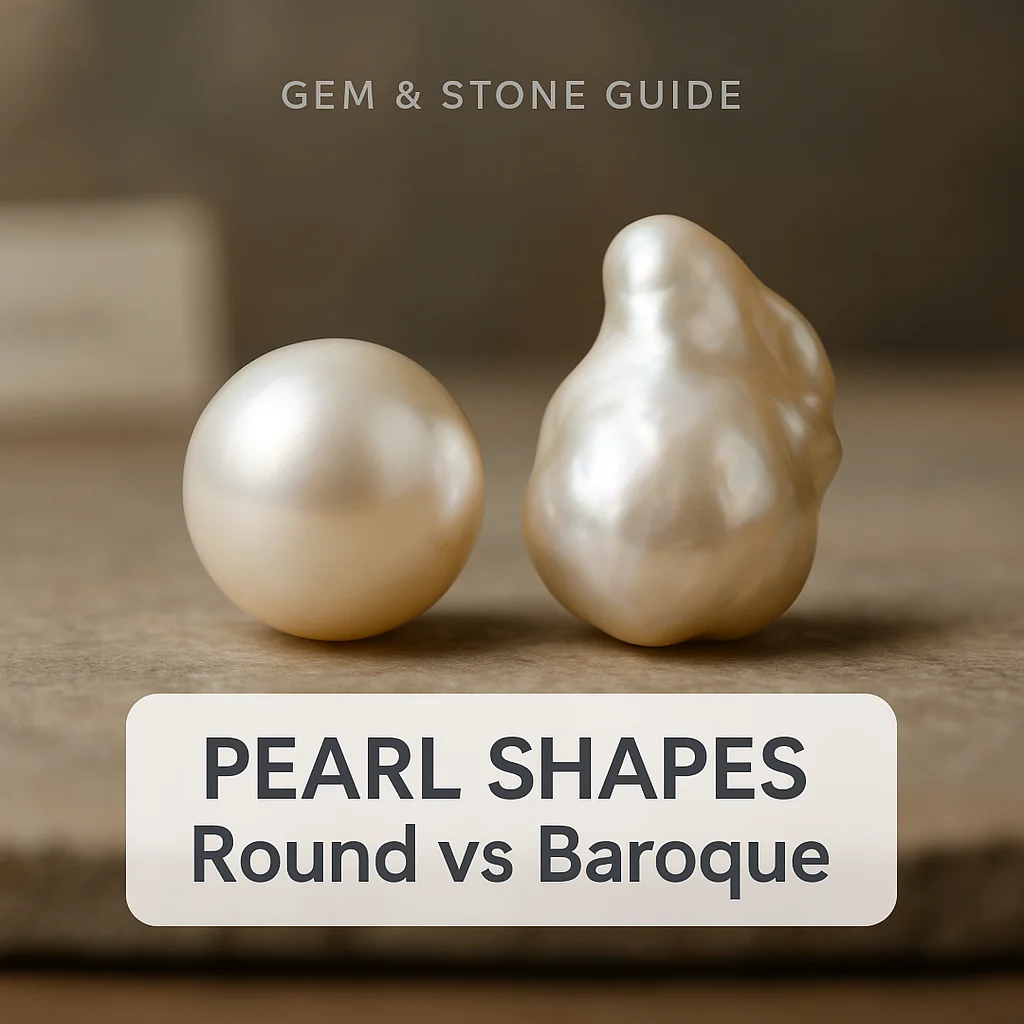
When discussing pearls, particularly in terms of shape, two varieties often come up: round pearls and baroque pearls. Round pearls are the most classic and sought-after shape, prized for their symmetry and uniform appearance. In contrast, baroque pearls are known for their irregular, non-spherical shapes, offering a more unique and organic aesthetic.
This article will guide you through the differences between these two pearl shapes, including their appearance, properties, origins, value, care, and purchasing advice. Whether you’re a beginner looking to make an informed purchase or simply curious about these gems, you'll find this information valuable.
🌍 Where It Comes From
Pearls are formed in marine environments, primarily within oysters and certain mussels. They can be found in both saltwater and freshwater bodies. Saltwater pearls are usually harvested from marine oysters found in the oceans, while freshwater pearls come from mussels in rivers, lakes, and ponds.
The most notable regions for saltwater pearl production include the coastal waters of Japan, French Polynesia, and Australia. These regions are renowned for producing high-quality Akoya, South Sea, and Tahitian pearls, respectively. Freshwater pearls are commonly cultured in China, which dominates the market with its large-scale production.
Origin can significantly influence a pearl's value and reputation. For instance, South Sea pearls are often considered some of the finest and largest pearls, attributed to the white and golden hues of the oyster variety found in these waters. Understanding where a pearl originates can provide insights into its characteristics and overall quality.
🔬 How It Forms
Pearls form when an irritant, such as a grain of sand or a piece of parasite, enters an oyster or mussel. In response, the mollusk secretes nacre, a lustrous substance composed of calcium carbonate, around the irritant to protect itself. Over time, layer upon layer of nacre builds up, eventually forming a pearl.
The formation process can take several months to years, depending on the type of pearl. Round pearls typically result when the irritant is spherical in shape, allowing even deposition of nacre. Baroque pearls form when the irritant's shape or the deposition of nacre is irregular, resulting in unique shapes.
The color of pearls is influenced by the mollusk species, water conditions, and the type of nacre. For example, Tahitian pearls are known for their dark hues, ranging from black to gray with peacock overtones, due to the specific type of oysters they are cultivated in.
🎨 Color and Look
Pearls can exhibit a wide spectrum of colors, from classic white and cream to more exotic shades like black, pink, blue, and gold. The undertones, influenced by the pearl’s nacre layers, can add secondary colors, creating a visually stunning effect.
The appearance of pearls, particularly their luster or shine, is one of the most important factors in their value. This luster is a result of the nacre's smooth surface and the way it reflects light. The shape also plays a role; round pearls reflect light evenly, enhancing their luster, while baroque pearls offer intriguing reflections due to their varied surfaces.
Common treatments to enhance pearl appearance include bleaching and polishing to produce a uniform, lustrous surface, particularly in white pearls. These treatments are widely accepted but should be disclosed when purchasing high-value pearls.
🧪 Properties That Matter
Pearls have a relatively low Mohs hardness rating, around 2.5 to 4.5. This indicates they can be easily scratched by harder materials. Their toughness can vary; while generally resistant to breakage, they can be chipped or scratched if mishandled.
Pearls have no distinct cleavage, meaning they don’t break along specific planes but can fracture unevenly under stress. Proper care is crucial as they are mainly composed of calcium carbonate and are sensitive to acids, making exposure to chemicals and direct sunlight harmful.
Round pearls are often preferred for daily-wear items like earrings and necklaces due to their symmetrical beauty, while baroque pearls are favored for artistic and unique jewelry designs, given their unconventional shapes.
✨ Meanings, Birthstones, and Culture
Throughout history, pearls have been associated with purity, wisdom, and wealth. While not linked to a specific birth month, they are often suggested as an alternative birthstone for June alongside alexandrite and moonstone.
Culturally, pearls have been revered in many societies. In ancient Rome, they were considered the ultimate symbol of wealth and status, while in India, they are traditionally associated with the moon and possess a religious significance.
Modern jewelry traditions continue to embrace pearls for weddings and formal occasions, symbolizing elegance and refinement. Their timeless appeal keeps them popular across different cultural contexts and fashion trends.
🧼 Care and Cleaning
Pearls require gentle care to maintain their luster and integrity. It is recommended to clean them using mild soap and lukewarm water, gently wiping with a soft cloth. Avoid exposing pearls to harsh chemicals such as perfumes, hair sprays, and household cleaners that can damage their surface.
Given their organic nature and porous structure, pearls should not be soaked for extended periods or subjected to sudden temperature changes that can cause them to crack. It is advised to put on jewelry after makeup and hair routines to minimize pearl exposure to cosmetics.
Storage is also crucial; pearls should be kept separately from other gemstones to prevent scratches. A soft pouch or lined jewelry box is ideal to preserve their condition over time.
🛒 Buying Tips and What to Check
When purchasing pearls, consider the "5 Pearl Value Factors": size, shape, color, luster, and surface quality. Larger pearls tend to be more valuable, while perfectly round pearls generally command higher prices than baroque styles.
Ensure that any treatments or enhancements are disclosed. Certificates from reputable laboratories can assure the authenticity and treatment details of high-value pearls.
For online purchases, check for clear photographs, a reliable return policy, and a trustworthy seller reputation. Good customer service and transparency can be indicative of a seller's reliability.
⚠️ Real vs Fake and Common Look-Alikes
Distinguishing between natural, synthetic, and imitation pearls can be challenging. Natural pearls form without human intervention, while synthetics are lab-cultured or freshwater versions, often marketed as "real" due to their natural composition.
Imitation pearls, typically made from glass or plastic, are designed to mimic pearls in appearance but lack their weight and luster. Assembled pearls, or doublets/triplets, feature a thin pearl layer bonded to a different core.
Professional gemologists can reliably identify and authenticate pearls, as distinguishing real pearls from imitations by eye can be difficult and risky.
❓ Common Questions and Misconceptions
"Is it a mineral or a rock?" Pearls are neither; they are organic gems.
"Is it a birthstone?" Pearls are an alternative birthstone for June.
"Will it scratch easily?" Yes, pearls are soft and can scratch easily.
"Can it go in water?" Briefly, yes, but it’s best to avoid prolonged soaking.
"Does color fade in sunlight?" Prolonged sun exposure can diminish their luster over time.
"What treatments are common?" Bleaching and luster-enhancing treatments are common.
"Is lab-grown 'fake'?" No, lab-grown pearls are genuine but differ from natural pearls in their formation process.
"How do I store it safely?" In a soft pouch, separately from other jewelry.
"Do inclusions always lower value?" Not always; some inclusions are natural and acceptable.
"How do I pick a good one for jewelry?" Evaluate luster, surface quality, and shape for your needs.
📌 Summary
- Pearls are organic gems not classified as minerals.
- They come in various shapes, with round and baroque being popular
- Pearls form when nacre coats an irritant inside a mollusk.
- They have variable hardness and are prone to scratching.
- Treatments often enhance color and luster; disclosure is vital.
- Use mild soap and water for cleaning; avoid harsh chemicals.
- Round pearls are suitable for classic jewelry, baroque for artistic designs.
- Imitation pearls are typically glass or plastic-based.
- Professionals should authenticate to distinguish real from fake.
- Buying tips include checking pearl quality factors and seeking reports.
- Pearls are traditionally linked with elegance and purity.
- The formation process and shape provide an intriguing history and uniqueness.