💎 Shell Cameo
🪨 What It Is
Shell cameos are exquisite gemstone carvings made primarily from seashells. Known for their intricate depictions, these carvings feature a raised relief pattern against a contrasting background. Unlike mineral gemstones, shell cameos are organic, meaning they originate from living organisms.
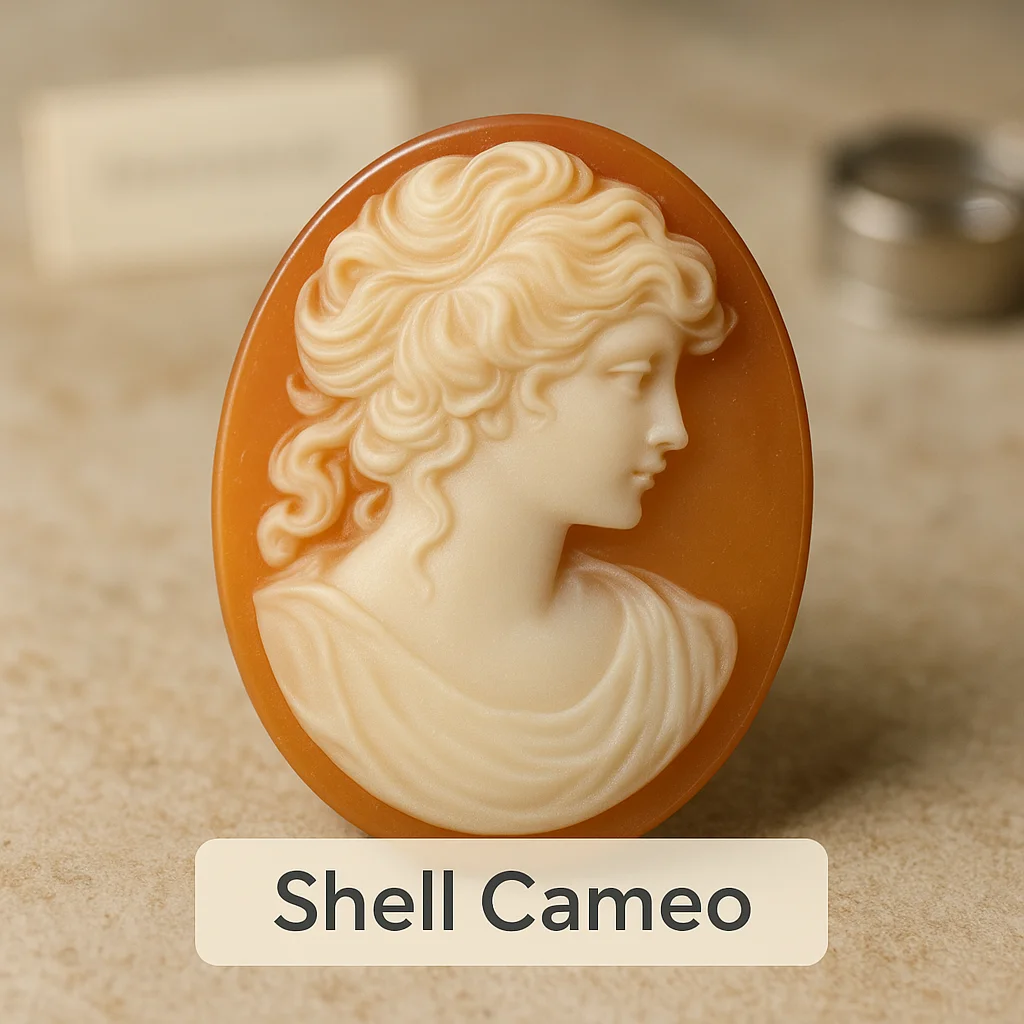
Surprisingly for some, shell cameos are not a singular gem type but rather a style of carving typically seen in jewelry such as brooches and pendants. The process involves carving figures or scenes onto the shell surface, resulting in two-tone images with excellent contrast.
This article will explore the nature and origins of shell cameos, how they form, their aesthetic qualities, and how to properly care for and purchase them.
🌍 Where It Comes From
Shell cameos primarily originate from shells found in marine environments. The most commonly used shell varieties are the Cassis, belonging to the helmet shell family, and the Cypraecassis. These shells are typically sourced from warm, tropical seas.
Countries like Italy have gained a reputation for crafting high-quality shell cameos, especially in regions such as Torre del Greco. This Italian city is revered for its skilled artisans who have mastered the art of cameo carving over centuries.
The origin of the shell can influence the cameo's color and structure, which in turn affects how easy it is to carve intricate designs. Although other regions produce shell cameos, Italy remains a hub for traditional craftsmanship, providing pieces with high aesthetic and market value.
🔬 How It Forms
The formation of shell cameos begins with the natural growth of the marine shells. These shells develop layers over time through biological processes, where organisms deposit calcium carbonate to form sturdy exoskeletons.
Once harvested, skilled artisans carve the shell using delicate tools. The cutting and carving process must balance precision and artistry to produce the raised imagery without damaging the shell layers.
Common designs feature mythological themes, flora and fauna, and historical figures. The relief effect is achieved by removing selected shell layers, exposing the underlying layers of different colors naturally present in the shell.
🎨 Color and Look
Shell cameos are admired for their beautiful color contrasts, typically a salmon-pink or creamy white relief against a darker background. This natural coloration comes from the layered structure of the shells.
The cameo's beauty can also be enhanced by the cut and polish. A well-polished cameo will reflect light more effectively, highlighting the details of the carved images.
While natural colors are common, some shell cameos may undergo treatments to enhance or stabilize their hues. It's essential to inquire about any treatments when making a purchase.
🧪 Properties That Matter
Shell cameos are relatively soft, with a Mohs hardness of about 3-4, indicating their vulnerability to scratches. As such, they are best suited for jewelry that isn't subjected to hard knocks, like pendants or brooches.
Their toughness is moderate, making them susceptible to chipping if not handled with care. However, their lack of cleavage means they do not easily split along defined planes.
The luster of a well-crafted shell cameo is usually waxy, contributing to its elegant appearance. This should be considered when selecting a piece for specific jewelry uses.
✨ Meanings, Birthstones, and Culture
While shell cameos are not associated with any birthstone month, they carry rich historical significance. Traditionally, cameos have been linked with noble and romantic ideals, often symbolizing grace and beauty.
In jewelry traditions, cameos have long been prized for their artistic value and are particularly popular in vintage and antique collections.
Though modern beliefs associate certain symbolic meanings with them, these meanings vary widely and are more cultural than scientific in nature.
🧼 Care and Cleaning
Proper care is essential for shell cameos to maintain their beauty. Cleaning should be done gently with a soft cloth and mild soap and water. Avoid abrasive materials and harsh chemicals.
Due to their porous nature, shell cameos should not be exposed to excessive moisture or sudden temperature changes, which could cause cracking or discoloration.
When not in use, store shell cameos separately from other jewelry to prevent scratches, ideally in a cloth-lined box or a soft pouch.
🛒 Buying Tips and What to Check
Several factors affect the price and quality of a shell cameo. The intricacy of the carving, the quality of the shell, and the artisan's reputation all contribute to price variations.
When considering a purchase, inquire about any treatments the cameo may have undergone. High-value pieces should ideally come with verification from a reputable gemological laboratory.
For online buying, ensure the seller has a clear return policy, and their listings provide detailed photos. Check for positive seller reviews and transparency about the product's origin and treatments.
⚠️ Real vs Fake and Common Look-Alikes
In the world of shell cameos, distinguishing real pieces from fakes can be challenging. Natural shell cameos are carved from genuine shells, while synthetic versions might use molded plastic or glass.
Imitations can be identified by their lack of layered relief and uniform coloring. Authenticity is best confirmed through professional testing and appraisal.
Common look-alikes include imitation cameos made of resin. These reproductions do not offer the same contrast and feel as genuine shell cameos.
❓ Common Questions and Misconceptions
Is it a mineral or a rock? Shell cameos are organic gems, not minerals or rocks.
Is it a birthstone? Shell cameos are not linked to any specific birthstone month.
Will it scratch easily? Yes, due to their soft nature, they scratch relatively easily.
Can it go in water? Prolonged exposure should be avoided as it might damage the cameo.
Does color fade in sunlight? While shell cameos are relatively stable, extended sunlight exposure might dull their appearance.
What treatments are common? Some may be treated to enhance color, so always inquire.
Is lab-grown 'fake'? Lab-created versions do exist and are different from naturally carved pieces.
How do I store it safely? Store separately in a soft fabric, away from direct sunlight or moisture.
Do inclusions always lower value? Not necessarily, as some inclusions are natural and expected.
How do I pick a good one for jewelry? Look for clear, intricate carvings without damages or irregular color patches.
📌 Summary
- Shell cameos are carved from marine shells, offering unique organic appeal.
- They typically display two-tone color contrasts with intricate designs.
- Formed by natural shell growth followed by skilled carving.
- Soft and best suited for less-bumped jewelry pieces like pendants.
- Some may be color-stabilized or enhanced; ask about treatments.
- Clean gently with soap and water, store separately to avoid scratches.
- Ideal for pendants, brooches, and earrings rather than rings.
- Imitation versions exist; look for details in carving and contrast.
- Authenticity confirmation usually requires a professional appraisal.
- Before buying, check seller reputation, photos, and return policies.
- Not a traditional birthstone but has historical and cultural symbolism.
- Remember: Shell cameos are valued for artistry and the skill of their craftsmanship.