💎 Alexandrite Fine Quality
🪨 What It Is
Alexandrite is a captivating gemstone variety of the mineral chrysoberyl, known for its extraordinary color-changing ability. This rare and enchanting characteristic makes it one of the most valuable and sought-after gemstones in the world.
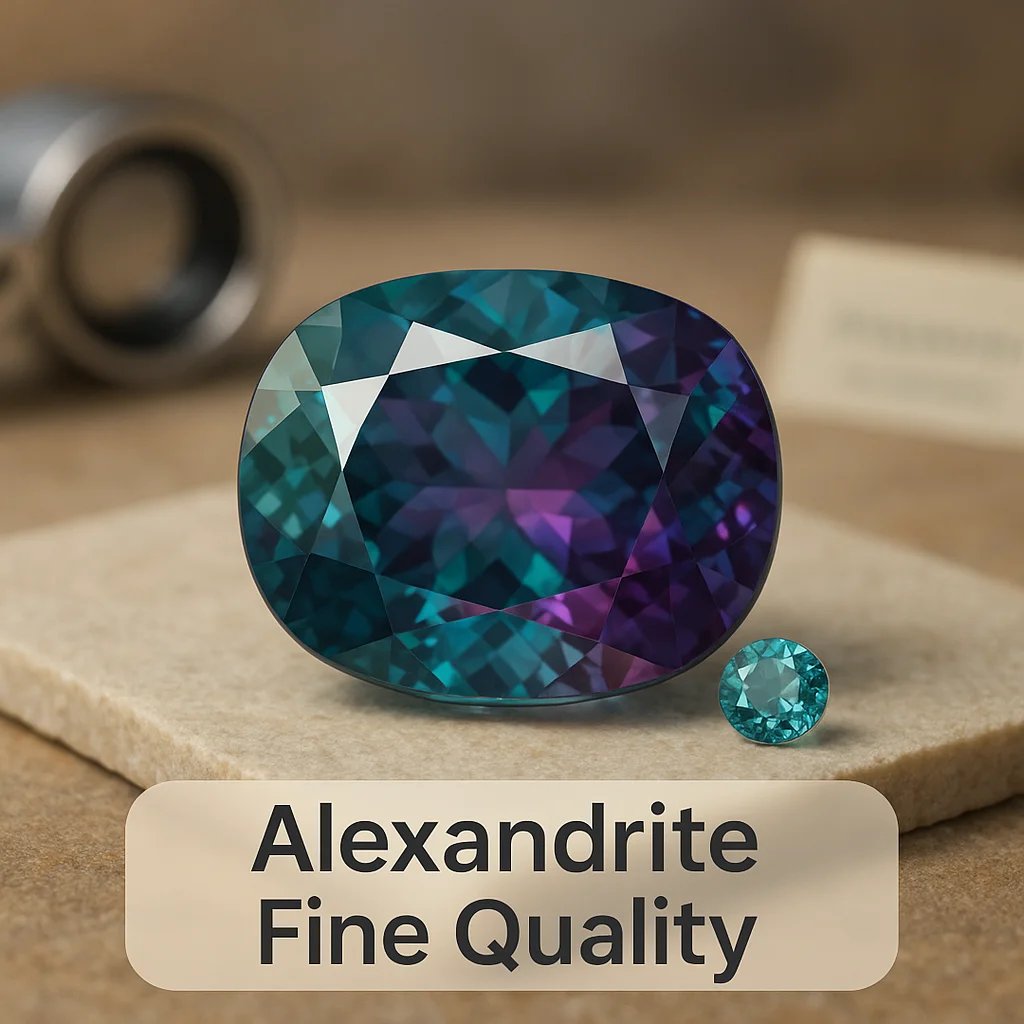
Often referred to as "emerald by day, ruby by night," alexandrite displays a remarkable transformation from greenish hues in daylight to reddish tones under incandescent light. This optical phenomenon is not only a natural wonder but also contributes significantly to the stone's allure.
Alexandrite is June's birthstone, sharing this honor with pearl. Those born in this month or anyone fascinated by its unique properties will find it a fascinating addition to their gemstone collection. In this article, we will explore its appearance, properties, origins, care, and buying tips.
🌍 Where It Comes From
Alexandrite forms primarily in metamorphic rock structures, where limestone undergoes transformation under intense heat and pressure. The precise trace elements present during formation significantly influence the stone's color-changing ability.
The original discovery site of alexandrite was in the Ural Mountains of Russia during the 19th century. These Russian stones set the benchmark for quality and are renowned for their superior color change and clarity. However, high-quality alexandrite can also be found in Sri Lanka, Brazil, and parts of Africa, each producing stones with unique characteristics.
Geographical origin plays a role in the market reputation of alexandrite. Russian stones are deemed the most prestigious due to their history and exceptional quality. In comparison, stones from other regions might vary in price and desirability based on their color and clarity.
🔬 How It Forms
Alexandrite forms through a complex geological process where certain rock types undergo transformation. These rocks must contain both beryllium and chromium, essential for the formation of chrysoberyl and the resulting color change.
This gemstone's color change is due to the presence of chromium ions. Under different lighting conditions, the wavelengths of light absorbed and reflected by these ions result in the stone's unique color transformation.
The crystal habit of alexandrite is typically prismatic, with well-defined forms. It is found as individual crystals, sometimes displaying twinning, which can add to the gem's complexity and beauty.
🎨 Color and Look
The hallmark of alexandrite is its color-changing ability. In daylight or fluorescent lighting, it appears green to bluish-green. Under incandescent light, its appearance shifts dramatically to red or purplish red.
The cut and polish of alexandrite can significantly influence its visual appeal. A well-cut alexandrite will maximize the color shift effect and enhance the stone's luster, adding to its overall beauty and value.
While most alexandrite is not treated, it is important for buyers to inquire about any treatments. As with many gemstones, treatments can enhance the color or clarity of alexandrite, and this information should be disclosed during purchase.
🧪 Properties That Matter
Understanding the physical properties of alexandrite can help guide its use in jewelry. The gem has a Mohs hardness of 8.5, making it fairly resistant to scratches and suitable for daily wear in various types of jewelry.
However, despite this hardness, alexandrite's toughness—the ability to resist chipping—is moderate, requiring care to avoid impacts that might cause damage. It has a conchoidal to uneven fracture, meaning it doesn't have perfect cleavage.
The luster of alexandrite is vitreous, or glass-like, which contributes to its brilliance. Its transparency ranges from transparent to translucent, depending on the quality and presence of inclusions within the stone.
✨ Meanings, Birthstones, and Culture
Alexandrite is traditionally associated with balance and enlightenment due to its transformational color properties. It is said to symbolize joy and good fortune, often gifted for 55th wedding anniversaries.
This gemstone is one of the birthstones for June, sharing this status with pearl. Being a birthstone adds to its desirability as a personalized and meaningful gift.
In terms of folklore, alexandrite is sometimes believed to aid in focusing energy and bringing clarity during times of decision-making, though these are not supported by scientific evidence.
🧼 Care and Cleaning
The best way to clean alexandrite jewelry is with warm soapy water and a soft cloth. Avoid using harsh chemicals or ultrasonic cleaners, as these can damage the stone or its setting.
Alexandrite should also be stored separately from other gemstones to prevent scratches, ideally in a cloth-lined jewelry box or soft pouch. Keeping it away from direct sunlight and avoiding sudden temperature changes are also recommended.
While the stone is durable, taking these precautions will help maintain its color and clarity over time, ensuring that it remains a cherished piece for years.
🛒 Buying Tips and What to Check
When purchasing alexandrite, several factors affect its price and desirability, including color change, clarity, cut, and carat size. Stones with a strong color change and higher clarity are more valuable.
It is wise to ask about any treatments the stone has undergone and request a gemological report for high-value purchases. Gem reports can confirm the authenticity and disclose any treatments.
For online purchases, check for detailed photos, a clear return policy, and the seller's reputation. Full disclosure of treatments and origin should also be provided to ensure transparency.
⚠️ Real vs Fake and Common Look-Alikes
Real alexandrite can be natural, coming from the earth, or synthetic, created in a lab with the same chemical properties. Synthetic alexandrite is not fake but can be less valuable than natural stones.
Imitations made from glass or plastic, often mistaken for alexandrite, do not change color and lack the same properties. Assembled stones may also be sold as alexandrite; these have a thin layer of real stone on top of a different material.
Professional testing and gemological equipment are required to verify the authenticity of alexandrite. Attempting to distinguish it at home can be unreliable and is not recommended.
❓ Common Questions and Misconceptions
Is it a mineral or a rock? Alexandrite is a mineral variety.
Is it a birthstone? Yes, it is one of the birthstones for June.
Will it scratch easily? It has a Mohs hardness of 8.5, so it is resistant to scratches.
Can it go in water? Yes, but avoid long soaking and harsh chemicals.
Does color fade in sunlight? Alexandrite is generally stable in color.
What treatments are common? Few treatments exist; ensure disclosures at purchase.
Is lab-grown 'fake'? No, synthetics have identical chemical compositions.
How do I store it safely? Separately, in soft, cloth-lined containers.
Do inclusions always lower value? Not always; it depends on their size and visibility.
How do I pick a good one for jewelry? Look for strong color change and clear stones.
📌 Summary
- Alexandrite is a rare, color-changing chrysoberyl variety.
- Typically changes from green to red depending on light.
- Forms under high heat and pressure in metamorphic rocks.
- Has a Mohs hardness of 8.5, durable but with moderate toughness.
- Color and clarity affect value; few treatments available.
- Clean with mild soap and soft cloth, avoid harsh treatments.
- Popular in rings, pendants, and as a June birthstone.
- Common look-alikes include synthetic and glass imitations.
- Authenticity confirmed by professional gemological reports.
- Purchasing tips include checking color change and clarity.
- Traditionally linked to joy and balance; cultural significance.
- Memorable for its extraordinary ability to change colors.