💎 Benitoite
🪨 What It Is
Benitoite is a rare blue barium titanium silicate mineral that is prized in the gemstone world for its striking color and brilliance. As an exceptionally bright gemstone, benitoite has captured the attention of gem enthusiasts and collectors alike. It is not widely available, which adds to its charm and value, making it a sought-after stone in the gem market.
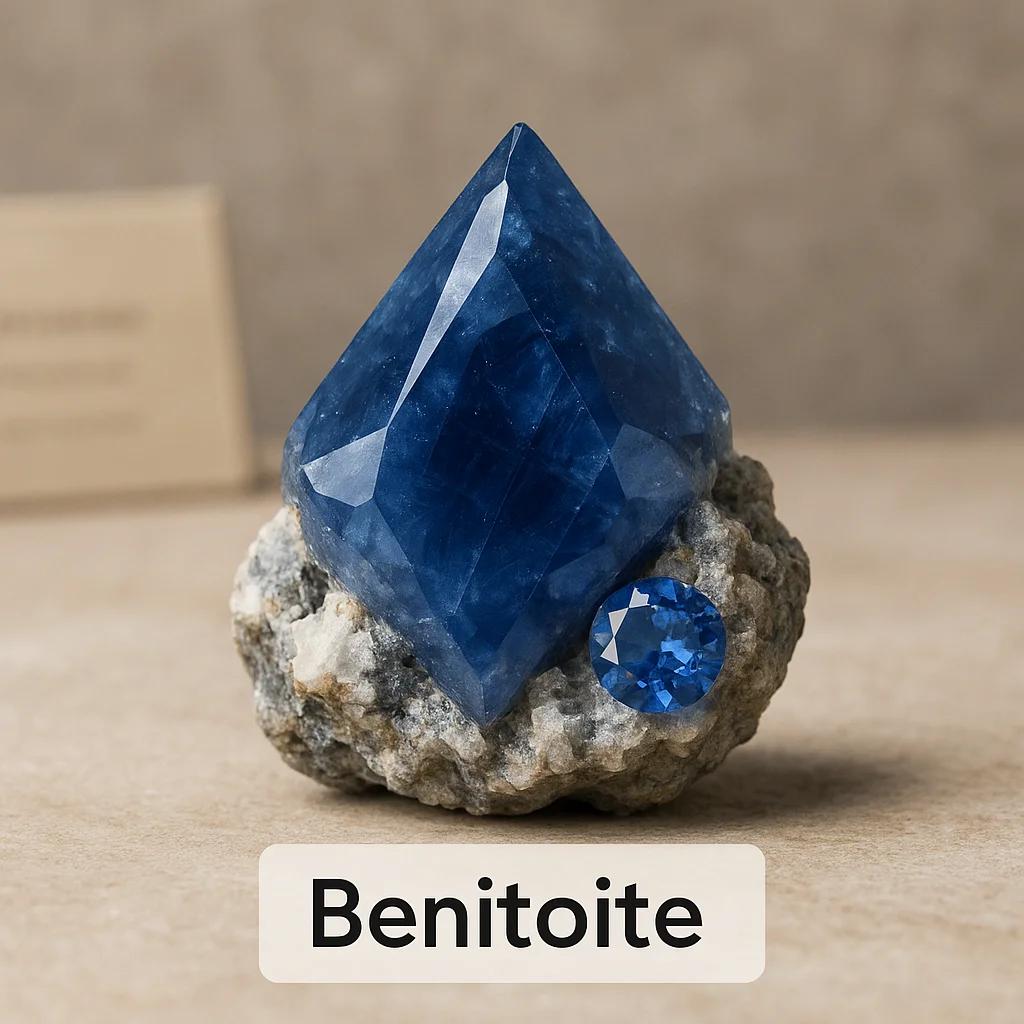
Though not a birthstone, benitoite is celebrated for its unique qualities and beauty in jewelry. This stone can be found mounted in a variety of jewelry pieces, from rings to pendants, making it a versatile addition to any collection. People are often drawn to its vivid blue color and the story of its discovery.
This article will dive into the fascinating aspects of benitoite, including its origins, formation, properties, and care recommendations. Whether you're a beginner or an experienced gem enthusiast, you'll find valuable insights on how to appreciate and handle this intriguing gemstone.
🌍 Where It Comes From
Benitoite is primarily found in California, United States, specifically near the San Benito River, from which it derives its name. This area is known for its unique geological conditions, which are conducive to the formation of this rare mineral. Although occurrences of benitoite have been reported in other parts of the world, such as Japan and Arkansas, these locations produce only minute quantities, if at all.
The geological environment in which benitoite forms is typically related to hydrothermal conditions. It is often found in association with serpentinite, a type of rock derived from the metamorphism of ultramafic rocks from the Earth's mantle. The combination of high temperature and pressure, along with the presence of specific chemical elements, creates the perfect environment for benitoite formations.
Regions known to produce benitoite have built a reputation in the gem market. The origin of a benitoite specimen can impact its market value, as the stones from California are often considered more desirable due to their vivid coloration and superior qualities.
🔬 How It Forms
Benitoite forms under specific hydrothermal conditions, where hot fluids circulate through rock formations. Over time, these fluids deposit minerals, leading to the creation of benitoite crystals. This process requires a precise combination of temperature, pressure, and chemical ingredients, which occurs infrequently, making the gemstone rare.
The striking blue color of benitoite is due to the presence of titanium in its crystal structure. Titanium affects the way light is absorbed and reflected within the mineral, giving benitoite its distinct blue hue. It often forms in compact, sometimes flattened tabular crystals that are typically small in size.
In natural settings, benitoite crystals are found alongside minerals like neptunite and natrolite. The presence of these minerals hints at the specific geological conditions necessary for benitoite's formation. Collectors often value specimens that show the association of these minerals in a single piece.
🎨 Color and Look
The most notable feature of benitoite is its vibrant blue color, which ranges from light to deep blue, depending on the presence and concentration of trace elements. The stone can possess a sapphire-like blue but with a unique dispersion that results in brilliant flashes of rainbow colors as it is turned in the light.
Although benitoite is primarily known for its blue color, it can also exhibit a range of hues, including colorless and gray. The clarity and cut of the stone can significantly influence its appearance, enhancing its natural luster and brilliance.
Benitoite is generally untreated, which means that the color, as found in the gemstone, is natural and unaltered. This is a desirable trait for many gem enthusiasts who prefer stones in their natural state. Cutting and polishing are critical in maximizing the visual appeal of benitoite, focusing the light in a way that showcases its brilliance.
🧪 Properties That Matter
With a Mohs hardness of 6 to 6.5, benitoite is moderately hard and suitable for various types of jewelry. However, it may not be ideal for everyday rings without protective settings. Instead, it is better for pendants and earrings, which are less exposed to potential impacts.
The gemstone has good toughness but can chip or fracture if mishandled due to its crystal structure, which has distinct cleavage. This means that, despite its captivating appearance, care should be taken when wearing and storing benitoite jewelry.
Benitoite is known for its vitreous (glass-like) luster and high refractive index, meaning it can reflect light brilliantly. This property is one of the reasons it is prized in jewelry, as it creates a visually stunning stone that can enhance any piece in which it is set.
✨ Meanings, Birthstones, and Culture
While benitoite is not officially recognized as a traditional birthstone, it holds a place of significance in California, where it is designated as the state gem. This status highlights its cultural importance and the pride taken in its uniqueness and beauty.
Culturally, benitoite is traditionally associated with clarity and insight, attributed to its dazzling visual properties. Some enthusiasts believe that wearing benitoite can bring mental clarity and a sense of calm, although these associations are not scientifically proven.
In modern jewelry traditions, benitoite is often chosen for its rarity and distinctive color, making it a prized possession for collectors and gemstone aficionados. Its natural beauty and striking appearance ensure that it remains a favorite among those who appreciate fine gemstones.
🧼 Care and Cleaning
Caring for benitoite involves gentle cleaning methods to maintain its natural beauty. It is best to use a mild soap and lukewarm water, gently wiping the stone with a soft cloth or brush to remove any buildup of dirt or oils.
It is advisable to avoid exposing benitoite to harsh chemicals, including bleach and household cleaners, which can damage the stone's surface. Additionally, avoid sudden temperature changes and long soaking to prevent any potential harm or fracture.
Storage also plays a crucial role in maintaining the integrity of benitoite jewelry. Always store benitoite pieces separately in a soft pouch or lined jewelry box to avoid scratches and damage from harder gemstones.
🛒 Buying Tips and What to Check
When purchasing benitoite, color is one of the most critical factors affecting its price. Rich, intense blue stones with high clarity are the most valued. Carat size also plays a role, as larger stones are rare and thus command higher prices.
Always inquire about potential treatments and ask for a lab report, especially for high-value stones, to confirm their natural origins and properties. Understand that lab reports can verify authenticity but may not indicate all treatments.
If buying online, check the seller's reputation, ensure they have a clear return policy, and ask for multiple photographs of the stone to appreciate its color and clarity fully. Transparency in disclosure and customer service should be top priorities.
⚠️ Real vs Fake and Common Look-Alikes
Benitoite can, at times, be confused with blue sapphires or synthetic stones. While both are visually similar, benitoite's unique optical properties and rarity set it apart.
Natural vs. synthetic distinctions are important; synthetic stones are lab-created, possessing similar properties to natural benitoite but often differing in value. In contrast, imitations may include glass or plastic, which do not replicate the physical properties of benitoite.
Professional gemological testing can accurately determine a stone's authenticity, using equipment and expertise that go beyond what a layperson can safely achieve at home. Avoid risky home tests that can damage or misidentify a gemstone.
❓ Common Questions and Misconceptions
Is it a mineral or a rock? Benitoite is a mineral.
Is it a birthstone? Benitoite is not a traditional birthstone.
Will it scratch easily? Benitoite has moderate hardness, making it more susceptible to scratches than harder gemstones.
Can it go in water? Yes, but avoid long soaking and sudden temperature changes.
Does color fade in sunlight? Color is generally stable, but prolonged exposure should be avoided to maintain its appearance.
What treatments are common? Benitoite is usually untreated.
Is lab-grown 'fake'? Lab-grown stones are synthetic but not fake; they have the same chemical composition as natural stones.
How do I store it safely? Store benitoite individually in a soft pouch or lined box.
Do inclusions always lower value? Not always, but high clarity is generally more valued.
How do I pick a good one for jewelry? Look for vibrant color, good clarity, and a reputable source.
📌 Summary
- Benitoite is a rare blue barium titanium silicate mineral.
- Typical colors range from light to deep blue, with high brilliance.
- Forms under hydrothermal conditions with specific geological settings.
- Moderate hardness (6–6.5 Mohs) makes it suitable for some jewelry.
- Usually untreated; authenticity can be confirmed via lab reports.
- Gentle cleaning with soap and water is recommended.
- Ideal for pendants and earrings due to its visual appeal.
- Blue sapphires are a common look-alike; professional testing confirms authenticity.
- Synthetic and imitation stones differ; authenticity requires professional assessment.
- Guidelines include considering color, clarity, origin, and reputable sources.
- Culturally significant in California as the state gem.
- A memorable takeaway: prized for its rarity and vivid blue hues.