💎 Carat vs Size Why It Matters
🪨 What It Is
When it comes to gemstones, both carat and size are terms often used to describe the physical attributes of a stone, but they mean different things. A carat is a unit of weight used for gemstones, whereas size refers to the dimensions of the stone, which can affect the appearance more than the carat weight itself.
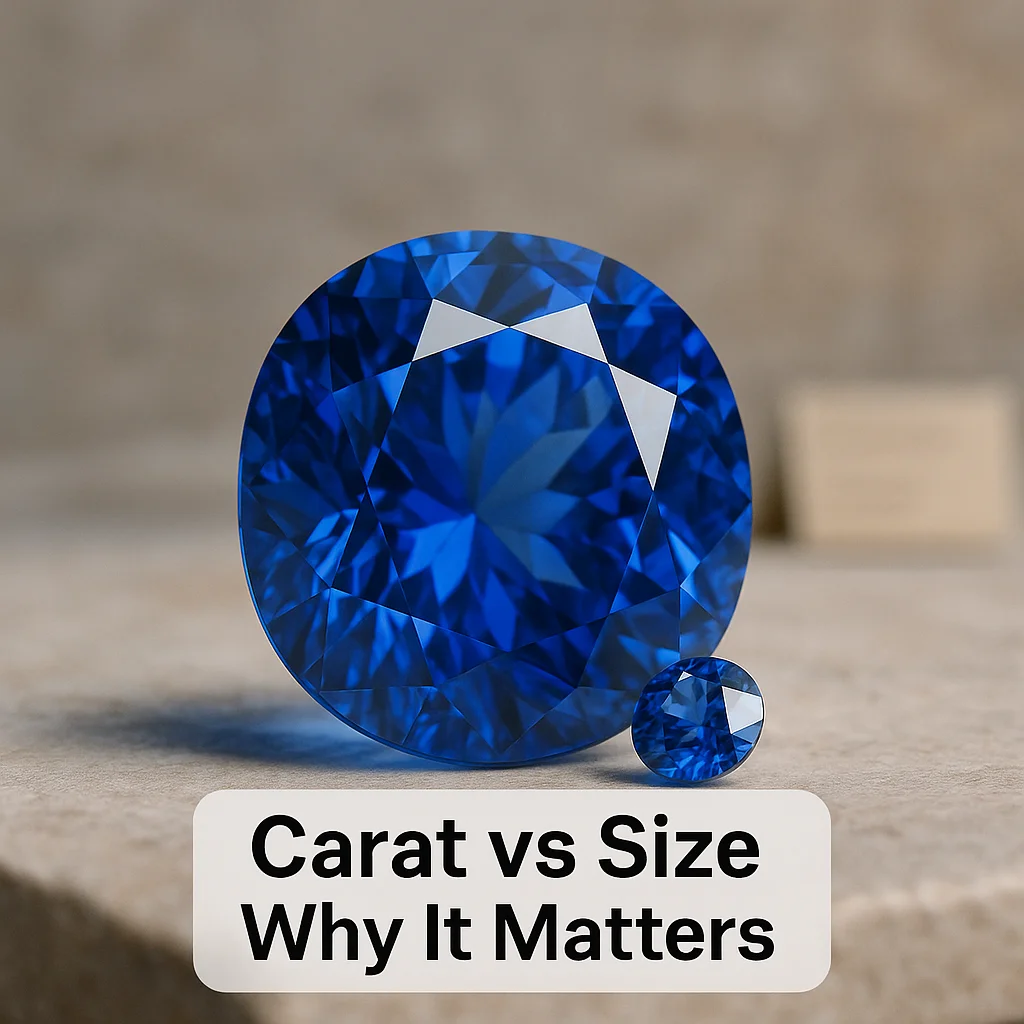
This article focuses on understanding the differences between carat and size, their implications for gemstone selection, and how they affect a gem's value, appearance, and suitability for various types of jewelry.
You will also learn about other important factors such as color, clarity, and cut, which together with carat and size, determine the overall quality and visual appeal of a gemstone.
🌍 Where It Comes From
The natural formation of gemstones occurs in a variety of geological environments. For instance, diamonds are typically formed deep within the Earth's mantle under high-pressure and high-temperature conditions. In contrast, emeralds often form in metamorphic rocks and are influenced by hydrothermal processes involving hot fluids.
Gemstones can be found in many regions around the world. For example, Myanmar is famous for rubies, while Sri Lanka is renowned for sapphires. Brazil is known for amethyst, and Australia is a key producer of opals. The origin of a gemstone often impacts its value based on color and clarity characteristics typical of that location.
The origin can also influence consumer perception; stones from well-known regions might command higher prices due to their reputation for superior quality.
🔬 How It Forms
Gemstones form through a variety of geological processes. For example, diamonds form when carbon undergoes immense pressure and heat over millions of years, causing the carbon atoms to crystallize into diamond. On the other hand, pearls are organic gems formed by mollusks in marine environments.
The color of a gemstone is typically influenced by trace elements. For instance, the presence of chromium gives rubies their characteristic red color, whereas the presence of iron and titanium in corundum is responsible for the blue color in sapphires.
Gemstones can occur in various crystalline forms. Quartz, for instance, can form in large six-sided crystals, geodes, or even nodules, depending on the specific environmental conditions during its formation.
🎨 Color and Look
The color of a gemstone is a crucial factor in its appeal and can range from vivid hues to subtle pastels. For example, emeralds are known for their vibrant green color, while sapphires can range from deep blue to yellow and even pink.
Various optical effects can enhance a gemstone's appearance, such as asterism in star sapphires or the mesmerizing play-of-color seen in opals. Cutting and polishing techniques also significantly influence how a gem's color is perceived.
Common treatments like heating, dyeing, or irradiation can modify a gemstone's color and clarity. Always inquire about any treatments when purchasing gems, as this can affect both the value and care requirements.
🧪 Properties That Matter
Understanding the properties of gemstones is essential for their selection and care. Mohs hardness measures scratch resistance, making it crucial for gemstones used in rings. Diamonds top the scale with a hardness of 10, posing minimal risk of scratching.
Toughness, or resistance to chipping, is equally important. Jade, while softer, is exceptionally tough. Cleavage, the tendency to break along specific planes, is a key factor in gems like diamond, which possess perfect cleavage.
Luster refers to the quality of light reflection. For example, the brilliant luster of diamonds makes them particularly popular in jewelry. Whether a gem is transparent, translucent, or opaque also affects its visual appeal and suitability for certain settings.
✨ Meanings, Birthstones, and Culture
Gemstones have been traditionally associated with various meanings and symbolism. For instance, diamonds are often connected to love and commitment, making them a popular choice for engagement rings. September's birthstone, sapphire, is often linked to wisdom and nobility.
Birthstones are a popular tradition, with each month of the year associated with a particular gem. For example, January is represented by garnet, while amethyst is the stone for February.
Cultural significance varies widely, with some stones believed to offer protection or bring good luck. While these associations are popular, it's important to understand they are based on tradition and not scientific evidence.
🧼 Care and Cleaning
Proper care and cleaning extend the life and luster of your gemstones. For most gems, a gentle wash with lukewarm water and mild soap is adequate. Use a soft cloth for drying to avoid scratches.
Avoid exposing gemstones to harsh chemicals, as these can damage both natural and treated stones. Porous stones like opals and pearls require extra caution; they should not be soaked and should be stored in humid conditions to prevent cracking.
Storing gemstones separately is essential to avoid scratching. Individual cloth bags or padded jewelry boxes are recommended for this purpose.
🛒 Buying Tips and What to Check
When purchasing gemstones, factors such as color, clarity, cut, and carat weight significantly influence price and quality. Origin and reputation can also affect value.
Always ask about any treatments and consider obtaining a gemological report, especially for high-value purchases. This report can confirm authenticity and any enhancements, although it cannot assess a gemstone's durability or future performance.
If buying online, check for clear photos, a return policy, and seller reputation. Look for complete disclosure of any enhancements or treatments.
⚠️ Real vs Fake and Common Look-Alikes
Understanding the distinctions between natural, synthetic, and imitation gemstones is crucial. Synthetic stones, created in labs, have the same chemical properties as natural stones but are often more affordable.
Imitation materials, like colored glass, attempt to replicate the look without the same beauty or durability. Doublets and triplets are examples of assembled stones that combine layers for visual effect.
Common look-alikes include cubic zirconia as an alternative to diamonds. Professional testing can reliably identify these differences, so it's essential to seek expert guidance for verification.
❓ Common Questions and Misconceptions
"Is it a mineral or a rock?" - Gemstones are minerals; some, like lapis lazuli, are rocks.
"Is it a birthstone?" - Each birth month is associated with specific gemstones, known as birthstones.
"Will it scratch easily?" - This depends on the Mohs hardness; diamonds are exceptionally resistant.
"Can it go in water?" - Generally, yes, but porous stones like opals should not be soaked.
"Does color fade in sunlight?" - Some stones, such as amethyst, might fade with prolonged UV exposure.
"What treatments are common?" - Heating and oiling are common treatments, especially for rubies and emeralds.
"Is lab-grown 'fake'?" - Lab-grown stones are real gemstones but not naturally occurring.
"How do I store it safely?" - Use individual cloth bags or padded boxes to prevent scratching.
"Do inclusions always lower value?" - Not always; some inclusions, like certain fibers in rutile quartz, can be appealing.
"How do I pick a good one for jewelry?" - Focus on color, clarity, cut, and personal preference for the best choice.
📌 Summary
- Gemstones are minerals known for their beauty and rarity.
- Colors range from vivid to pastel, influenced by trace elements.
- Formation involves specific geological conditions, like heat and pressure.
- Mohs hardness and toughness determine wear suitability.
- Treatments like heating can alter appearance; disclosure is vital.
- Regular cleaning with mild soap and soft cloth maintains luster.
- Best as rings, pendants, earrings, tailored to hardness/toughness.
- Common look-alikes include synthetic and imitation stones.
- Professional testing confirms authenticity and quality.
- Buying checklist: Photos, return policy, seller reputation, treatments disclosed.
- Birthstones and symbolism are cultural traditions, not scientific facts.
- Balancing carat and size enhances both beauty and value.