💎 Common Pricing Traps to Avoid
🪨 What It Is
Gemstones, minerals, crystals, and birthstones are natural materials that have been prized for their beauty and rarity throughout history. They are used in jewelry and as collectors' items, each possessing unique characteristics and value.
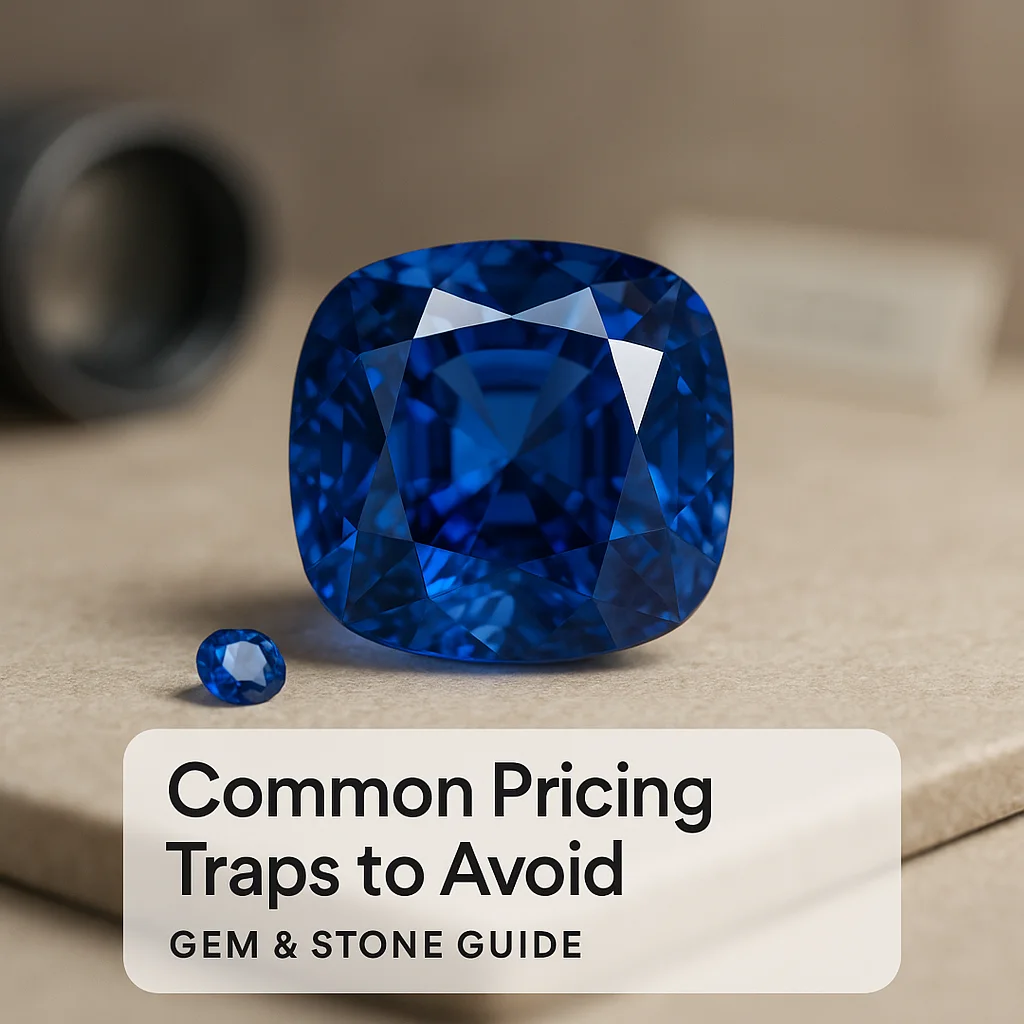
A gemstone can be a variety of things: a mineral, an organic gem, or even a rock. For example, diamonds, sapphires, and emeralds are minerals, while pearls, amber, and coral are organic.
This article aims to educate novices about how to identify common pricing traps when buying gemstones. You'll learn about their appearance, essential properties, origin, and the importance of cautious purchasing.
🌍 Where It Comes From
Gemstones are found in various geological settings, including igneous rocks, metamorphic rocks formed deep within the Earth under pressure, and sedimentary environments where they form from accumulated mineral material.
Some gemstones develop in hydrothermal environments, where mineral-rich water interacts with rock. Marine or organic settings produce organic gems like pearls and coral.
The origin of a gemstone can affect its color and clarity and can add to its market reputation. Gemstones from well-known regions like Colombian emeralds or Burmese rubies often fetch higher prices due to their reputation for quality.
🔬 How It Forms
Gemstones form over thousands or millions of years under specific conditions. Heat and pressure play critical roles, along with the presence of certain trace elements and fluids.
For example, sapphires and rubies are varieties of the mineral corundum. The presence of trace elements such as iron and chromium causes their blue and red colors, respectively.
These gemstones can be found as crystals within a host rock, often surrounded by mineral deposits that indicate their potential presence.
🎨 Color and Look
Gemstones display a variety of colors, which can be solid or feature patterns such as banding, zoning, or feathering. Additional optical effects might include the star-like asterism of some sapphires or the color play in opals.
The appearance of a gemstone can be influenced by its cut and polish, as well as the clarity of the stone. Lighting conditions also play a role in how a stone appears.
Common treatments to enhance a gemstone's color or clarity include heat treatment, dyeing, or oiling. While these methods can improve appearance, they should be disclosed by reputable sellers.
🧪 Properties That Matter
A gem's properties greatly affect how it can be worn. The Mohs scale measures hardness, or scratch resistance, where diamonds are the hardest known mineral at 10.
Toughness, or resistance to chipping, is also crucial. Cleavage describes how a stone breaks along certain planes, while luster is how light interacts with its surface.
For daily-wear items like rings, harder stones are preferable. For more fragile items, pendants or earrings are safer choices.
✨ Meanings, Birthstones, and Culture
Gemstones hold significant cultural value and are often linked to various traditions and folklore. For instance, the opal has been traditionally associated with creativity and hope, though these meanings are not scientifically proven.
In the realm of birthstones, each month is linked to a particular gemstone believed to bring good luck. The sapphire, for instance, is the birthstone for September.
The symbolism and traditions surrounding gemstones often add to their allure and can influence buying decisions.
🧼 Care and Cleaning
Proper care extends a gemstone's life. Gentle soap and water with a soft cloth are generally safe for cleaning most gemstones.
Harsh chemicals should be avoided, especially for porous stones like opals or emeralds, which are more susceptible to damage.
Store gemstones separately to prevent scratches. Use soft, padded boxes or pouches and avoid exposing them to heat or sudden temperature changes.
🛒 Buying Tips and What to Check
The price and quality of a gemstone are influenced by the 4 Cs: color, clarity, cut, and carat size. The stone's origin and any treatments also affect price.
For high-value purchases, request a lab report, which can confirm authenticity and treatments but does not guarantee market value.
When purchasing online, verify photos, check the seller's return policy, read reviews, and ensure all treatments are disclosed before buying.
⚠️ Real vs Fake and Common Look-Alikes
Natural gemstones are formed in nature, whereas synthetic stones are lab-grown to mimic natural options. These are often of high quality and have identical physical properties.
Imitations are materials like glass or plastic designed to look like gemstones but lack similar qualities. Assembled stones, like doublets or triplets, are composites that mimic the real thing.
Professional gemologists can confirm authenticity through various tests, which are more reliable than attempting home experiments.
❓ Common Questions and Misconceptions
Is it a mineral or a rock? A rock consists of multiple minerals; a gemstone can be either a single mineral or an aggregate.
Is it a birthstone? Yes, many gemstones correspond to particular birth months.
Will it scratch easily? It depends on the hardness; softer stones will scratch more easily.
Can it go in water? While many gemstones can tolerate brief exposure, prolonged soaking should be avoided, especially for porous stones.
Does color fade in sunlight? Some gemstones can fade; store them out of direct sunlight.
What treatments are common? Treatments like heating and oiling are common; always ask for disclosure.
Is lab-grown 'fake'? No, lab-grown stones have the same properties as natural ones but are created in controlled environments.
How do I store it safely? Store gems separately in padded boxes or pouches to prevent scratches.
Do inclusions always lower value? Not necessarily; some inclusions are typical, but excessive ones can decrease clarity.
How do I pick a good one for jewelry? Consider wear expectations and consult a gemologist for advice on quality and durability.
📌 Summary
- Gemstones can be minerals, organic, or rocks.
- They occur in various colors and patterns.
- Formed over time by heat, pressure, and trace elements.
- Hardness and toughness affect wear suitability.
- Common treatments include heating and oiling.
- Clean gently with soap and water; avoid chemicals.
- Rings require hard stones; pendants/earrings suit softer ones.
- Real stones can be natural, synthetic, or imitations.
- Lab reports confirm authenticity and treatments.
- Buying tips: check photos, policies, and disclosures.
- Birthstones offer traditional, not scientific benefits.
- Professional guidance ensures wise gemstone investments.