💎 Jadeite Imperial Jade
🪨 What It Is
Jadeite, known for its bright and vivid green color, is one of the two minerals commonly referred to as jade; the other being nephrite. Within the realm of jadeite, "Imperial Jade" is the most prized and revered variety, boasting a deep emerald green hue that captivates gemstone enthusiasts and collectors alike.
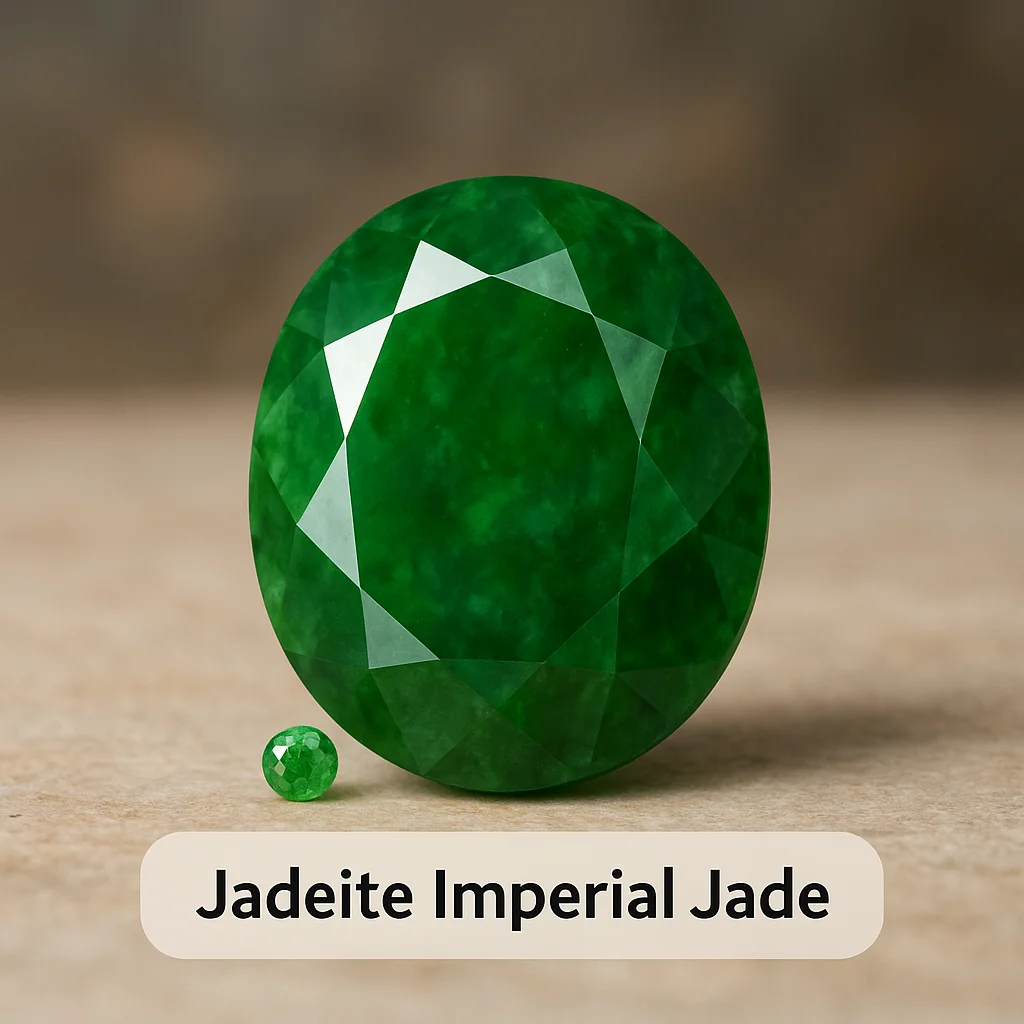
Imperial Jade is a type of mineral known for its high value in the gemstone market, sporting both beauty and historical significance. It is often used in jewelry, making it a popular choice for rings, pendants, and other ornamental pieces.
In this article, we'll explore the appearance, properties, origin, and care of Jadeite Imperial Jade. You'll also gain insights into its value, how to buy it wisely, and how to differentiate it from look-alikes.
🌍 Where It Comes From
Jadeite Imperial Jade is primarily found in regions with geological conditions favorable to its formation, such as areas with high-pressure metamorphic rocks. Certain locations provide the perfect environment with the necessary heat and pressure to produce this exquisite gemstone.
The most renowned source of Jadeite Imperial Jade is Myanmar (formerly Burma), which has long been celebrated for producing the highest quality of this gemstone. Other locations may produce jadeite, but they are generally considered secondary in quality compared to Burmese jade.
The origin of Jadeite Imperial Jade can significantly influence its value and reputation in the marketplace. Jade from historically significant regions like Burma is often more sought after due to its reputed quality and the deep green colors it typically exhibits.
🔬 How It Forms
Jadeite forms under high-pressure conditions within metamorphic rocks. The process involves the transformation of pre-existing minerals and rock compositions through intense pressure and moderate temperatures over millions of years.
The distinct green color characteristic of Imperial Jade is primarily due to the presence of trace amounts of chromium. These elements act as coloring agents, rendering the gemstone its iconic green hue that makes it so prized among collectors and gem enthusiasts.
Typically, jadeite can be found in crystalline aggregates or granular masses. While it may not often form distinct crystals, its vibrant color and texture make it desirable and fascinating to study and collect.
🎨 Color and Look
The most valued Imperially Jade exhibits a rich, semi-transparent to translucent emerald green color that can appear almost luminescent under suitable lighting conditions. This quality is partly why it is referred to as Imperial Jade.
Color uniformity and intensity significantly affect its appeal, with the best stones presenting an even, vivid green without discernable color zoning. Clarity can vary, and some stones may show fine inclusions without detracting heavily from value, given their other desirable qualities.
Common treatments for enhancing the color and clarity of jadeite include dyeing and impregnation with polymers. It’s vital for buyers to be aware of these treatments given their impact on the gem's natural properties and market value.
🧪 Properties That Matter
On the Mohs scale of hardness, jadeite ranks between 6.5 and 7. This shows that while it is hard enough for jewelry use, it requires mindful handling to prevent scratches and damage.
Jadeite is notably tough, meaning it is resistant to breaking or chipping, making it a suitable choice for jewelry expected to endure daily wear. This toughness arises from its compact interlocking crystal structure.
When polished, Jadeite Imperial Jade has a vitreous to greasy luster. This shimmering quality boosts its aesthetic appeal, especially visible in well-cut and well-polished gemstones.
The gemstone’s lack of cleavage also contributes to its durability, which means it does not have flat, predictable planes of breakage, making it safer to wear and less prone to accidental fractures.
✨ Meanings, Birthstones, and Culture
Jade has traditionally been associated with nobility and spirituality, especially within Asian cultures. In Chinese history, jade was cherished not just for its beauty but for its supposed powers of protection and health.
While Jadeite is not traditionally a birthstone, it is occasionally gifted as part of cultural practices and celebrations, holding special meaning in various cultures as a symbol of purity and wisdom.
In modern jewelry traditions, Jadeite Imperial Jade is prized for its beauty and rarity, often setting trends in the high-end jewelry market where it is used to create striking pieces that command a significant presence.
🧼 Care and Cleaning
Caring for Jadeite Imperial Jade involves gentle cleaning with mild soap and water, using a soft cloth to polish its surface. Harsh chemicals and ultrasonic cleaning should be avoided as these can damage the gemstone or the settings.
Due to its porous nature, jadeite should not be exposed to prolonged water immersion. Temperature changes can also impact its integrity, so keeping it away from extreme heat or cold is advisable.
To prevent scratches, jadeite should be stored separately from other harder gemstones and preferably wrapped in a soft cloth or placed in a dedicated jewelry box with compartments.
🛒 Buying Tips and What to Check
The price and quality of Jadeite Imperial Jade can be influenced by various factors, including color, clarity, cut, and size. Imperial Jade, characterized by its rich, vivid green, commands higher prices.
Prospective buyers should inquire about any treatments the gemstone may have undergone and request proper certification or reports for high-value stones from reputable gemological laboratories.
When purchasing jadeite online, ensure there are clear, detailed pictures and a robust return policy. A transparent seller who discloses treatments and provides documentation can inspire confidence in your purchase.
⚠️ Real vs Fake and Common Look-Alikes
The world of jade is rife with imitations, from glass and plastic replicas to composite stones masquerading as jadeite. Synthetics may look convincing but lack the natural variations found in true jade.
Common look-alikes include dyed quartz and other simulants designed to mimic jade's appearance. It is essential to consult professionals for testing and confirmation rather than relying solely on visual inspection.
Professional gem testing can distinguish natural jadeite from these alternatives, with experts using advanced tools that assess specific gravity, refractive index, and microscopic inclusions.
❓ Common Questions and Misconceptions
Is it a mineral or a rock? Jadeite is a mineral, one of the two comprising jade.
Is it a birthstone? No, it’s not traditionally a birthstone.
Will it scratch easily? It’s quite hard, ranking 6.5-7 on Mohs scale, but like all gemstones, it can scratch if mishandled.
Can it go in water? It should not be immersed for long periods to protect its composition.
Does color fade in sunlight? Prolonged exposure to harsh lighting may affect dyed jadeite but not untreated, natural jadeite.
What treatments are common? Dyeing, polymer impregnation, and bleaching are some treatments seen in jadeite.
Is lab-grown 'fake'? Yes, lab-manufactured stones are not natural jadeite but can look similar.
How do I store it safely? Store separately from other jewelry, ideally wrapped in a cloth or in a cushioned box.
Do inclusions always lower value? Not always; in some contexts, they can add unique characteristics that certain buyers find appealing.
How do I pick a good one for jewelry? Look for vibrant, evenly colored stones with good transparency and minimal inclusions.
📌 Summary
- Jadeite Imperial Jade is a highly valued mineral variety of jade.
- It features vibrant, deep green colors, often with high transparency.
- Forms under high-pressure conditions in metamorphic rocks over time.
- On the Mohs scale, ranks between 6.5 and 7, indicating good wear resilience.
- Commonly treated to enhance appearance, so demands cautious buying.
- Clean with mild soap and water, avoid chemicals and extreme temperatures.
- Ideal for occasional wear in rings, pendants, and sometimes earrings.
- Common look-alikes include glass, plastic, and composite stones.
- Professional testing necessary for accurate identification of authenticity.
- When buying, check for treatments and credible certification.
- Not a traditional birthstone, but embedded deeply in cultural symbolism.
- Imperial Jade represents luxury and deep cultural appreciation.