💎 Jeremejevite
🪨 What It Is
Jeremejevite is a rare mineral and gemstone that captures the imagination of collectors and gem enthusiasts worldwide. Known for its striking hues, it belongs to a category of silicate minerals and is highly prized for its rarity and aesthetic appeal. While it is not a traditional birthstone or commonly seen in everyday jewelry, its unique properties make it a fascinating subject of study.
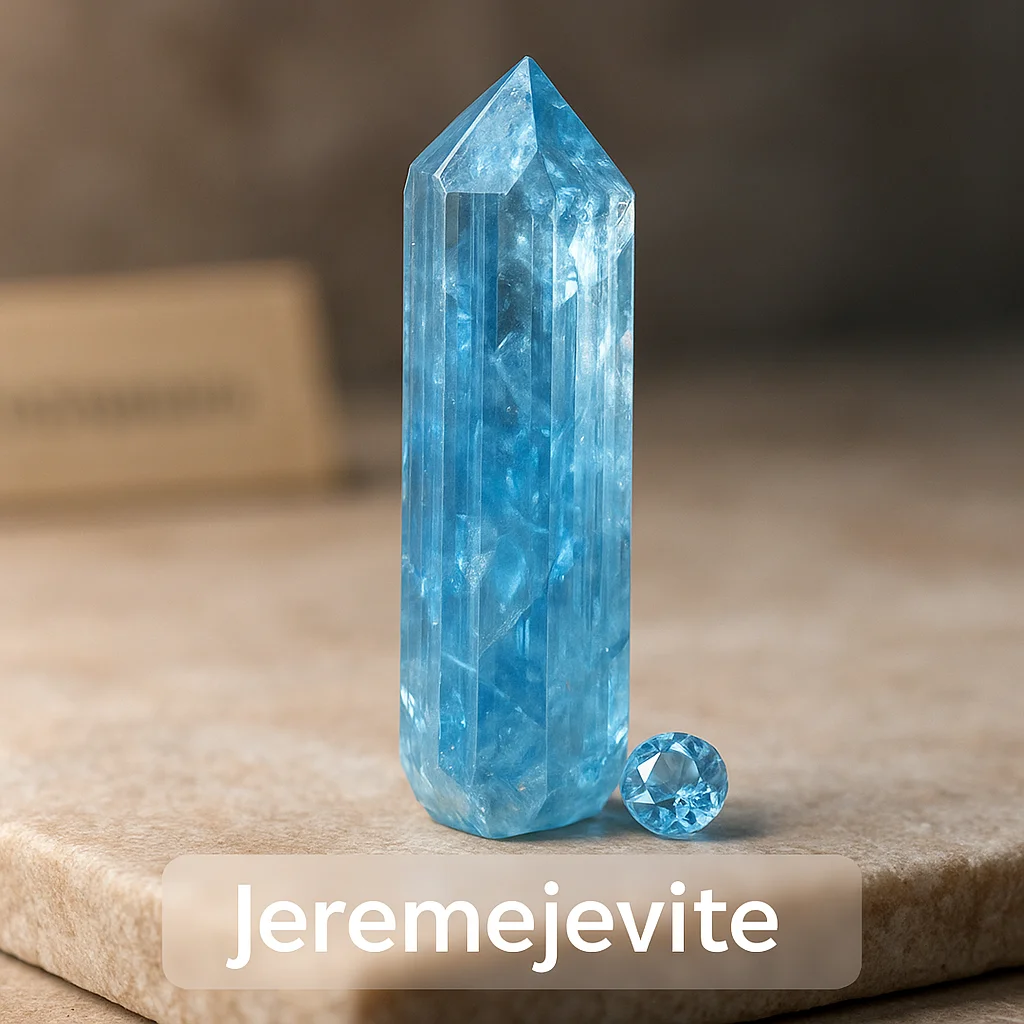
In this article, we will explore the various facets of Jeremejevite, including its appearance, geological origins, and physical properties. We will also discuss how to care for this cherished gem and what to look for when buying it. By delving into these topics, beginners can gain a comprehensive understanding of what makes Jeremejevite so special.
Whether you are a budding gemologist or simply curious about the world of gemstones, this guide will equip you with essential knowledge about Jeremejevite. You will discover the rich blue tones that this mineral is best known for and learn about the factors that contribute to its rarity and desirability.
🌍 Where It Comes From
Jeremejevite most commonly forms in igneous rocks, specifically those that are rich in aluminum and boron. These rock types provide the necessary elements for Jeremejevite's growth. The process involves crystallization from hydrothermal solutions that are rich in these elements, which penetrate fractures and cavities in the host rock.
The most notable sources of Jeremejevite are found in parts of Africa, particularly Namibia, where the mineral was first discovered. Namibia remains a prime location for sourcing high-quality Jeremejevite gemstones. The country is celebrated for its diverse mineral wealth, and Jeremejevite is a gem that significantly contributes to this reputation.
While Namibia is most famous for Jeremejevite, the mineral can also be found in other parts of the world such as Myanmar and Tajikistan. Each region can slightly impact the color and clarity of the stones, making the origin an interesting aspect for collectors. A stone's color intensity and clarity can often enhance its market value significantly.
🔬 How It Forms
The formation of Jeremejevite is an intricate process that begins with the presence of aluminum and boron-rich fluids. During the early stages, these elements circulate through the host rock due to geothermal activity, crystallizing into the hexagonal structures that characterize this mineral. It is these hexagonal structures that give many Jeremejevite stones their elongated, prism-like shapes.
The blue hues found in Jeremejevite are primarily due to trace amounts of iron within the mineral structure. The level and nature of these trace elements influence the depth and range of colors available, from pale blue to a more intense, sapphire-like shade.
Crystal habits frequently exhibit prismatic forms, and the stones can have well-defined edges. The presence of twinning and inclusions within the crystals can also affect their overall aesthetic and value. However, inclusions may sometimes enhance a gem's beauty through unique internal patterns.
🎨 Color and Look
Jeremejevite is renowned for its beautiful color palette, which primarily ranges from pale blue to a rich, deep azure. Some stones may exhibit yellow, colorless, or even faint purple hues. The color intensity can vary significantly between individual stones and is largely influenced by their location of origin.
The gem’s appearance is further accentuated by brilliant cuts and expert polishing techniques. A well-polished Jeremejevite will exhibit high clarity with a vitreous luster, meaning it shines like glass. Clarity can be affected by natural inclusions, which are common in most geology-formed gemstones.
In terms of treatments, Jeremejevite is generally not subjected to enhancements such as heat treatment or dyeing. Its natural beauty tends to speak for itself, making untreated stones particularly valued by collectors. Nonetheless, confirming whether a stone has been treated requires professional evaluation.
🧪 Properties That Matter
The physical properties of Jeremejevite make it a durable yet somewhat delicate gem in certain contexts. It ranks a 6.5 to 7.5 on the Mohs hardness scale, indicating it has decent scratch resistance, similar to quartz. Despite this, its relative brittleness could make it more susceptible to chipping if not carefully handled.
Its toughness, meaning resistance to breaking, is moderate. The stone has distinct cleavage, which means it breaks along certain planes of weakness. This characteristic requires gem cutters to skillfully navigate its structure to prevent damage during fashioning.
Jeremejevite typically exhibits a high vitreous luster, alongside good transparency to translucency. These attributes make it an appealing choice for fine jewelry, though it's generally best suited for settings where it's less likely to encounter daily wear and tear, such as earrings or pendants instead of rings.
✨ Meanings, Birthstones, and Culture
While Jeremejevite is not one of the traditional birthstones, it holds cultural and spiritual significance for some gemstone enthusiasts. In certain lore, it is associated with clarity and enhanced understanding, mirroring its physical clarity.
Unlike more common stones, Jeremejevite has limited presence in folklore or historical traditions but may be used in modern jewelry collections for its beauty rather than symbolic meanings. Collectors often treasure it as a specimen piece because of its rarity and the challenge it represents in gem cutting.
When considering gemstones for sentimental or metaphysical use, it's important to view these narratives as traditions rather than scientifically backed facts. As such, Jeremejevite's allure lies in its elegance, unique coloration, and rarity rather than any purported effects.
🧼 Care and Cleaning
Proper care is essential to maintain the beauty of a Jeremejevite gemstone. Cleaning should always be conducted with warm, soapy water and a soft cloth to avoid scratching the stone. It is crucial to avoid harsh chemicals or abrasive materials that could damage the surface.
Due to its cleavage planes, Jeremejevite should not undergo rapid temperature changes, as these could potentially cause the stone to fracture. It is also advisable to avoid soaking it for extended periods to protect its structure.
For storage, the gemstone should be kept separate from other stones to prevent scratches. Soft fabric pouches or individual compartment storage boxes offer suitable protection to keep it safe from harm when not in use.
🛒 Buying Tips and What to Check
When purchasing a Jeremejevite, several factors can greatly influence its price and quality. The stone's color, clarity, cut, and carat weight are crucial aspects that contribute to its value. Origin can also play a role, with those from well-regarded regions fetching higher prices.
Buyers should always inquire about any treatments the stone may have undergone, requesting a lab report for high-value purchases to ensure authenticity and quality. Lab reports provide verification of the stone's natural origin and any identified treatments, though they cannot guarantee the gem's future resistance to wear.
When shopping online, it's essential to check the seller's reputation, scrutinize clear photographs closely, and review the return policy for peace of mind. Asking for full disclosure about the stone's characteristics helps ensure informed purchasing decisions.
⚠️ Real vs Fake and Common Look-Alikes
Distinguishing genuine Jeremejevite from synthetic or imitation versions is crucial for authenticity. While natural stones are formed in the earth, synthetic ones are created in a lab with the same chemical composition and crystal structure. Synthetic stones are not "fake," but they are not naturally formed.
Imitation stones, often made of glass or plastic, may attempt to mimic the appearance of Jeremejevite without any of its physical or chemical properties. Furthermore, assembled stones like doublets or triplets combine materials to appear like a singular piece, which requires careful identification.
Jeremejevite's unique attributes, such as its specific shade of blue and specific gravity, can often help experts tell it apart from look-alikes. However, reliable identification typically necessitates professional gemological testing to avoid reliance on home assessments, which can be inaccurate and risky.
❓ Common Questions and Misconceptions
Is it a mineral or a rock? Jeremejevite is a mineral, specifically a silicate mineral.
Is it a birthstone? No, it is not recognized as a traditional birthstone.
Will it scratch easily? With a Mohs hardness of 6.5-7.5, it is relatively scratch resistant but not as hard as diamond or sapphire.
Can it go in water? Brief contact with water is fine, but long soaking is not recommended due to potential structural effects.
Does color fade in sunlight? There's no strong evidence that Jeremejevite significantly fades under sunlight. However, minimal exposure is advisable to preserve its vibrancy.
What treatments are common? Jeremejevite is generally untreated, with most of its beauty derived from its natural characteristics.
Is lab-grown 'fake'? Lab-grown Jeremejevite is not fake; it is identical in chemical and physical properties but not naturally formed.
How do I store it safely? Store Jeremejevite separated from other stones to prevent scratches, preferably in a soft cloth pouch or jewelry box.
Do inclusions always lower value? Inclusions can lower clarity grades but may also create unique features that some collectors find appealing. The impact on value varies.
How do I pick a good one for jewelry? Look for good color saturation, clarity, a well-executed cut, and ensure it meets your needs for the specific type of jewelry.
📌 Summary
- Jeremejevite is a rare and beautiful silicate mineral.
- It typically displays shades of blue, sometimes yellow or colorless.
- Forms through crystallization in aluminum-boron-rich environments.
- Moderate hardness (6.5-7.5) makes it durable yet requires care.
- It's generally untreated, enhancing its natural beauty.
- Clean gently with soap and water; avoid chemicals and rapid temperature changes.
- Best suited for earrings and pendants, not recommended for rings.
- Look-alikes include synthetic equivalents and glass imitations.
- Authenticity confirmed through professional testing and lab reports.
- Key buying tips: clarity, color, origin reputation, and treatment disclosures.
- Not a traditional birthstone, but celebrated for its unique properties.
- Jeremejevite's rarity and aesthetic make it a collector's gem.