💎 Natural Pearl Value Factors
🪨 What It Is
Natural pearls are an organic gem formed within the soft tissue of a living shelled mollusk. They're prized for their lustrous appearance and have been a symbol of beauty and wealth for centuries. As organic gems, they differ from minerals like diamonds or sapphires, which are inorganic.
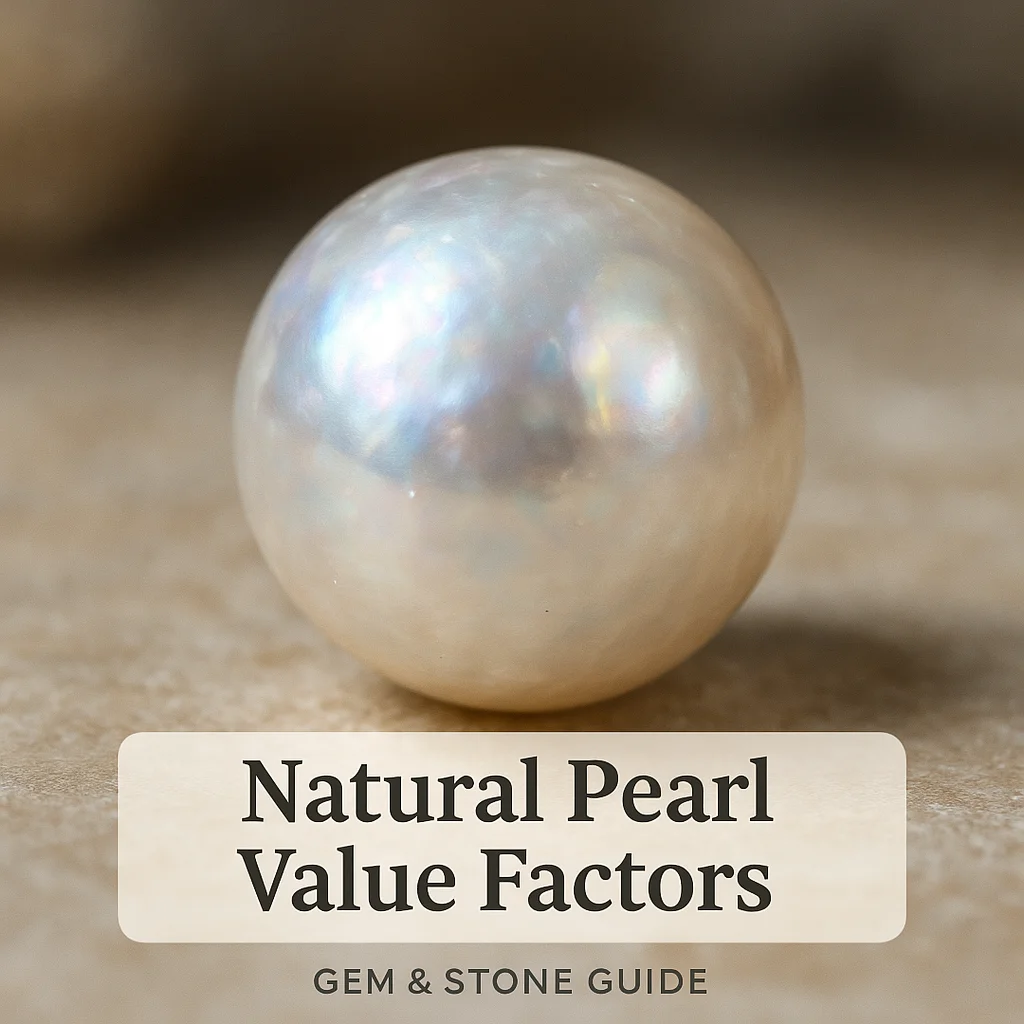
Pearls can appear in various shapes and sizes, with each formation a unique piece of nature's craftsmanship. They are acclaimed for their subtle glow and iridescence, often making them a popular choice in jewelry, such as necklaces and earrings.
Within this beginner-friendly guide, you'll discover factors influencing natural pearl value, including their appearance, properties, origins, care, and tips for purchasing.
🌍 Where It Comes From
Pearls are formed within mollusks found in marine and freshwater environments. As filter feeders, these organisms rely on the surrounding waters and environmental conditions to thrive. Notably, saltwater pearls and freshwater pearls differ due to their environmental origins.
Historically, some of the most famous pearls have been sourced from regions like the Persian Gulf and the coasts of India and Sri Lanka. However, today, significant pearl-producing areas also include Japan, China, and French Polynesia, where various mollusk species contribute to pearl formation.
The origin of a pearl can affect its value, as certain regions are known for distinct types of pearls. For instance, Japanese Akoya pearls are renowned for their perfectly round shapes and reflective luster. On the other hand, Tahitian pearls are celebrated for their striking black hues and larger sizes.
🔬 How It Forms
Natural pearls form when an irritant, such as a small particle, becomes trapped inside a mollusk. In response, the mollusk secretes layers of nacre, a combination of aragonite and conchiolin, around the irritant to protect itself. Over time, these layers build up to form a pearl.
The process can take several years, and the quality of the pearl can vary based on the thickness and application of the nacre layers. The specific molecular structure and composition influence the pearl's luster, giving it the characteristic shimmer.
Pearls can vary in color due to the type of mollusk and the water's mineral content. This variation in color and natural formation processes makes each pearl unique, adding to its allure and value.
🎨 Color and Look
The appearance of natural pearls can range from white and cream to blue, green, and black. Their color can be influenced by the mollusk's species and the environment. For example, Tahitian pearls are known for their dark, exotic hues, while Akoya pearls are prized for their classic white shades and mirror-like luster.
Natural pearls exhibit a unique luster, attributed to the microscopic layers of nacre that reflect light. This optical characteristic is often a key determinant of a pearl's value as well as its allure.
Sometimes, pearls undergo treatments to enhance their color or luster, although these should be disclosed to potential buyers. Such treatments can include bleaching to brighten whites or dyeing to create specific color effects.
🧪 Properties That Matter
The Mohs hardness scale rates pearls around 2.5 to 4.5, indicating they're relatively soft compared to other gemstones. This means they can scratch easily and require careful handling to maintain their appearance in jewelry.
Pearls are also considered fairly tough due to their resilience to chipping, provided they are well-encased. However, they lack cleavage, meaning they fracture rather than split along defined lines, requiring thoughtful setting in jewelry.
The luster of a pearl is one of its most defining properties, stemming from the layer arrangement and quality of nacre. This gives pearls a unique, reflective glow that captures and refracts light exquisitely.
✨ Meanings, Birthstones, and Culture
In various cultures, pearls are traditionally associated with purity, wisdom, and wealth. As the birthstone for June, they have long been connected with attributes of tranquility and internal balance.
Their enduring presence in jewelry across centuries reflects their status as timeless symbols in fashion. Historically, they were favored by royals and often gifted as signs of admiration and devotion.
Today, pearls continue to be a popular choice for bridal jewelry and special occasions, signifying elegance and sophistication without overstating their presence.
🧼 Care and Cleaning
Pearls require gentle care. It's recommended to clean them with mild soap and water using a soft cloth, avoiding the use of harsh chemicals that can damage the nacre.
Avoid exposure to direct sunlight, heat, and sudden temperature changes as they can harm the gem's surface. It's also best to put on pearls after applying makeup and perfumes to prevent any adverse chemical interactions.
When storing pearls, keep them separate from other jewelry to prevent scratching; using a soft pouch or lining is ideal. Regular wear is beneficial as the natural oils in the skin can help maintain their luster.
🛒 Buying Tips and What to Check
When assessing pearl value, factors like color, size, luster, shape, and surface quality are crucial. Larger pearls with better luster and fewer surface blemishes command higher prices.
It's wise to inquire about any treatments a pearl might have undergone and consider requesting a gemological report for high-value acquisitions, ensuring a transparent transaction.
For online purchases, ensure that a clear return policy is in place. Verifiable seller reputation and clear, accurate photographs help guarantee authenticity and buyer satisfaction.
⚠️ Real vs Fake and Common Look-Alikes
Natural pearls differ from synthetic (lab-grown) or imitation pearls, which are often glass or plastic coated versions. These replicas lack the same natural luster and weight.
Common look-alikes include "cultured pearls," which are also grown inside mollusks but with human intervention. While natural pearls form spontaneously, cultured pearls are usually nucleated to speed up production.
Reliable identification of natural versus synthetic or imitation pearls demands professional expertise. Testing through X-ray analysis can verify the internal structure and natural origins.
❓ Common Questions and Misconceptions
Is it a mineral or a rock? Pearls are neither; they are organic gems.
Is it a birthstone? Yes, pearls are the birthstone for June.
Will it scratch easily? Yes, pearls have low hardness and can scratch easily.
Can it go in water? Brief exposure is fine, but prolonged soaking should be avoided.
Does color fade in sunlight? Yes, prolonged exposure to sunlight can lead to fading.
What treatments are common? Treatments like bleaching or dyeing might be used to alter appearance.
Is lab-grown 'fake'? Lab-grown pearls are synthetic but can still possess similar properties.
How do I store it safely? Store pearls in a soft-lined container away from harder jewelry.
Do inclusions always lower value? Not always, as inclusions can sometimes add character, but generally, fewer blemishes command higher value.
How do I pick a good one for jewelry? Look for pearls with high luster, even coloration, and minimal surface imperfections.
📌 Summary
- Pearls are organic gems formed within mollusks.
- They appear in colors like white, black, and gold, known for their luster.
- Formed through natural nacre deposition over time.
- Soft (Mohs 2.5–4.5), requiring gentle wear and care.
- Treatments can enhance color and luster; should be disclosed.
- Clean gently; store away from chemicals and harder items.
- Perfect for earrings, necklaces, but less ideal for rough daily wear rings.
- Common imitators include synthetic and faux pearls.
- Natural origin confirmed via professional testing methods.
- Check authenticity and seller conditions when buying, especially online.
- Pearls are June birthstones and symbolize purity and elegance.
- Pearls require careful handling but triumph as timeless treasures in jewelry.