💎 Red Beryl Bixbite
🪨 What It Is
Red Beryl, sometimes known by the trade name Bixbite, is a rare variety of the mineral beryl. Most people are familiar with beryl in its other famous forms, such as emeralds and aquamarines. Red Beryl is distinct for its striking red color, which sets it apart from its beryl siblings. It is primarily valued as a collector's gem and is considered one of the rarest gemstones in the world.
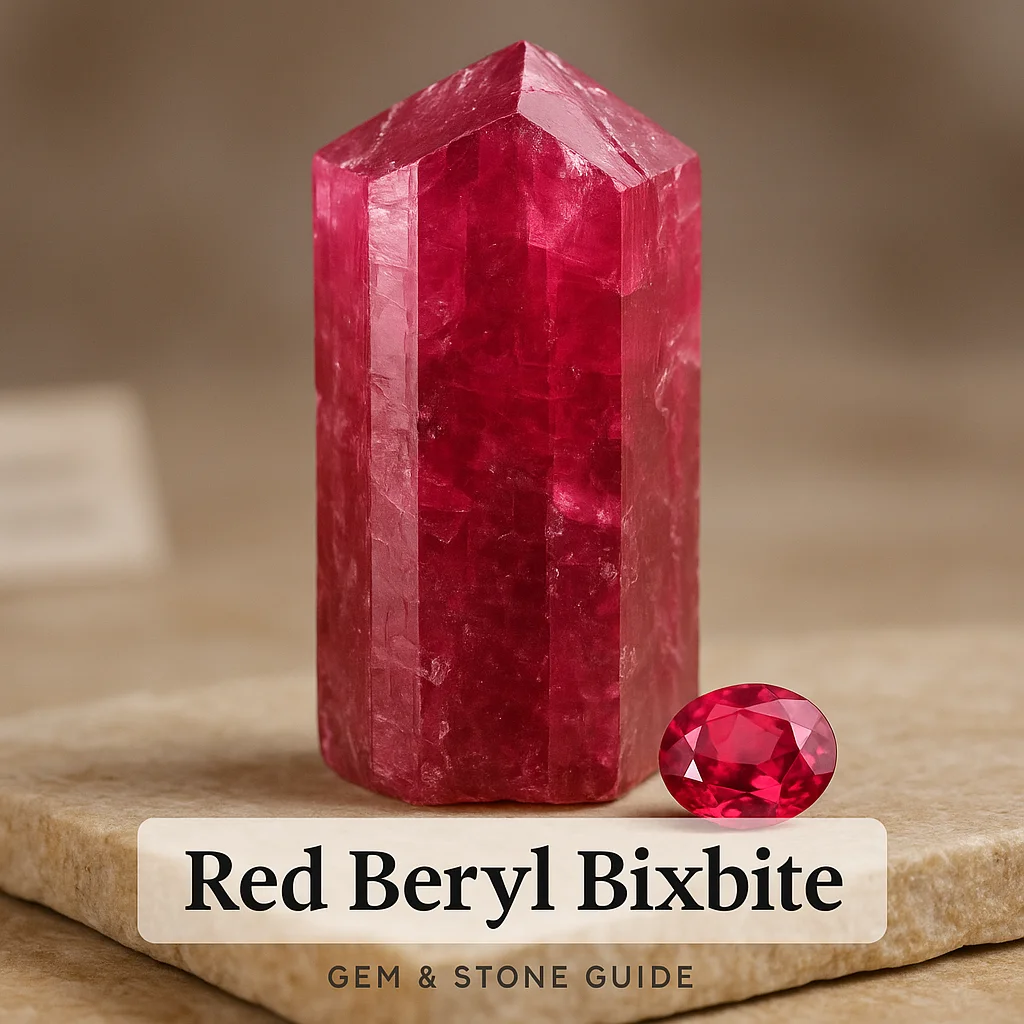
This exquisite gemstone is not designated as a birthstone, but it is a highly sought-after piece for collectors and jewelry lovers alike. Beginners interested in Red Beryl will learn about its captivating appearance, unique properties, natural origins, value, care, and buying advice. Understanding what distinguishes Red Beryl can enhance your appreciation and guide you in making informed decisions, whether buying or simply admiring.
The allure of Red Beryl lies in its rarity and beauty. Its intense red hue can captivate even the most seasoned gem enthusiasts. In this article, we will explore essential facts about Red Beryl, from how it forms in nature to tips on buying authentic specimens.
🌍 Where It Comes From
Red Beryl is predominantly found in specific geologic settings, primarily forming in volcanic rock formations. It is typically located within cavities in the rhyolitic lava flows. These environments offer the unique geological conditions necessary for the formation of this gem. The presence of trace elements like manganese is what gives Red Beryl its distinctive red color.
The majority of Red Beryl is sourced from the Wah Wah Mountains in Utah, USA. This region is famous for producing gem-quality Red Beryl, and the deposits are notably rare. The limited geographic availability contributes to the gem's high market value and desirability. Other less significant deposits might be found in New Mexico and Mexico, though these are not known for producing the same quality.
Origin plays a crucial role in determining the gem's value. The Wah Wah Mountains specimens command the highest prices because of their vivid color and impressive clarity. Understanding the region a piece comes from can offer insights into its potential quality and characteristics.
🔬 How It Forms
The formation of Red Beryl is a fascinating geological process that involves a combination of heat, pressure, and time. It forms in pegmatitic and rhyolitic environments where a high volume of silica-rich magma allows the mineral to crystallize.
The vivid red color of Red Beryl is attributed to the presence of manganese within its crystal structure. As this mineral forms, microscopic amounts of manganese are incorporated, turning the beryl into its distinct red shade. Without this specific trace element, the stone would not exhibit its characteristic red color.
Red Beryl typically occurs in hexagonal crystal forms, similar to other beryl varieties. These natural crystal shapes, when properly cut and polished for jewelry, can highlight the gem's extraordinary color and brilliance.
🎨 Color and Look
The most defining feature of Red Beryl is its striking red color, which can range from bright cherry-red to a deep raspberry-red. The stone’s color can sometimes appear different depending on the lighting, with natural daylight often showcasing its true intensity.
Clarity and cut significantly impact the appearance of Red Beryl. Unlike many gems, Red Beryl is almost never treated to enhance its color or clarity, though some stones may be carefully cut to maximize their visual impact. Because of its rarity, finding a well-cut, transparent Red Beryl is highly prized.
While treatments like heat or dye are common in other colored gemstones, they are not typically associated with Red Beryl. This absence of treatment places even greater emphasis on natural beauty, making untreated stones particularly desirable.
🧪 Properties That Matter
Red Beryl exhibits a Mohs hardness of 7.5 to 8, indicating that it has good scratch resistance and can be suitable for everyday jewelry, although care should be taken due to its rarity. While it is harder than many other gemstones, it is not immune to scratches or damage.
The gem's toughness is considered fair to poor, meaning that it can be prone to chipping if subjected to sharp blows. It does not have perfect cleavage, which lessens the chance of splitting along defined lines, but care is still advised.
The luster of Red Beryl is typically vitreous, offering a shiny, glass-like surface that enhances its visual appeal. Its transparency ranges from translucent to transparent, with clearer stones being more valued.
✨ Meanings, Birthstones, and Culture
Red Beryl is not traditionally associated with a month's birthstone, but its vibrant color and rarity have lent it cultural significance over the years. In various gemstone cultures, red is often seen as a symbol of power, passion, and vitality.
The gem is sometimes believed to bring strength and courage to its holder, although these are more traditional associations rather than scientifically backed claims. In the world of jewelry, it is a stone prized for its beauty and rarity rather than its mysticism.
In modern jewelry traditions, Red Beryl's rarity means it is less commonly seen in commercial jewelry stores, often residing instead in private collections or specialty gem retailers.
🧼 Care and Cleaning
Caring for Red Beryl involves gentle cleaning methods to preserve its appearance and structural integrity. The best approach is using lukewarm soapy water and a soft cloth to clean any surface dirt or oils. Ensuring the gemstone is rinsed thoroughly will help maintain its brilliance.
Red Beryl should not be exposed to harsh chemicals or ultrasonic cleaners, which can potentially damage the stone. Long soaking or sudden temperature changes should be avoided to prevent any potential adverse effects.
For storage, wrap Red Beryl separately in soft cloth or place it in a lined jewelry box to guard against scratches from harder gemstones and other jewelry items.
🛒 Buying Tips and What to Check
When considering the purchase of Red Beryl, several factors affect its price and quality. The most critical aspects are color, clarity, and size. The most vibrant and clear stones are valued the highest. Carat size also plays a role, but due to the natural rarity of this gem, even small stones can be quite valuable.
Buyers should inquire about any treatments, although Red Beryl is rarely subjected to these. Requesting a reputable laboratory report can confirm the stone's natural status and any treatments, offering peace of mind for higher-value purchases.
When buying online, ensure that the seller provides clear photos, a fair return policy, and full disclosure about the stone's characteristics. Research the seller's reputation to avoid pitfalls commonly associated with rare gemstone transactions.
⚠️ Real vs Fake and Common Look-Alikes
It is important to differentiate between natural Red Beryl, synthetic versions created in labs, and common imitations. Synthetic gems are real in composition but distinguished from natural stones by their man-made origins.
Imitation stones might be composed of glass or plastic, created to mimic the look of Red Beryl without matching its properties. Assembled stones like doublets or triplets combine layers of different materials to imitate a solid gem.
Common look-alikes for Red Beryl include red spinel, red garnet, and treated red zircon. Due to its rarity, professional gemological testing is recommended to verify authenticity, employing advanced testing equipment beyond home capabilities.
❓ Common Questions and Misconceptions
"Is it a mineral or a rock?" Red Beryl is a mineral, specifically a variety of beryl.
"Is it a birthstone?" No, Red Beryl is not traditionally assigned as a birthstone.
"Will it scratch easily?" With a high Mohs hardness of 7.5 to 8, it is scratch-resistant but not immune to damage.
"Can it go in water?" Yes, but prolonged exposure is not recommended. Short and careful cleaning is best.
"Does color fade in sunlight?" Red Beryl generally retains its color well, though prolonged exposure can cause fading.
"What treatments are common?" Red Beryl is rarely treated; most gems are natural as the market prefers untreated stones.
"Is lab-grown 'fake'?" Lab-grown Red Beryl is real in composition but differs in origin and natural rarity.
"How do I store it safely?" Store separately or wrapped in a soft cloth to avoid scratches.
"Do inclusions always lower value?" Not always; inclusions can sometimes enhance a gem's uniqueness.
"How do I pick a good one for jewelry?" Look for vibrant color, good clarity, and appropriate size for the intended use.
📌 Summary
- Red Beryl (Bixbite) is a rare, red-colored variety of the mineral beryl.
- It is not an official birthstone, yet holds cultural significance in some traditions.
- Red Beryl forms in volcanic environments, with manganese causing its color.
- It exhibits a Mohs hardness of 7.5 to 8, making it durable but not immune to damage.
- The color and clarity of Red Beryl are critical to its value.
- Caring requires gentle cleaning and cautious storage to prevent damage.
- Best used in pendants or limited-use jewelry due to its rarity.
- Common look-alikes include red spinel and red garnet.
- Authenticity is confirmed through professional gemological examination.
- When buying, check color, clarity, size, and seller's reputation.
- Cultural associations are traditional and should be understood as such.
- Overall, Red Beryl is valued for its rarity and intense beauty.