💎 Tourmaline Watermelon Rare Colors
🪨 What It Is
Tourmaline is a silicate mineral known for its colorful varieties, and one of the most eye-catching among them is the watermelon tourmaline. With a pink center and green outer areas, it resembles a slice of watermelon. Tourmaline is a popular choice for jewelry due to its beauty and versatility.
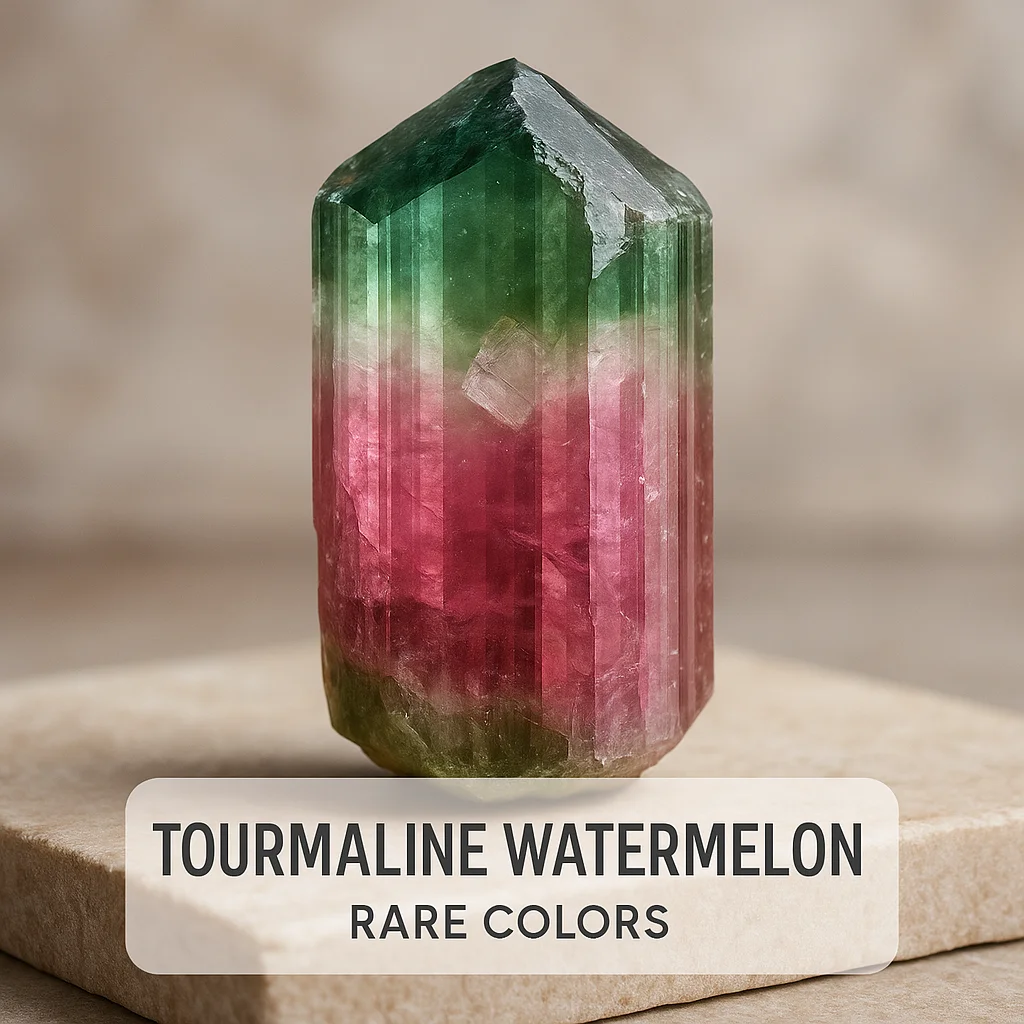
The watermelon tourmaline is particularly cherished for its unique coloration and is a favorite among collectors and gem enthusiasts. It is one of the many varieties that make up the tourmaline family, which is often found in diverse hues and patterns.
In this article, you will learn about the properties, formation, origins, and care of watermelon tourmaline. We will also explore its meanings, the factors affecting its value, and how to distinguish it from similar-looking materials.
🌍 Where It Comes From
Tourmaline is a mineral that typically forms in igneous and metamorphic rock environments. It is commonly found in granite pegmatites, which are igneous rocks formed from molten magma. This setting provides the right conditions for tourmaline to grow into large and colorful crystals.
Watermelon tourmaline is found in several regions around the world, including Brazil, which is known for producing high-quality specimens. Other sources include parts of Africa, the United States, and Afghanistan. The origin of a watermelon tourmaline can influence its color and clarity, and sometimes the market reputation of the stone.
Collectors and jewelers often seek out specific origins for their watermelon tourmalines, as stones from certain regions may exhibit more desirable coloration or larger crystal sizes. However, individual quality factors such as color zoning and clarity can be more significant than origin alone.
🔬 How It Forms
Tourmaline forms under high pressure and temperature conditions within the Earth's crust. The process begins with mineral-rich fluids that penetrate cracks and crevices in host rocks. As these fluids cool and harden, tourmaline crystals start to grow, incorporating various elements that give rise to different colors.
The signature colors of watermelon tourmaline are due to trace elements such as manganese (which creates pink/red hues) and iron or chromium (contributing to green colors). The distinct pink center and green outer part occur naturally as the crystal develops, exhibiting a radial or concentric pattern.
Crystal habit typically includes long, slender rods or pencils with a hexagonal cross-section. This formation is ideal for cutting into slices or cross-sections, enhancing the banded appearance that gives watermelon tourmaline its name.
🎨 Color and Look
Watermelon tourmaline is prized for its natural color zoning, with a pink-red core surrounded by green. This unique appearance resembles the colors of a watermelon, hence its name. The vibrant contrast between the colors makes it a sought-after variety.
The appearance of watermelon tourmaline can be influenced by the quality of the cut and polish. A well-cut stone will display its colors prominently and have good symmetry. Lighting can also affect its appearance, with natural sunlight often enhancing its lustrous look.
Common gemstone treatments for improving clarity or color are not typically associated with watermelon tourmaline. However, it's important for buyers to inquire about any treatments as disclosure is essential for transparency in the gem market.
🧪 Properties That Matter
The Mohs hardness of tourmaline ranges from 7 to 7.5, making it relatively resistant to scratches and suitable for various jewelry applications. Its toughness is generally good, although it should be protected from hard knocks.
Tourmaline does not have prominent cleavage, which reduces the likelihood of breakage along specific lines. It usually fractures in a conchoidal pattern, which means it can chip if struck sharply.
The luster of watermelon tourmaline is typically vitreous, giving it a glass-like shine that adds to its appeal. Its appearance ranges from transparent to translucent, with transparency being a desired trait in high-quality stones.
✨ Meanings, Birthstones, and Culture
Tourmaline, including its watermelon variant, is traditionally associated with creativity and balance. It is believed to symbolize watermelon's nurturing qualities, offering emotional stability and warmth. While these meanings enhance its cultural value, they are based on folklore rather than scientific evidence.
Tourmaline is recognized as the modern birthstone for October, alongside opal. This makes watermelon tourmaline an appealing choice for those born in that month or anyone seeking a vibrant stone associated with positive energies.
In jewelry design, tourmaline's diverse colors and patterns make it popular not only for its aesthetic appeal but also for its versatility, providing designers with inspirational color palettes to work with.
🧼 Care and Cleaning
To maintain your watermelon tourmaline's shine and quality, clean it gently using warm, soapy water and a soft cloth. Avoid harsh chemicals, which can damage the stone's surface over time.
It's advisable not to expose your watermelon tourmaline to sudden temperature changes, as this could cause thermal shock, potentially leading to fractures. Long periods of soaking should also be avoided to prevent structural damage.
Store your watermelon tourmaline separately from other jewelry to prevent scratches, ideally wrapping it in a soft cloth or in a cotton-lined jewelry box. This ensures that it remains free from abrasions and other types of damage.
🛒 Buying Tips and What to Check
When purchasing watermelon tourmaline, evaluate its color, clarity, and cut. The desirability of its 'watermelon' color pattern significantly affects value. Stones that exhibit well-defined color zones with both vibrant pink and green hues are typically more valuable.
Clarity is another consideration. While minor inclusions are common, those that do not detract visibly from appearance are preferred. Always ask the seller about any treatments and request a lab report for high-value pieces.
Beginner buyers should consider factors such as detailed photos, return policies, and the seller's reputation when buying online. A certificate from a respected gemological laboratory can offer assurance of authenticity but understand it can’t guarantee origin.
⚠️ Real vs Fake and Common Look-Alikes
Natural watermelon tourmaline should be distinguished from synthetic (lab-grown) versions, which are created with the same chemical properties but in controlled environments. While quality can be high, they are typically less valued than natural stones.
Imitation stones might be made of glass or plastic and lack the structural properties of real tourmaline. Assembled stones, like doublets or triplets, combine layers of different materials to mimic natural appearance.
Common look-alikes include other bicolor gemstones, often quartz or fluorite, which can be misidentified without proper gemological equipment. Professional testing is essential for accurate identification; home tests can risk damage without conclusive identification.
❓ Common Questions and Misconceptions
Q: Is it a mineral or a rock?
A: Tourmaline is a mineral, not a rock. It is a crystalline boron silicate mineral.
Q: Is it a birthstone?
A: Yes, tourmaline is one of the modern birthstones for October.
Q: Will it scratch easily?
A: With a Mohs hardness of 7 to 7.5, it is relatively scratch-resistant compared to softer minerals.
Q: Can it go in water?
A: Brief contact with water is fine, but avoid prolonged soaking to prevent structural damage.
Q: Does color fade in sunlight?
A: It is generally stable in light, but extended exposure to intense sunlight should be avoided.
Q: What treatments are common?
A: Watermelon tourmaline typically does not undergo common treatments. Always confirm with sellers.
Q: Is lab-grown 'fake'?
A: Lab-grown stones have the same chemical properties as natural ones but are considered less valuable by collectors.
Q: How do I store it safely?
A: Store it separately in a soft cloth pouch or a lined jewelry box to prevent scratches.
Q: Do inclusions always lower value?
A: Not always. Minor inclusions are acceptable if they do not detract from the appearance.
Q: How do I pick a good one for jewelry?
A: Look for vibrant color contrast, good clarity, and an appealing cut.
📌 Summary
- Tourmaline Watermelon is a mineral variety known for its unique pink and green coloration.
- Typical appearance includes a pink-red core and green rim, resembling a watermelon.
- Forms through cooling of mineral-rich fluids in igneous rock environments.
- Properties include Mohs hardness of 7–7.5, good toughness, and vitreous luster.
- Common treatments are minimal; make sure to verify during purchase.
- Gentle soap and water is recommended for cleaning, and avoid harsh chemicals.
- Suitable for a variety of jewelry uses, including pendants and earrings.
- Common look-alikes include certain bicolor stones and synthetic options.
- Authenticity confirmed via gemological tests; certificates can aid buyers.
- Buying checklist includes color zone quality, clarity, cut, and seller reputation.
- Traditionally, it is associated with creativity and October birthdays.
- A memorable takeaway: the natural beauty of its color pattern makes it a prized collector's item.