💎 Tsavorite Garnet Value
🪨 What It Is
Tsavorite is a stunning green gemstone that belongs to the garnet family. It is prized for its vibrant color and brilliance, making it a popular choice in jewelry. Unlike many other garnets, tsavorite gets its striking green hue from the presence of trace amounts of vanadium and chromium.
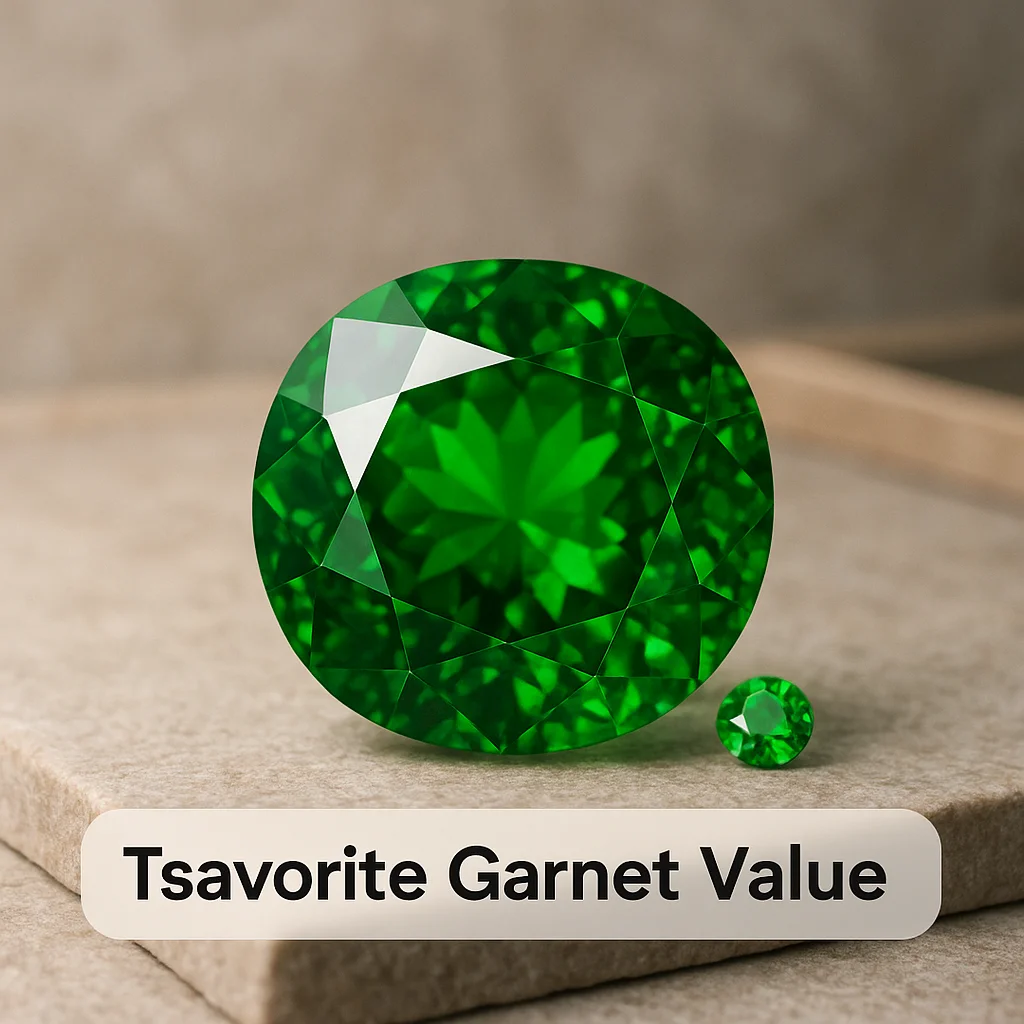
As a type of grossular garnet, tsavorite is considered a mineral, which is a naturally occurring inorganic substance with a specific chemical composition. Tsavorite is increasingly admired by gem enthusiasts and is often found in fine jewelry pieces such as rings, necklaces, and earrings.
In this article, we will explore the origins of tsavorite, how it forms, its physical properties, and what factors affect its value. We'll also discuss how to care for tsavorite jewelry and provide useful tips for purchasing authentic stones.
🌍 Where It Comes From
Tsavorite garnet is primarily found in East Africa, especially in parts of Kenya and Tanzania. The gemstone was first discovered in the 1960s near the Tsavo National Park, from which it gets its name. The geological conditions in these regions favor the formation of tsavorite, occurring in metamorphic rocks that have undergone extreme heat and pressure over millions of years.
The presence of vanadium and chromium in these regions is responsible for tsavorite's unique green color. While Kenya and Tanzania are the most notable sources, tsavorite can also be found in smaller quantities in places such as Madagascar and other African countries.
Origin can significantly impact the value of tsavorite. Gemstones from well-known regions are often more highly prized due to their established reputation for quality and color intensity. As such, collectors and jewelry enthusiasts often seek out stones with documented origins from these respected areas.
🔬 How It Forms
Tsavorite forms under specific geological conditions that involve high temperature and pressure. These conditions are typically found in metamorphic rocks, where existing minerals are subjected to change. The transformation includes the incorporation of vanadium and chromium, which give tsavorite its distinct green color.
The formation process begins deep within the earth's crust. Over time, tectonic movements push these rocks closer to the surface, where they can be mined. This natural process of formation results in tsavorite typically appearing in dodecahedral crystal habit, which means it forms twelve-sided crystals.
Though the green color of tsavorite is highly valued, it can sometimes have slight variations in hue depending on the amounts of vanadium and chromium present, as well as other factors such as the host rock composition and mining location.
🎨 Color and Look
Tsavorite is celebrated for its vibrant green color, which ranges from bluish-green to a more intense, rich green. Its coloring can be similar to that of a fine emerald, making it a desirable alternative due to its superior durability and overall beauty.
The appearance of tsavorite can be greatly influenced by the way it is cut and polished. A skilled cut can enhance its natural brilliance, allowing it to exhibit a dazzling luster that enhances its already striking appearance. Under different lighting conditions, tsavorite can display subtle shifts in color intensity.
It is important to know that tsavorite is typically untreated, making it an attractive option for consumers seeking a natural gemstone. Unlike other common gemstones, tsavorite generally does not undergo treatments like heat, dye, or irradiation to enhance its appearance.
🧪 Properties That Matter
Tsavorite has practical properties that make it suitable for various types of jewelry. It has a Mohs hardness rating of about 7 to 7.5, which means it is fairly resistant to scratching. This durability makes tsavorite an excellent choice for everyday wear in rings and bracelets.
Regarding toughness, which indicates resistance to chipping and breaking, tsavorite is relatively robust. However, like any gemstone, it should be protected from heavy blows and rough handling. Tsavorite lacks cleavage, meaning it does not easily split along specific planes, which also contributes to its practicality in jewelry use.
Tsavorite's luster is described as vitreous, giving it a glass-like sheen when polished. The stone's transparency can range from translucent to opaque, with more transparent specimens generally being more valuable.
✨ Meanings, Birthstones, and Culture
In terms of cultural and traditional significance, tsavorite is not classified as a traditional birthstone. However, its vibrant green color is often associated with growth, renewal, and prosperity in various cultural traditions. While these meanings do not have scientific grounding, they add to tsavorite's appeal in jewelry.
Modern jewelry traditions embrace tsavorite for its natural beauty and exotic origins. It is often used as a substitute for emerald due to its durability and resistance to chipping, as well as its attractive price point.
While tsavorite does not have an official zodiac association, its fresh green color can symbolize the spirit of spring, aligning with traditions that celebrate new beginnings and personal growth.
🧼 Care and Cleaning
To maintain the beauty of tsavorite jewelry, it is recommended to clean it using a gentle soap and water mixture. A soft cloth can be used to buff the gemstone to a shine, and it should be dried thoroughly after cleaning.
As tsavorite is relatively durable, it can handle everyday wear. Nonetheless, it is wise to avoid exposure to extreme heat and sudden temperature changes, which can potentially damage the stone.
When storing tsavorite, it is best to keep it separate from other harder gemstones, such as diamonds, to prevent scratches. A lined jewelry box or soft pouch can offer a good protective environment for safekeeping.
🛒 Buying Tips and What to Check
When purchasing tsavorite, several factors influence its value and quality. Color is a primary determinant, with more vivid and saturated green hues being more desirable. Clarity is also important; clearer stones without visible inclusions are generally more valuable.
The cut of a tsavorite should maximize its brilliance and color display. A well-proportioned cut can enhance the stone’s appeal considerably. Carat weight is also a consideration, but due to tsavorite’s density, larger sizes can be rarer and more expensive.
Asking about treatments is prudent, even though tsavorite is typically untreated. For high-value stones, requesting an independent gemological report can assure authenticity. A good report details the stone’s characteristics and confirms its natural origin.
⚠️ Real vs Fake and Common Look-Alikes
Telling real tsavorite apart from fakes involves understanding the differences between natural, synthetic, and imitation stones. Synthetic tsavorite is lab-grown but shares the same chemical and visual properties as natural tsavorite. Imitations, such as green glass or plastic, often attempt to replicate its appearance but lack the same durability and brilliance.
Common look-alikes include emeralds and green tourmalines. Emeralds, while also green, usually have a different hue and often contain more inclusions. Tourmalines can appear similar in color, but their specific gravity and refractive index differ.
Authenticating a tsavorite can be challenging and typically requires professional equipment and expertise. Avoid trying to identify gemstones using unsafe methods at home, and consult a certified gemologist for an accurate evaluation.
❓ Common Questions and Misconceptions
Is it a mineral or a rock? Tsavorite is a mineral, specifically a type of grossular garnet.
Is it a birthstone? Tsavorite is not traditionally recognized as a birthstone.
Will it scratch easily? With a Mohs hardness of 7 to 7.5, tsavorite is fairly resistant to scratches.
Can it go in water? Tsavorite can be safely cleaned with water but should not be subjected to prolonged soaking.
Does color fade in sunlight? Tsavorite's color is generally stable and does not fade significantly in sunlight. Still, it should be kept away from harsh environmental conditions.
What treatments are common? Tsavorite is typically untreated, enhancing its appeal to those who seek natural stones.
Is lab-grown "fake"? Lab-grown tsavorite is not fake, as it replicates the natural stone's properties, but it is distinguished from naturally mined gems.
How do I store it safely? Store tsavorite jewelry in a soft-lined box separate from other gemstones to prevent scratches.
Do inclusions always lower value? Inclusions can impact value, but slight inclusions are common and sometimes expected in tsavorite.
How do I pick a good one for jewelry? Look for a vivid green color, good clarity, and a well-executed cut for maximum brilliance.
📌 Summary
- Tsavorite is a green garnet mineral, valued for its color and brilliance.
- Typical colors range from bluish-green to intense, rich green.
- Forms in metamorphic rocks through heat and pressure.
- Properties include a Mohs hardness of 7 to 7.5 and vitreous luster.
- Typically untreated, with minimal enhancements.
- Clean gently with soap and water; avoid harsh conditions.
- Best used in rings, pendants, earrings; durable for daily wear.
- Look-alikes include emeralds and green tourmaline.
- Authenticity confirmed by gemological testing, reports.
- Buying checklist: color, clarity, cut, origin, lab report.
- No official birthstone status; symbolizes growth and prosperity.
- Remember: Tsavorite’s beauty lies in its natural, vivid green.